The definitive manual for foreign ownership, tax compliance, and residency.
🎯 Summary of Content:
Foreigners cannot own “Freehold” (Hak Milik) land in Indonesia individually. The safest legal structure for investment is a PT PMA (Foreign Owned Company), which grants you the “Right to Build” (Hak Guna Bangunan) or “Right to Use” (Hak Pakai) titles. These titles are 100% legally protected and insurable. Additionally, buying property valued over ~USD 130,000 (IDR 2 Billion) now qualifies you for the 5-10 Year Second Home Visa, allowing you to live in your investment tax-efficiently.
This guide simplifies the complex legal landscape into a step-by-step roadmap for secure investment.
For decades, buying property in Bali was a “grey area” filled with nominee structures and handshake deals.
In 2026, the grey area is gone. The Indonesian government has modernized its investment laws (Omnibus Law) to welcome foreign capital, provided you follow the rules.
The path is now clear: Establish a PT PMA, Pay your Taxes, and Secure your Visa.
If you try to “hack” the system using local nominees to avoid taxes, you risk losing your asset. If you follow the legal framework, you secure a property right that is as strong as any in the West. This guide is your map to doing it right.
👤 Written by: Rasmus Holst, Founder & CEO of Coco Development Group. Legal Review: COCO Legal Compliance Team & Notary Partners. Last updated: 16 January 2026
ℹ️ Transparency: We are property developers, not a law firm. While we facilitate legal setup for our buyers, this guide is for educational purposes. We strongly recommend independent verification with a qualified Notary (PPAT) for all transactions.
Table of Contents
- The Foundation: Freehold vs. Leasehold vs. Hak Pakai
- The Vehicle: Why You Need a PT PMA
- The Access: Second Home Visa & Investor KITAS
- The Cost: Property Taxes & VAT Explained
- The Process: Notaries & Due Diligence
- Limitations, Alternatives & Professional Guidance
- Frequently Asked Questions (FAQ)
- Conclusion: Secure Your Future
1. The Foundation: Freehold vs. Leasehold vs. Hak Pakai
The first question every investor asks is: “Can I own the land forever?” The answer is nuanced.
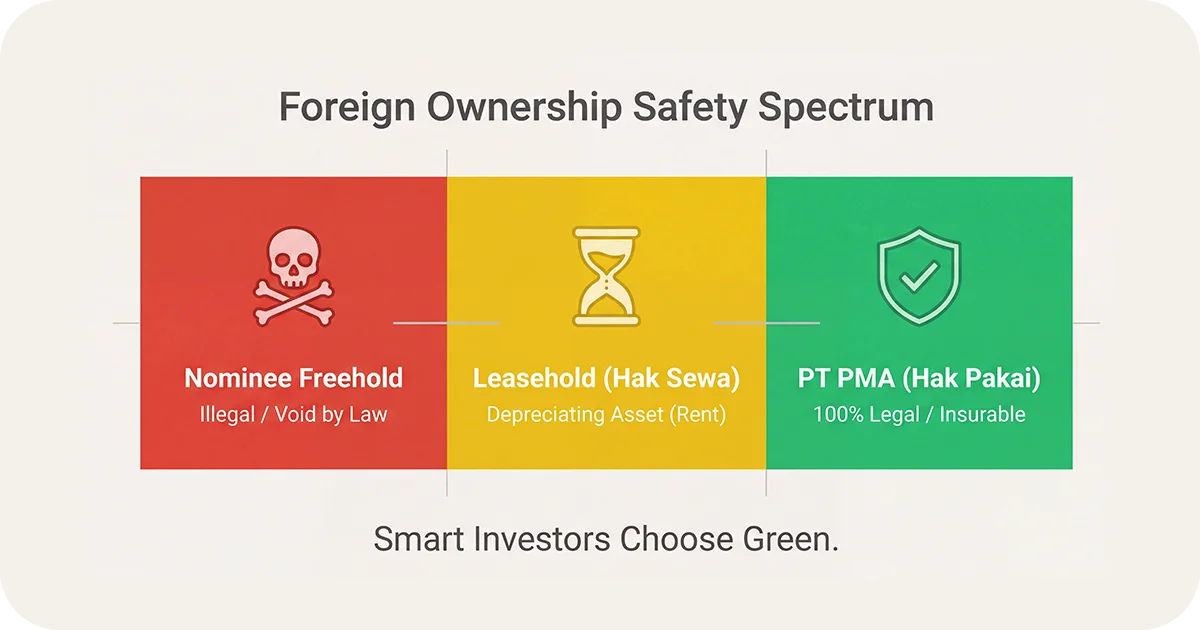
- Freehold (Hak Milik): Reserved exclusively for Indonesian citizens. If a foreigner “buys” Freehold using a local nominee, the agreement is legally void, and the land belongs to the state. Do not do this.
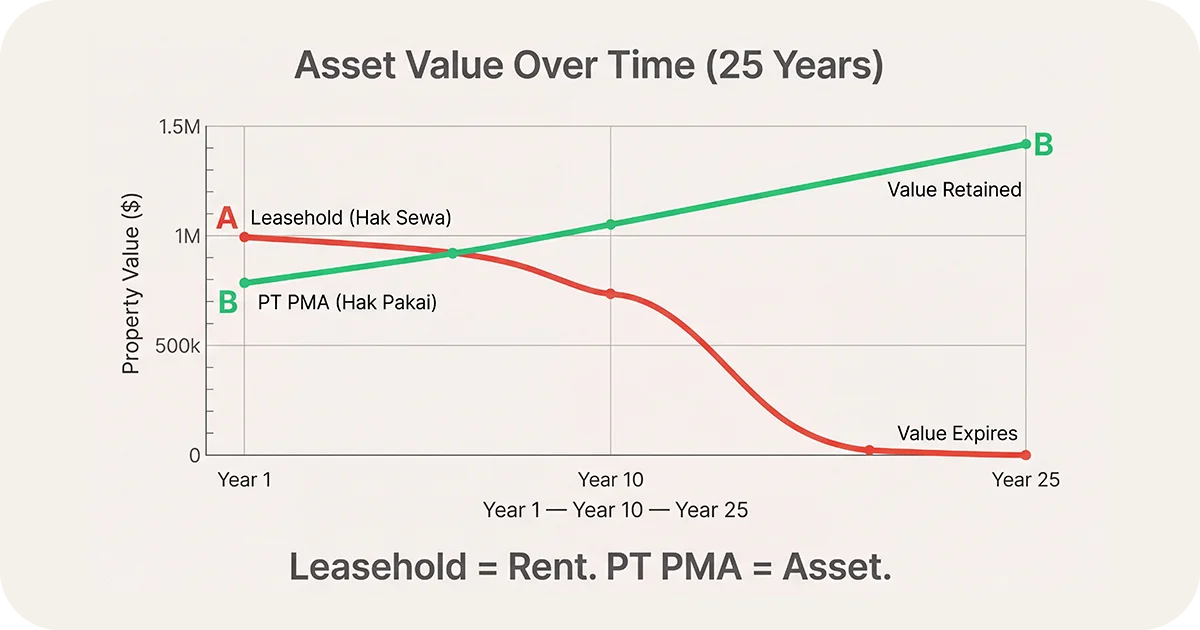
- Leasehold (Hak Sewa): You rent the land for 25-30 years. It is a depreciating asset. At the end of the lease, you own nothing unless you extend (if possible).
- Right to Use (Hak Pakai) / Right to Build (HGB): This is the Gold Standard for foreigners. It is a registered title certificate under your PT PMA company. It is valid for 30+20+30 years (total 80 years) and can be sold, inherited, or mortgaged.
📜 Need the full legal definition? Read our breakdown of [Freehold vs. Leasehold in Bali: What Foreigners Can Actually Own].
2. The Vehicle: Why You Need a PT PMA
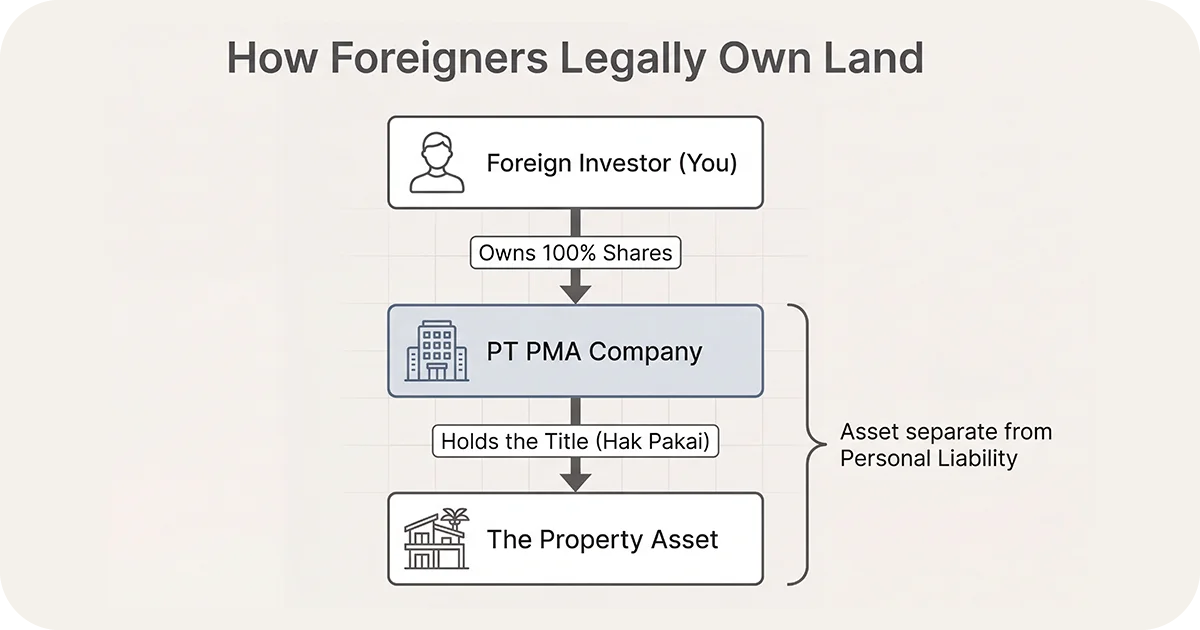
A PT PMA (Perseroan Terbatas Penanaman Modal Asing) is a Limited Liability Company that can be 100% foreign-owned.
Think of it as your “Investment Vehicle.”
- Asset Protection: The property is held by the company, not you personally.
- Visa Eligibility: Owning a PT PMA allows you to apply for an Investor KITAS (Residency Permit).
- Tax Efficiency: Expenses (marketing, maintenance, management fees) can be deducted from your revenue before tax.
The Cost: Setting up a PT PMA typically costs between $600 – $1,000 and takes 1-2 weeks. It requires a “Paid-Up Capital” declaration, but you do not necessarily need to deposit cash immediately if structured correctly.
🏢 Ready to start a company? See our step-by-step [PT PMA Setup in Bali: The Ultimate Foreign Ownership Guide]. – pending
💸 What is the real cost? Check the capital requirements in [PT PMA Bali Cost: Setup Fees & Capital Requirements (2026)]. – pending
3. The Access: Second Home Visa & Investor KITAS
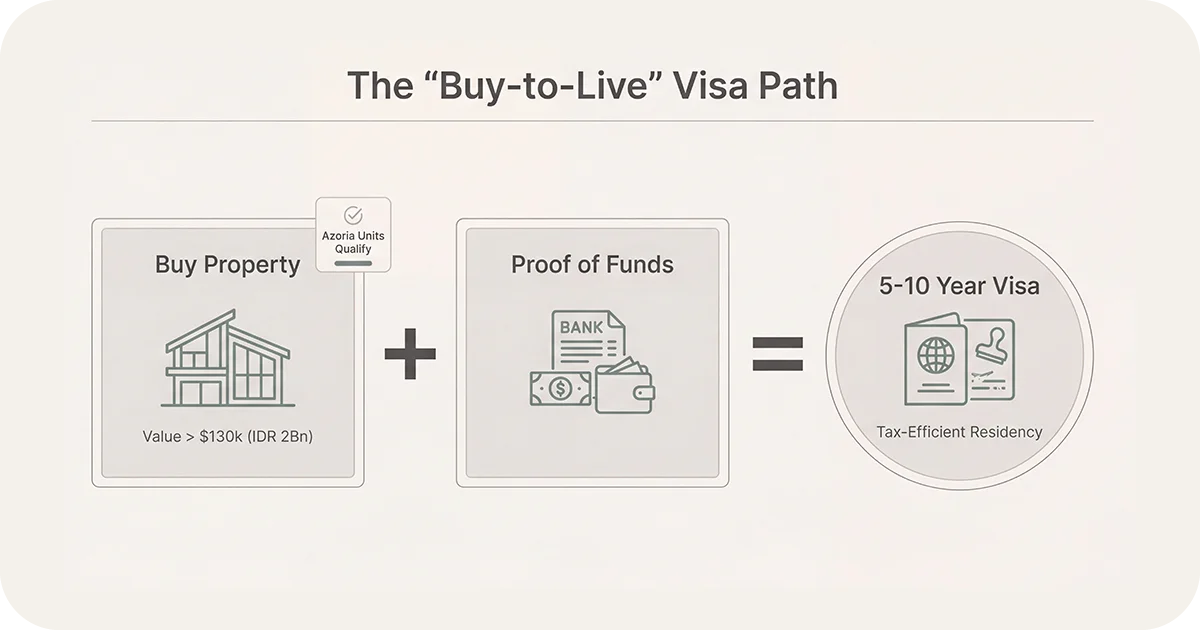
In 2026, buying a property is your ticket to living in Bali.
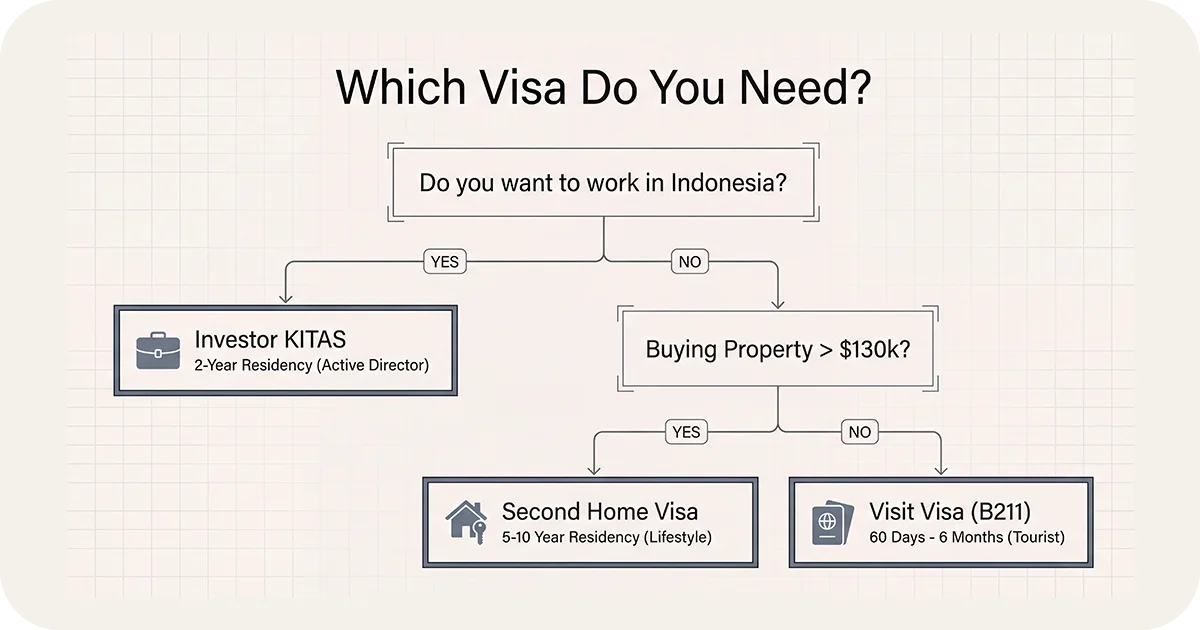
Option A: The Second Home Visa (The Lifestyle Choice)
- Best For: Retirees, Digital Nomads, Lifestyle Buyers.
- Requirement: Purchase a property valued at ~USD 130,000 (IDR 2 Billion) or show proof of funds.
- Benefit: Stay for 5 or 10 years tax-efficiently (foreign income is generally not taxed if not remitted).
✈️ Want to move here? Read our guide on [Bali Second Home Visa: Live in Your Investment for 5-10 Years]. – pending
📋 Do you qualify? Check the [Second Home Visa Requirements: Proof of Funds & Property]. – pending
Option B: The Investor Visa/KITAS (The Business Choice)
- Best For: Aspiring investors who want to become active Directors.
- Benefit: 2-year renewable residency + ability to work.
💼 Doing business? Read our guide on [Indonesia Investor Visa (KITAS): Requirements, Cost & Process]. – pending
Option C: The Golden Visa
- Best For: High-Net-Worth Individuals (depositing $350k+).
🌟 High Net Worth? Compare your options in [Indonesia Golden Visa: Who Qualifies for the 5-Year Stay?]. – pending
4. The Cost: Property Taxes & VAT Explained
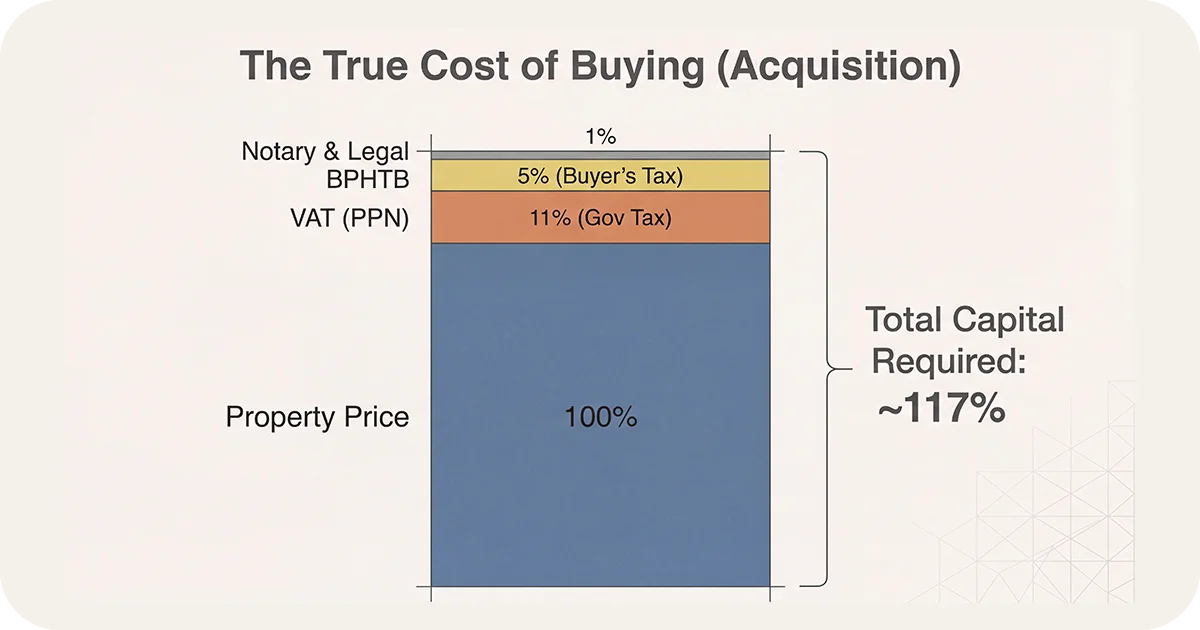
You must calculate taxes into your ROI model. Ignoring VAT (PPN) is the #1 reason investors go over budget.
The “Buying” Taxes (One-Off):
- VAT (PPN): 12%. This applies to buying new builds from a developer.
- BPHTB (Buyer’s Tax): 5% of the land value (often waived or negotiated in leasehold deals).
The “Earning” Taxes (Recurring):
- PBB (Land & Building Tax): ~0.5% per year (usually paid by the owner/lessor).
- Income Tax (PPH):
- Final Tax (10%): On rental income for individuals/companies (gross revenue).
- Corporate Tax (22%): On net profit for PT PMA (after expenses).
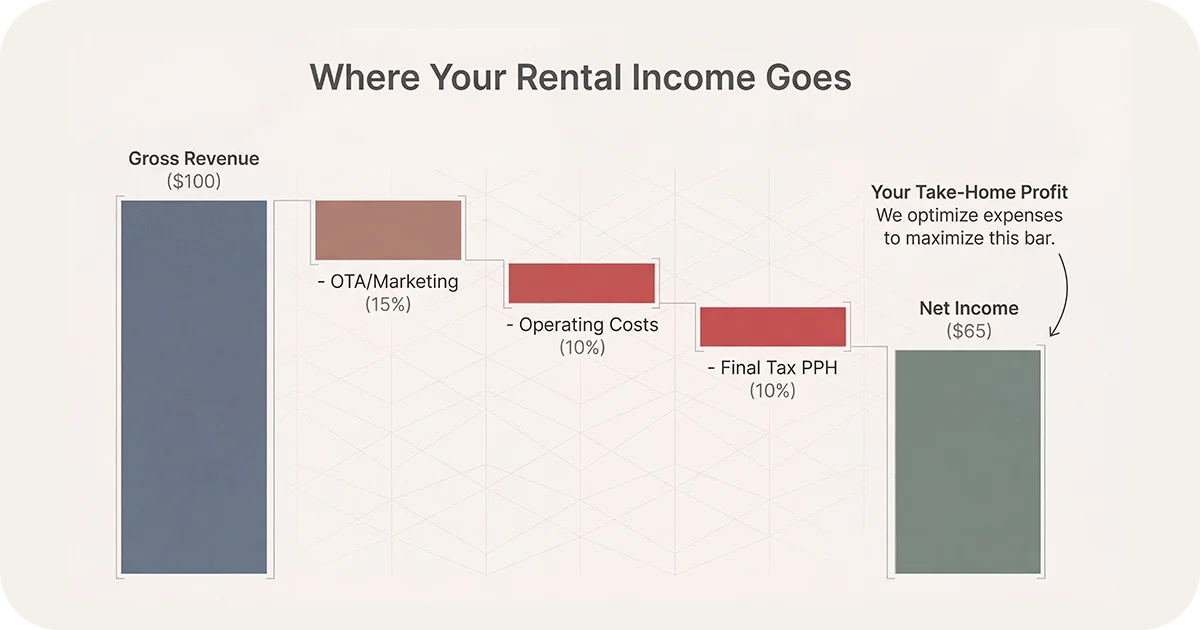
📊 Income vs. Property Tax? Understand the difference in [Taxes for Foreigners in Bali: Income vs. Property Tax]. – pending
5. Compliance & Closing: The Legal Checklist
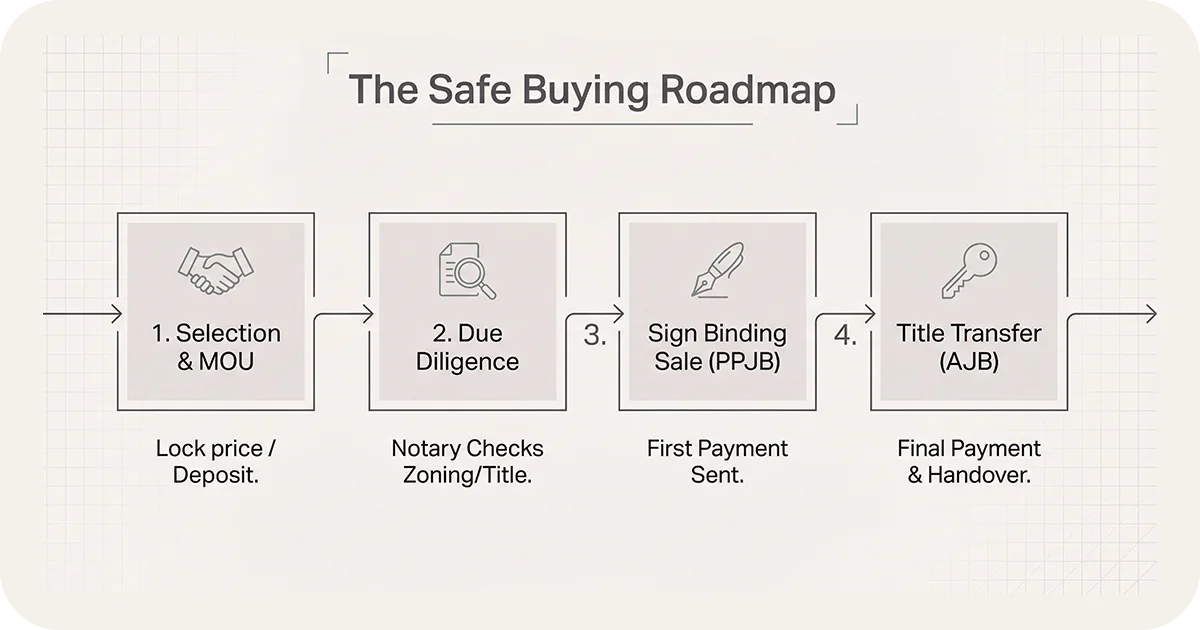
Once you have chosen a property, the legal process begins. This is not a “DIY” (Do It Yourself) stage.
The Role of the Notary (PPAT): In Indonesia, the Notary is a government official responsible for validating land titles. They will:
- Check the Zoning (ITR) to ensure you can build.
- Verify the Certificate (Hak Milik/Hak Pakai) is free of mortgages.
- Draft the Sales & Purchase Agreement (Akta Jual Beli).
Closing Costs: Standard Notary fees are 1% of the transaction value. Never skip this due diligence.
⚖️ Ready to sign? Walk through the full journey in our Ultimate Guide to Buying Property in Bali.
Fee Structure: [Notary Fees in Bali: Closing Costs for Property Transactions]. – pending
6. Limitations, Alternatives & Professional Guidance
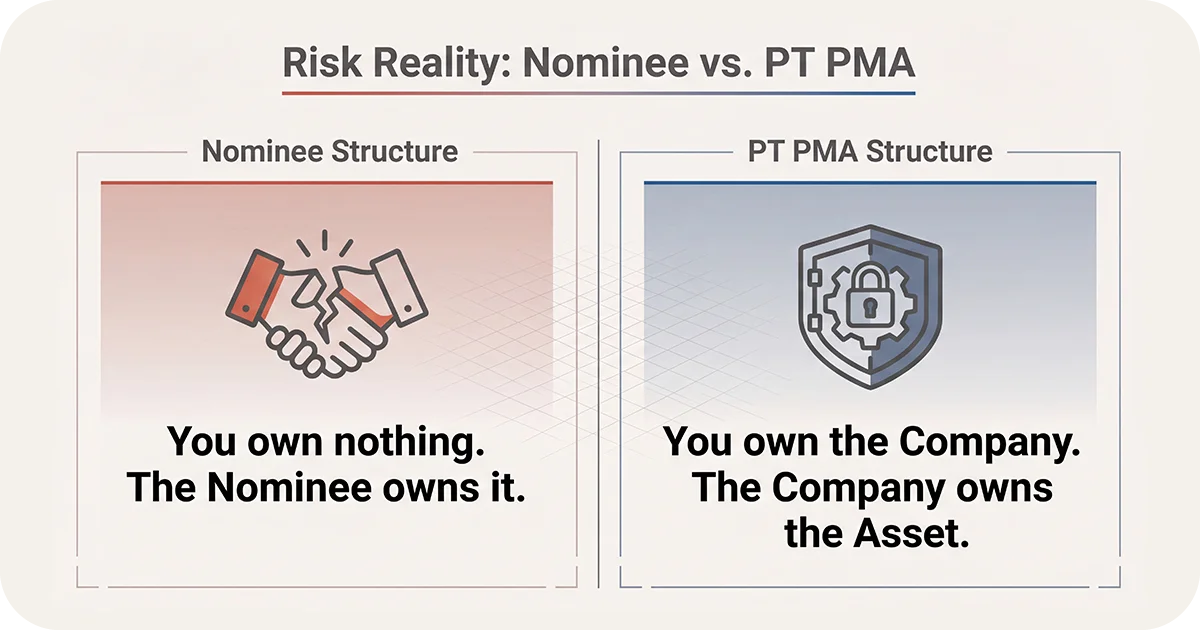
Legal structures provide safety, but they require maintenance.
The Limitations
- Reporting: A PT PMA must file quarterly investment reports (LKPM) and monthly tax returns.
- Construction Risks: A perfect legal structure is useless if the building collapses. Before signing legal papers, ensure the physical asset is sound.
🏗️ Is the building safe? Validate the quality with our Bali Villa Construction Guide 2026: Costs, Regulations & Risks.
Alternatives
- Nominee Agreements: Cheaper but illegal and high risk. We strictly advise against this.
- Market Check: Ensure you aren’t overpaying for the asset just to get a visa.
💰 Is the price fair? Check the latest data in Bali Real Estate Market Guide 2026: Trends, Prices & Areas.
Seek Professional Advice Do not sign a Lease Agreement or Transfer Deed without a legal review.
Confused by PT PMA setup or Visa requirements?
Book a Free 30-Minute Legal Roadmap Call with our team. We can explain which visa matches your investment strategy and connect you with our vetted legal partners.
Lets Meet
7. Frequently Asked Questions (FAQ)
No. Freehold (Hak Milik) is legally reserved for Indonesian citizens only. Foreigners who attempt to "buy" Freehold using local nominees are entering illegal agreements that can result in total asset seizure. The safe alternatives are Leasehold (long-term rent) or Right to Use (Hak Pakai) via a PT PMA. 📜 Understand your rights: [Freehold vs. Leasehold in Bali: What Foreigners Can Actually Own]. - pending
You do not need one for a simple Leasehold, but a PT PMA (Foreign Owned Company) is highly recommended for investment security. It allows you to hold a stronger land title (HGB/Hak Pakai), obtain an Investor Visa, and deduct operating expenses from your taxes. 🏢 Start your company: [PT PMA Setup in Bali: The Ultimate Foreign Ownership Guide]. - pending
To qualify for the 5-10 Year Second Home Visa, you must provide proof of funds of at least IDR 2 Billion (approx. USD $130,000) or purchase a luxury property meeting that value threshold. This visa allows you to stay in Indonesia long-term but does not permit employment. ✈️ Check eligibility: [Second Home Visa Requirements: Proof of Funds & Property]. - pending
Buyers typically pay 11-12% VAT (PPN) on new developer builds and a 5% Acquisition Tax (BPHTB). Once you own the property, you are liable for the annual Land & Building Tax (PBB) (approx 0.5%) and income tax on any rental revenue (10-20% depending on structure). 🧾 Get the full list: [Bali Property Tax Guide: PBB, BPHTB & VAT Explained]. - pending
Standard notary fees are 1% of the transaction value. The notary (PPAT) is responsible for due diligence, checking land certificates, ensuring the zoning (ITR) is correct, and drafting the Sale & Purchase deeds. Never skip this step to save money. ⚖️ Budget for closing: [Notary Fees in Bali: Closing Costs for Property Transactions]. - pending
7. Conclusion: Secure Your Future
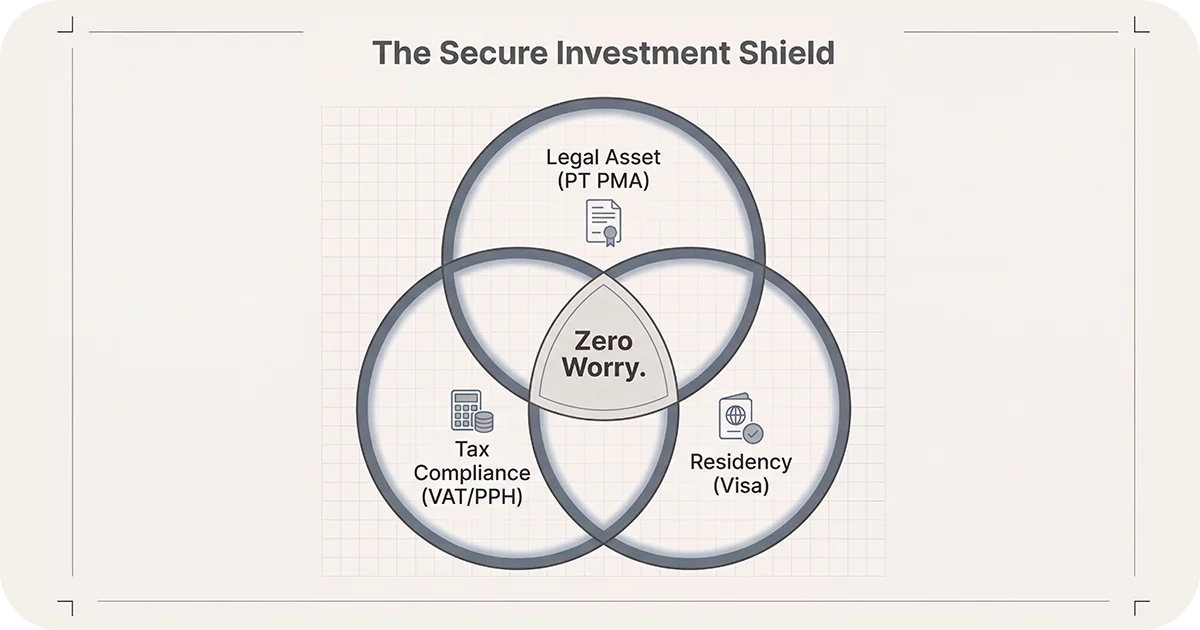
Investing in Bali is no longer about “trusting a local friend.” It is about Corporate Governance and Compliance.
By setting up a PT PMA and securing a Second Home Visa, you transform a holiday home into a legitimate, insurable, and tax-efficient asset that can serve you for decades.
Ready to invest with full legal compliance? All our developments are PT PMA-compliant and qualify for the Second Home Visa.
👉 Get Resident Status: Secure Your Second Home Visa with Azoria

Rasmus Holst is a serial entrepreneur and Co-Founder of COCO Development Group, where he helps drive innovation and growth through strategic business development. He is also the Co-Founder of Estate of Bali and Regnskabshelten.dk, Denmark’s fastest-growing accounting firm, which grew to 35 employees and generated $2.5M in turnover in 2023. Rasmus is passionate about building businesses that create long-term value and impact.