Skip to content




🎯 Quick Answer
Bali property investment currently offers a Total Return of 13–15% (8–10% net rental yield + 5–6% capital appreciation), significantly outperforming the S&P 500 (avg. 10%) and Global REITs (4–5%). While global markets struggle with high interest rates and compressed yields (Miami 4%, Dubai 6%), Bali benefits from #1 global tourism demand (TripAdvisor 2026) and a unique supply-demand imbalance. However: this is real estate in an emerging market, not a liquid ETF. Expect a 5–7 year hold and accept that operational quality is the difference between “benchmark” and disappointment.
- The Global Benchmark: Bali real estate projects a 13–15% Total Return in 2026, significantly outperforming mature market equities like the S&P 500 (~10%) and Global REITs (4–5%) due to a unique “Yield Anomaly” of accessible entry prices and premium rental rates.
- Two-Engine Growth: Investment math relies on dual compounding: high Net Rental Yields (8–12%) generated by cash flow, paired with consistent Capital Appreciation (5–8%) driven by land scarcity in prime zones like Uluwatu and Canggu.
- Fundamental Demand Drivers: High yields are sustained by tangible metrics, notably Bali’s designation as TripAdvisor’s #1 Global Destination (2026) and a surge in “lifestyle migration” that has pushed international arrivals past 6.3 million with longer average stays.
- The Lifestyle Resort Strategy: To beat the market average, institutional developers pivot from standalone properties to managed Lifestyle Resorts—integrating coworking spaces and wellness centers with in-house management to mitigate seasonal vacancy risks.
- Market Realities & Liquidity: Bali is an emerging market, not a liquid ETF. Capturing this “Alpha” requires a strict 5–7 year hold period and strict legal compliance using secure titles like Hak Pakai or a PT PMA corporate structure.
Written by: Rasmus Holst – Founder & CEO of Coco Development Group | Reviewed by: Coco Senior Investment Analyst | Last updated: 12 March, 2026
Transparency & Methodology: COCO Development Group develops in Bali and therefore has a commercial interest in the region. This report separates two things:
- Market benchmarks and comparisons (based on the third-party sources listed in References)
- The COCO operating model (“The Coco Advantage”), which describes how we aim to improve outcomes relative to “average” listings. It is not a performance guarantee.
This is not legal, tax, or financial advice. Any investment decision should be verified with qualified counsel, including a licensed PPAT/notary and professional financial/tax advisors.
Table of Contents
- Introduction
- The Benchmark: Bali vs. The World (2026 Data)
- The Math: Yield + Appreciation vs. Inflation
- The Demand Driver: Why the World is Here
- How to Beat the “Average” (The Coco Advantage)
- Limitations, Alternatives & Professional Guidance
- Frequently Asked Questions (FAQ)
- Conclusion
- References & Official Sources
Introduction

In a world of high interest rates and volatile equities, capital is searching for yield. The traditional “safe havens” – London, New York, Singapore – are currently offering net rental yields of just 2% to 4%, often barely outpacing inflation.
Sophisticated investors are shifting their gaze to high-growth emerging markets where tourism demand outstrips supply. This shift is the primary reason why more international investors are seriously considering to Buy property in Bali as a strategic addition to their portfolio.
The hypothesis is simple: Does investing in the #1 travel destination in the world generate superior “alpha” versus mainstream markets?
According to 2026 data, the answer is a conditional yes. Bali is not just a lifestyle choice; it is a financial anomaly where high net yields (8–10%) coexist with strong capital appreciation (5–6%), driven by a post-pandemic tourism boom that has seen it crowned the #1 Global Destination by TripAdvisor. But only when the asset is executed and operated correctly.
This report compares Bali’s property metrics directly against the S&P 500, Global REITs, and major property hotspots like Dubai and Miami.
The Benchmark: Bali vs. The World (2026 Data)

To compare markets fairly, the metric that matters is Net Rental Yield – cash remaining after operating expenses – not “gross yield.”
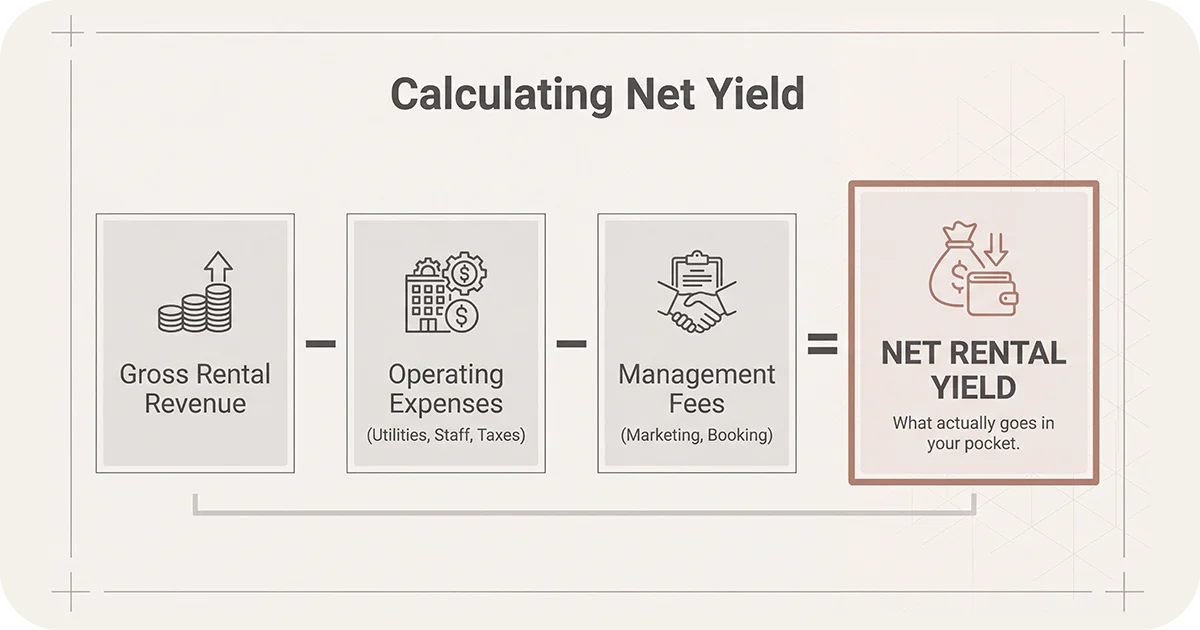
Definition used in this report (practical, investor-facing):
Net Rental Yield ≈ (gross rental revenue − operating costs − management/fees − maintenance) ÷ total capital deployed.
(Note: this simplified definition does not include every possible item like taxes, FX conversion costs, financing, or transaction fees. Those can materially change outcomes.)
(For a granular breakdown of villa vs. resort performance specifically, see our companion report on the Bali property investmentlandscape.)
Global Property Hotspot Comparison
| Market | Avg. Entry Price (USD) | Net Rental Yield (%) | Capital Appreciation | Total Return | Liquidity |
|---|---|---|---|---|---|
| Bali (Indonesia) | $150k – $400k | 8% – 12% | 5% – 8% | 13% – 20% | Low |
| Dubai (UAE) | $350k – $800k | 6% – 7% | 3% – 5% | 9% – 12% | High |
| Miami (USA) | $600k+ | 3% – 5% | 4% – 6% | 7% – 11% | Very High |
| London (UK) | $700k+ | 2% – 4% | 2% – 3% | 4% – 7% | High |
| Bangkok (Thailand) | $150k – $300k | 4% – 6% | 3% – 5% | 7% – 11% | Medium |
Data aggregated from the third-party sources listed in References (Global Property Guide, CBRE, Deloitte, and local market reporting). Benchmarks are directional ranges, not guarantees.
The “Yield Anomaly”
Bali’s outperformance thesis is driven by what we call a Yield Anomaly: in many developed markets, asset prices are so high that rent rarely produces strong percentage returns after costs. In Bali, entry pricing can remain comparatively accessible (e.g., $150k–$300k for luxury units in some segments), while nightly rates (ADR) can compete with established holiday markets – creating a wider spread between price and revenue potential.
Key takeaway: Based on the benchmark ranges above, Bali can produce materially higher cash yield than comparable assets in mature markets – if the investor can handle operational complexity and accepts lower liquidity.
📈 Want more data? Check the latest trends and price valuations in our complete guide: Bali Real Estate
The Math: Yield + Appreciation vs. Inflation

Investors often debate Real Estate vs. Stocks. Let’s break down the math over a 5-year hold period.
1. The Global Equity Benchmark
- S&P 500 Historical Average: ~10% annualized (nominal).
- MSCI World Index: ~8-9% annualized.
- Global REIT Index: ~4-5% dividend yield + moderate growth.
2. The Bali Investment Model
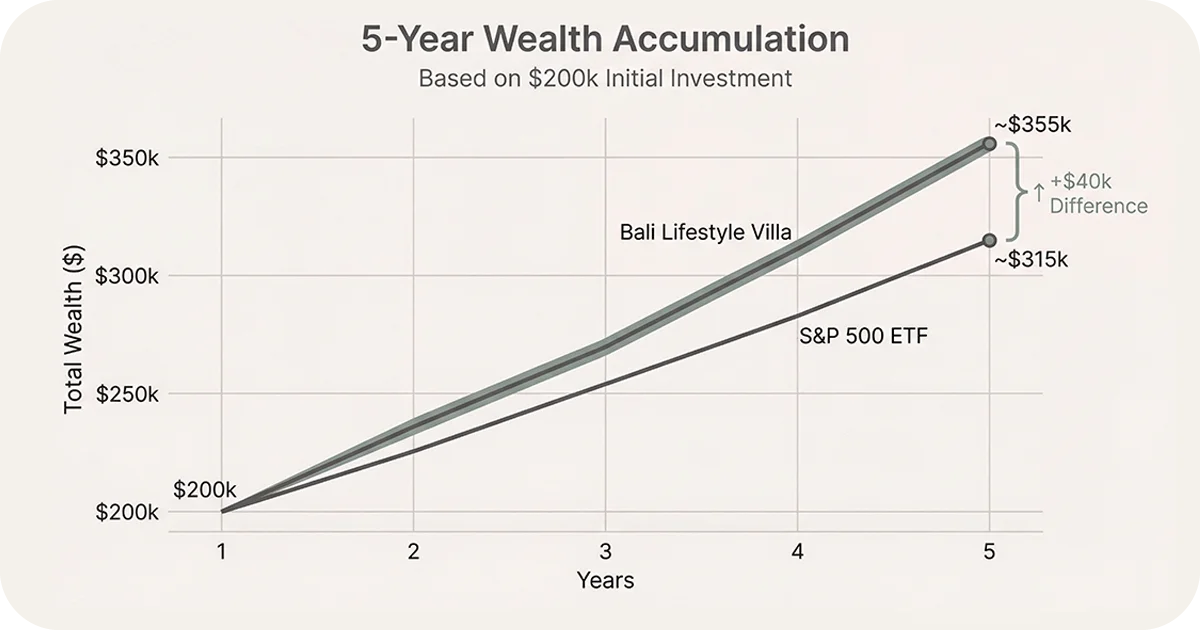
In Bali, your return is composed of two engines: Cashflow and Land Value Growth.
Total Return=Net Rental Yield+Asset Appreciation
Benchmark ranges used in this report:
- Net Rental Yield (8–12%): Driven by high occupancy (70%+) and premium ADRs.
- Asset Appreciation (5–8%): Driven by scarcity in prime zones (Uluwatu, Canggu) and general inflation.
Scenario: $200,000 Investment (5-Year Hold) – Illustrative Model
| Metric | S&P 500 ETF | Bali Lifestyle Villa |
|---|---|---|
| Annual Yield (Cashflow) | 1.5% (Dividends) | 10% (Net Rental Income) |
| Annual Growth (Appreciation) | 8.5% | 5% |
| Total Annual Return | ~10% | ~15% |
| Cashflow in Pocket (5 Yrs) | $15,000 | **$100,000** |
| Asset Value (Year 5) | $300,000 | $255,000 |
| Total Wealth (Year 5) | $315,000 | **$355,000** |
Why this matters: The equity benchmark compounds mostly through unrealized gains unless you sell. A high-yield property model can generate ongoing cashflow that may be spendable or reinvestable during the hold period – but only if net income is real and defensible after costs.
Important caution: This illustrative model does not include transaction costs, taxes, financing, FX, downtime, refurbishment cycles, or compliance/licensing costs. Those items can materially reduce net outcomes.
The Demand Driver: Why the World is Here
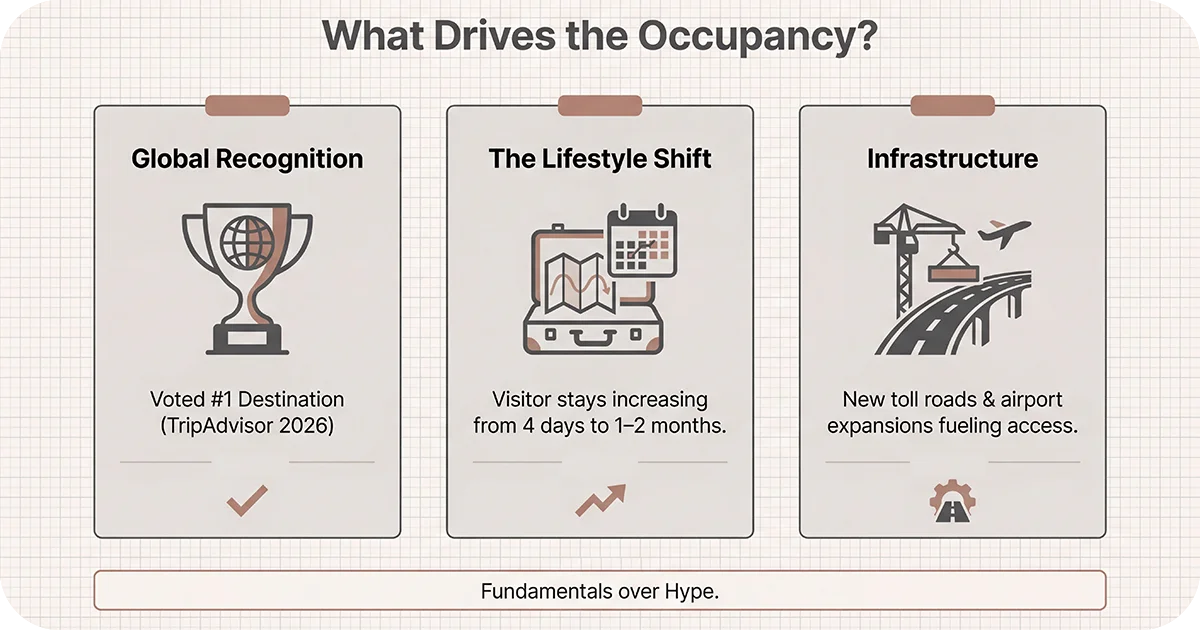
High yields are useless if they are based on a bubble. Bali’s yields are supported by fundamental tourism demand that is outpacing supply.
1. #1 Global Destination
In January 2026, TripAdvisor named Bali the #1 Best Tourist Destination in the World, surpassing London, Dubai, and Paris. This is not just a badge; it is a leading indicator of occupancy for the next 12–24 months.
2. The “Lifestyle Migration”
Bali is no longer just for backpackers. It has become a primary base for the “global mobile” class – entrepreneurs, digital nomads, and retirees.
- Visitor Arrivals: Surpassed 6.3 million international arrivals in 2024, exceeding pre-pandemic levels.
- Stay Duration: The average length of stay has increased, shifting from 4-night vacations to 1-2 month “lifestyle” stays, which stabilizes occupancy rates year-round. This trend is supported by new visa options; see our complete Bali Investor Guide for details on the Second Home Visa.
3. Infrastructure Maturity
The government is aggressively upgrading infrastructure to match this demand, including the Gilimanuk-Mengwi toll road and ongoing airport expansions. This accessibility directly correlates with land value appreciation
How to Beat the “Average” (The Coco Advantage)
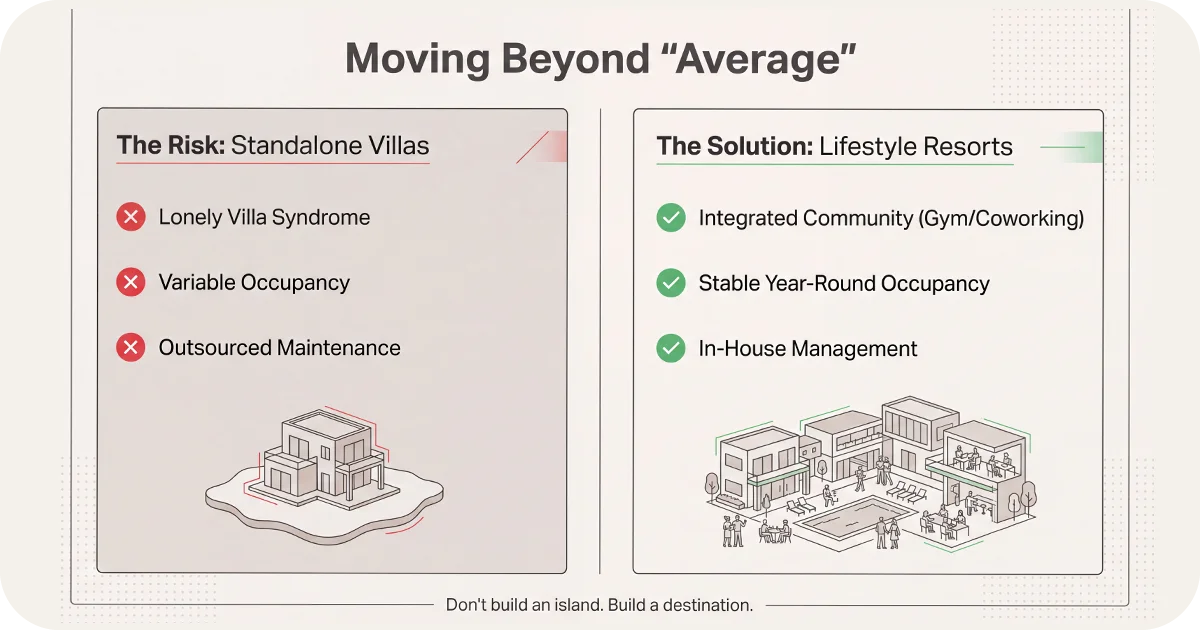
The market average in Bali is attractive (8-10% yield), but “Average” implies risk – including older villas with maintenance issues or poor marketing.
At COCO Development Group, we do not settle for average. We utilize a Lifestyle Resort Model to push returns from the standard 10% toward 12–22%.
1. Community > Isolation
Standalone villas often suffer from “lonely villa syndrome” – high vacancy during low season. We build destinations. By integrating coworking spaces, wellness centers (padel, gyms), and cafes into the development, we create a magnet for guests.
- Result: Higher occupancy (80%+) even during shoulder seasons because guests come for the community, not just the bed.
2. In-House Management
Most investors lose 20-30% of their revenue to third-party management companies that lack “skin in the game.”
- The COCO Difference: We handle everything in-house – marketing, maintenance, guest relations. This vertical integration lowers costs and ensures your asset is maintained to hotel standards, protecting its resale value.
3. Strategic Location & Build Quality
We don’t build everywhere. We select high-growth zones like Uluwatu and specific pockets of Canggu where land scarcity ensures capital appreciation. Furthermore, we adhere to strict standards to combat the tropical climate.
🏗️ Concerned about quality? Learn more about our engineering standards in our guide: Bali Villa Construction
Limitations, Alternatives & Professional Guidance
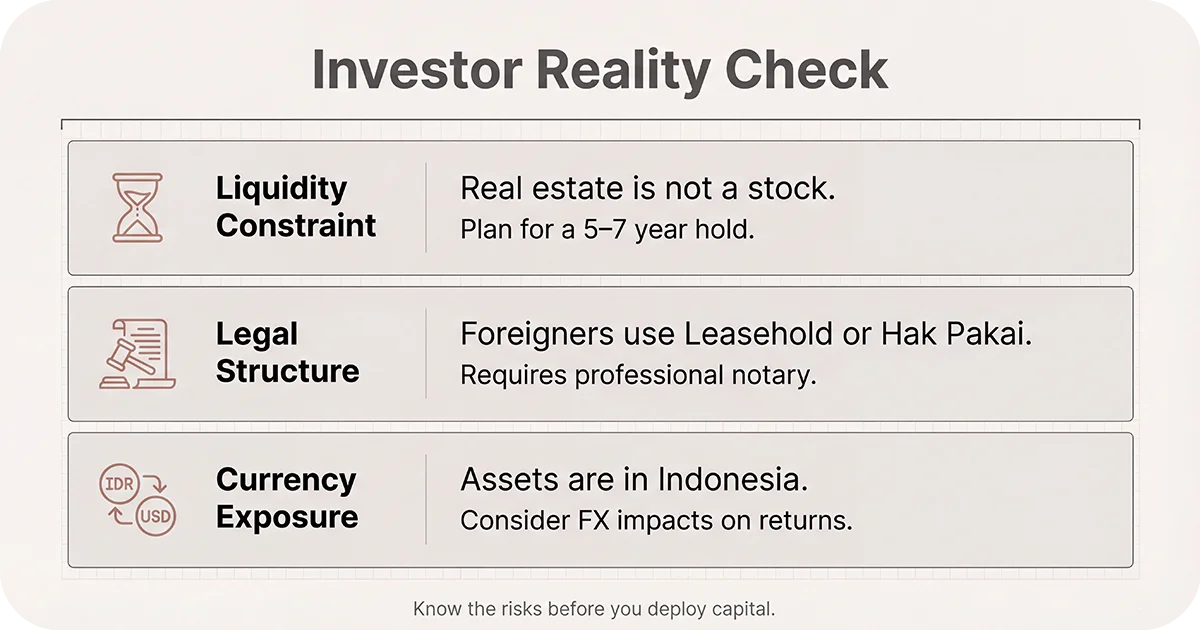
While the returns are superior, Bali investment is not for everyone. It requires a different mindset than buying a US Treasury Bond.
1. The Liquidity Trade-Off
Real estate is illiquid. Unlike a stock you can sell in seconds, selling a property in Bali takes time (typically 3–9 months).
- Guidance: Only invest capital you do not need for at least 5–7 years. If you need instant liquidity, stick to the S&P 500 or REITs.
2. Leasehold vs. Freehold

Foreigners generally cannot buy “Freehold” (Hak Milik) in their personal name. Instead, we use Hak Pakai (Right to Use) or long-term Leasehold structures.
- Reality Check: A 30-year lease with a guaranteed extension operates financially like a freehold asset for the first generation of ownership, but you must understand the expiration mechanics.
3. Currency Risk
You are investing in Indonesia (IDR), though many transactions are pegged to USD or EUR. While the IDR has been relatively stable, currency fluctuations can impact your repatriated returns
Lets Meet
Conclusion
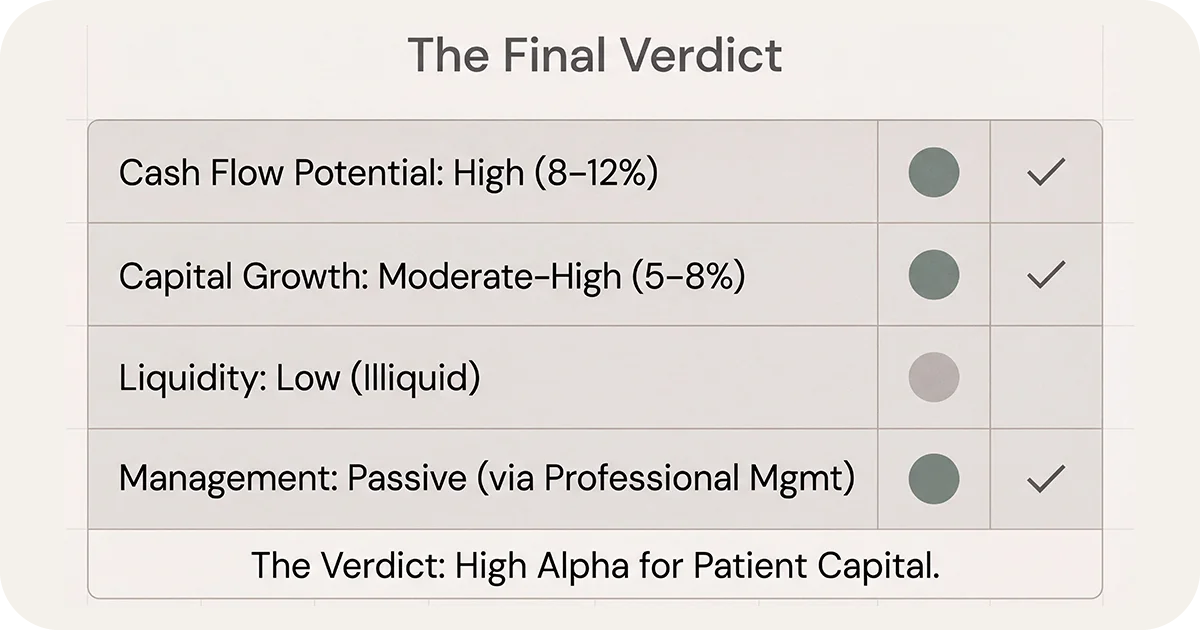
The data for 2026 is clear: Bali property investment outperforms global equity and developed real estate markets on a Total Return basis.
The combination of 8–12% net yields and solid capital appreciation offers a rare opportunity to build significant wealth. However, this “Alpha” is the reward for accepting lower liquidity and navigating an emerging market environment.
For investors seeking a hands-off, high-yield asset that doubles as a lifestyle destination, Bali is currently unrivaled.
Next Step: Browse Our Exclusive Property in Bali for Sale
Frequently Asked Questions (FAQ)
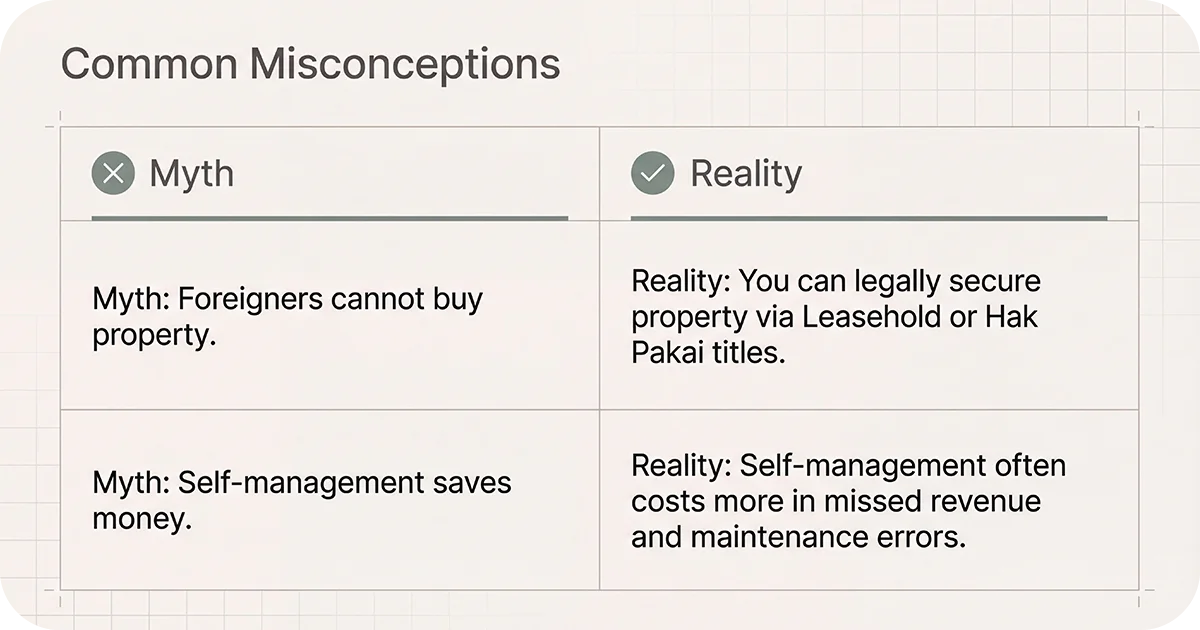
Yes, provided you follow the correct legal structures. The Indonesian government has introduced the "Second Home Visa" and "Golden Visa" to encourage foreign investment. Using a reputable notary (PPAT) and establishing a PT PMA (Foreign Owned Company) or using Hak Pakai titles ensures legal security.
It is a combination of lower entry prices (land and construction costs are lower) and high demand (tourist spending power is high). In London, a $500k apartment might rent for $2,500/month. In Bali, a $500k villa can generate $500/night, resulting in significantly higher gross revenue relative to the asset cost.
This is the primary risk. However, Bali proved resilient post-COVID, recovering faster than most Asian destinations. By investing in a "Lifestyle Brand" like COCO (with gyms, coworking, etc.), you target long-term residents and digital nomads, who are less seasonal than short-term tourists.
Technically yes, but we advise against it. Managing a property in Bali requires navigating local banjar (community) relations, tax reporting, staff management, and maintenance in a tropical climate. Professional in-house management is the key to truly passive income.
References & Official Sources
Tourism & Demand Drivers
- TripAdvisor (2026). “Travelers’ Choice Awards Best of the Best”. (Ranked Bali as the #1 Global Destination). https://www.tripadvisor.com/TravelersChoice-Destinations
- Badan Pusat Statistik (BPS) Bali (2024). Foreign Visitor Statistics 2019–2024. (Aggregated via All Indonesia Travel). (https://allindonesiatravel.com/bali-tourism-statistics-2019-2024/)
Global Property Yields & Market Data
- Global Property Guide (2025). Rental Yields in Indonesia & World Cities. (Primary source for the “Yield Anomaly” table: Bali 8-12% vs. London/Miami 2-5%).
https://www.globalpropertyguide.com/asia/indonesia/price-history - Deloitte (2025). Dubai Real Estate Predictions Report 2025. (Source for Dubai’s 6-7% yield cap and market maturity data).
https://www.deloitte.com/middle-east/en/about/press-room/deloitte-unveils-dubais-real-estate-predictions-report-for-2025.html - CBRE Thailand (2026). “Thailand’s Real Estate Market 2026: Balancing Risk and Reward”. (Source for regional Southeast Asian market comparisons). https://www.cbre.co.th/press-releases/thailand-real-estate-market-2026-balancing-risk-reward
Financial Benchmarks (The “Global Market” Comparison)
- Investing in the Web / MSCI Data (2025). MSCI World Index Historical Data. (Data source for the 8-9% global equity average return benchmark). https://investingintheweb.com/blog/msci-world-index-historical-data/
- SlickCharts / S&P 500 (2025). S&P 500 Total Return History. (Source for the ~10% nominal return benchmark used in the “Math” section). https://www.slickcharts.com/sp500/returns
- iShares by BlackRock (2025). Global REIT ETF Performance. (Source for the 4-5% average REIT dividend yield comparison). https://www.ishares.com/ch/professionals/en/products/268752/ishares-global-reit-etf

Rasmus Holst is a serial entrepreneur and Co-Founder of COCO Development Group, where he helps drive innovation and growth through strategic business development. He is also the Co-Founder of Estate of Bali and Regnskabshelten.dk, Denmark’s fastest-growing accounting firm, which grew to 35 employees and generated $2.5M in turnover in 2023. Rasmus is passionate about building businesses that create long-term value and impact.