Skip to content




Key Takeaway
For residents navigating the island’s unique logistics, Gojek Bali services are generally the most effective all-in-one solution for affordable bike rides and food delivery, while Grab often offers superior car reliability and easier payment for foreign cards.
Gojek
The local favorite, typically best for GoRide (bike taxi) and GoFood delivery.
Grab
Often more reliable for cars (GrabCar) and seamlessly accepts international credit cards.
Bluebird
Widely considered the safest taxi option; it is highly recommended to book via the MyBluebird app to ensure a metered fare.
Continue reading for a detailed breakdown of pricing, avoiding “red zones,” and payment hacks for new residents.
Every new resident in Bali eventually faces the “scooter vs. car” debate. While short-term tourists often opt for scooter rentals to zip between beach clubs, long-term residents, investors, and entrepreneurs typically value efficiency, safety, and air-conditioned comfort.
For many, the strategic use of ride-hailing apps replaces vehicle ownership entirely, transforming commute time into productive work time while navigating the island’s notorious traffic.
This guide provides a definitive comparison of the “big three”—Gojek, Grab, and Bluebird—tailored specifically for those living on the island. Beyond generic travel advice, we explore insider logistics, such as how to handle payments without a local bank account, navigating restricted pickup zones, and understanding the role of Gojek Bali in your daily routine compared to its competitors.
Written by: Rasmus Holst Founder & CEO of Coco Development Group.
Reviewed by: Our local Bali-based concierge and operations staff who use these apps daily.
Last updated: 29 December 2025
ℹ️ Transparency: This guide is based on our team’s extensive daily experience living and working in Bali. Our recommendations are based on independent analysis and publicly available data. Our goal is to provide accurate, helpful information to make your life in Bali seamless. This article does not contain affiliate links.
Table of Contents
The Big Three Compared: Gojek vs. Grab vs. Bluebird
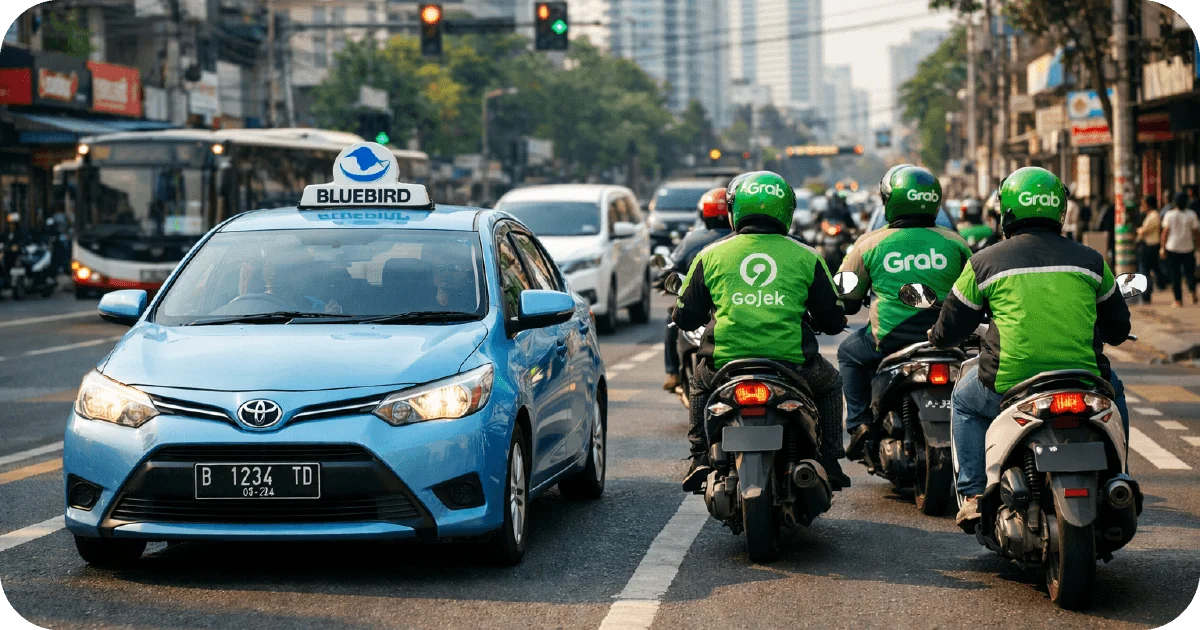
While all three apps are essential downloads for any resident, they serve distinct functions in the daily ecosystem of Bali life. Your choice often depends on whether you are prioritizing cost, comfort, payment convenience, or safety for a specific journey.
Gojek (The Local Champion)
According to market analysis from firms like Statista and Bloomberg, Gojek has historically held a dominant market share in Indonesia, particularly in the ride-hailing and food delivery sectors [4]. For residents, Gojek Bali services are often the default for GoRide (motorcycle taxis), which are critical for cutting through heavy traffic in areas like Seminyak and Canggu.
Its super-app status also makes GoFood a market leader for delivery. However, a common friction point for international residents is that the app frequently rejects foreign credit cards, often requiring a workaround.
Grab (The Reliable All-Rounder)
When comparing Gojek vs Grab Bali options, Grab positions itself as a slightly more premium and reliable choice for car transport (GrabCar). Its significant advantage for newcomers is the seamless acceptance of international credit cards.
You can typically download the app, add a foreign Visa or Mastercard, and book a ride immediately without the payment hurdles often associated with competitors. This makes Grab Bali services particularly useful for airport transfers or when cash is low.
Bluebird (The Gold Standard for Safety)
Bluebird has built a decades-long reputation as Indonesia’s most reliable taxi operator, a status consistently reflected in customer feedback and industry perception [3]. While you can hail Bluebird taxi Bali vehicles on the street, savvy residents use the MyBluebird app.
Booking via the app is crucial to avoid “fast meter” scams or drivers demanding inflated flat rates. The app guarantees a professional driver and a fair, metered fare, making it the preferred choice for late-night trips or when safety is the paramount concern.
Invest in Bali Real Estate
Our Projects

AN ICON IN THE MAKING
AURA WELLNESS RESORT
ROI 12 - 17%
- Lovina, North of Bali
- 141 residences
- Fitness, Spa, Cave, Dining, Mischling
- Gym, Helipad, Winston Hair Studio
- Sauna, Steam, Cold Plunge, Pool
Prices from: €105000

Bali’s First Padel & Wellness Resort
AZORIA LIVING SULUBAN BEACH RESORT
ROI 12 - 17%
- 1 min from the Suluban beach
- 285 properties
- 6 padel courts, café & lounge
- Gym, Pilates, CrossFit, Yoga, Boxing
- Sauna, steam, cold plunge, pool
Prices from: €90000

Bali’s First Padel & Wellness Resort
AZORIA LIVING NYANG NYANG BEACH RESORT
ROI 12 - 17%
- Nyang Nyang Beach, Uluwatu
- 150 properties
- 6 padel courts, café & lounge
- Gym, Pilates, CrossFit, Yoga, Boxing
- Sauna, steam, cold plunge, pool
Prices from: €80882.73

Skyline lifestyle residence
COCO HILLS RESORT
ROI 15 - 20%
- Bingin, Uluwatu, Bali
- 95 Properties
- Coworking Space, Podcast Studio
- Gym, Wellness, Beach Pool Area
- Restaurant
Prices from: €131966.56

Exclusive LifeStyle Properties
Amazona Jungle Resort
ROI 12 - 17%
- Kaba Kaba, Canggu area, Bali
- 41 Jungle apartments
- Open-air cinema & fireplace
- Waterfall Restaurant
- Yoga, recovery, Ice-bath & sauna
Prices from: €123452.59 EURO

Exclusive LifeStyle Properties
THE COCO BOULEVARD
ROI 12 - 17%
- Bingin, Uluwatu, Bali
- 11 Lifestyle Villas
- Padel court
- Gym, Wellness
- Cafe
Prices from: €166022.44 EURO
Decision Matrix: Which App When?
| Feature | Gojek | Grab | Bluebird (via App) |
|---|---|---|---|
| Best For | Quick bike rides, food delivery | Car journeys, airport transfers | Safety, professional drivers |
| Bike Taxi (Ojek) | Excellent (Largest Fleet) | Good | Not Available |
| Car Service | Good (GoCar) | Excellent (More reliable) | Excellent (Metered Taxis) |
| Foreign Card Payment | Often fails (Requires GoPay top-up) | Excellent | Good |
| Pricing | Generally Cheapest | Competitive | Higher (but reliable meter) |
| Primary Service Area | All of Bali (strongest in south) | All of Bali | Major towns (Denpasar, Canggu) |
Construction you can trust
We handle all the details – no hassle for you.

5 Years full warranty

20+ Finished developments in Bali by our team

25+ Years of shared experience
The Foreign Card Payment Failure Loop
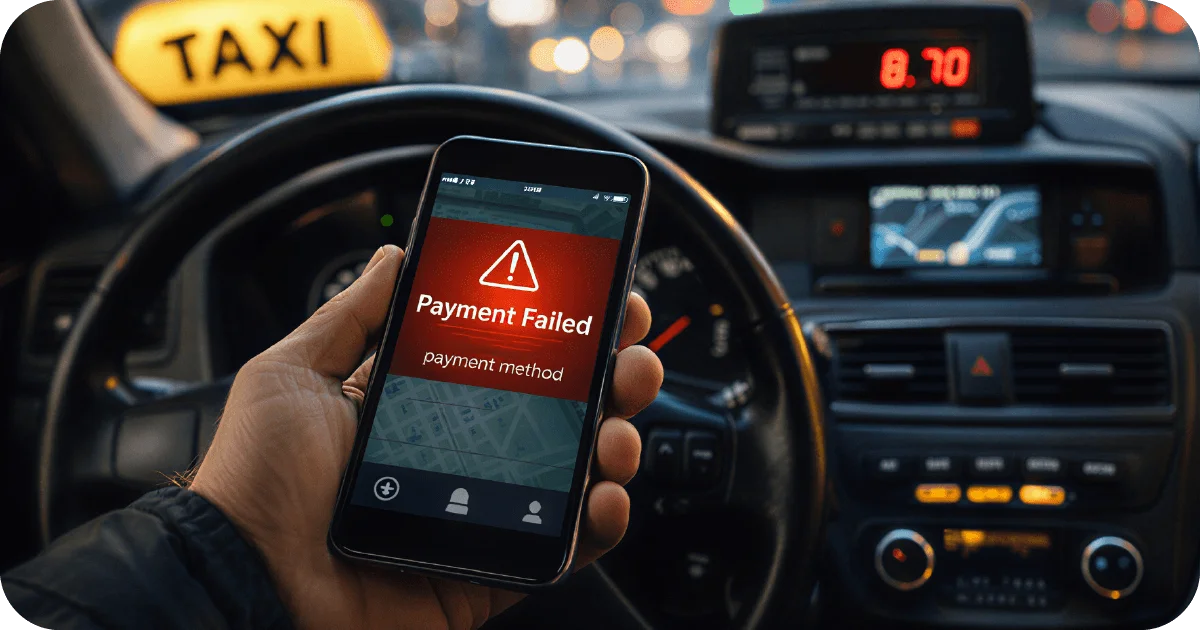
A frequent question from new arrivals is: “Why does my card keep failing?” It is a known technical hurdle that foreign credit cards frequently fail on Gojek due to 3D Secure authentication protocols that don’t sync well with the local platform.
If you are wondering, “Can I use credit card for Gojek Bali services directly?”, the answer is often no. However, residents use a reliable workaround to unlock the cheaper rates and food delivery options:
The Resident Hack: Topping up GoPay
- Understand GoPay: This is Gojek’s integrated digital wallet.
- The Wise Method: Most long-term residents use Wise (formerly TransferWise) to transfer funds directly from their home bank account into their GoPay e-wallet. It is fast, offers good exchange rates, and bypasses the credit card failure loop.
- The Convenience Store Method: If you have cash, you can walk into any Alfamart or Indomaret convenience store, go to the cashier, and ask to “Top up GoPay.” You hand them the cash, tell them your phone number, and the credit appears instantly.
- The Grab Advantage: If you prefer to avoid these steps, Grab remains the simplest solution as it accepts foreign cards directly.
Setting up GoPay is a one-time setup that significantly streamlines daily life, allowing you to order food or bikes without handling cash for every trip.
The “Red Zone” Survival Guide for Residents
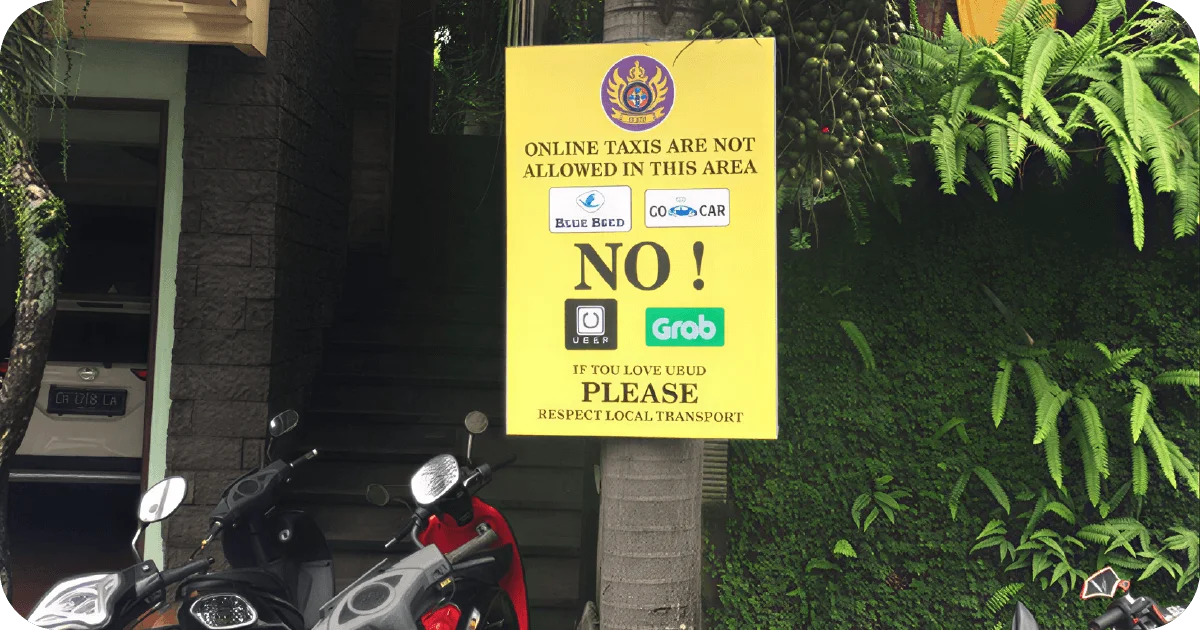
One nuance that generic travel guides and AI tools often miss is the existence of “Red Zones.” These are areas where local transport cooperatives (known as Banjar) restrict app-based pickups to protect local drivers. While official government regulations, such as the Ministry of Transportation’s Regulation No. 118 of 2018, focus on setting a legal framework for the apps’ operations at a national level [5], these informal zones are enforced locally and must be navigated with discretion.
Drop-offs are almost always permitted everywhere. The restriction applies primarily to pickups. Here is how residents handle the most common zones:
Ubud (The Strictest Zone)
Transport Ubud logistics can be tricky. In central Ubud, especially near the Ubud Market and the Royal Palace, app pickups are strictly forbidden. If you attempt to book a ride right on the main street, your driver may cancel or ask you to move. The unwritten rule is to walk approximately 200-300 meters away from the main intersections to a designated pickup point, often near a specific cafe or minimart away from the local taxi stands.
Canggu (Batu Bolong & Echo Beach)
For Taxi Canggu requirements, the situation is fluid but generally follows the “walk away” rule. Along the main Batu Bolong strip, especially near the beach and Old Man’s, local drivers are prioritized. Residents typically walk 100 meters up the road, away from the busiest beachfront venues and taxi clusters, before ordering a ride. This simple courtesy prevents conflict and ensures your driver feels safe stopping for you. For more tips on navigating daily life in Canggu, understanding these small local norms is essential.
Seminyak & Uluwatu
These areas are generally more app-friendly, but specific high-end beach clubs or resorts may have exclusive transport partners. In these cases, security may not allow an app driver to enter the lobby for pickup. You may need to walk to the main road to meet your driver.
Pro Tip: Always communicate with your driver via the app’s chat function. A simple message like “I am walking to [Landmark Name] to make it easier for you” shows you understand the local context and often prevents cancellations.
Car vs. Bike: The Resident’s Traffic Logic
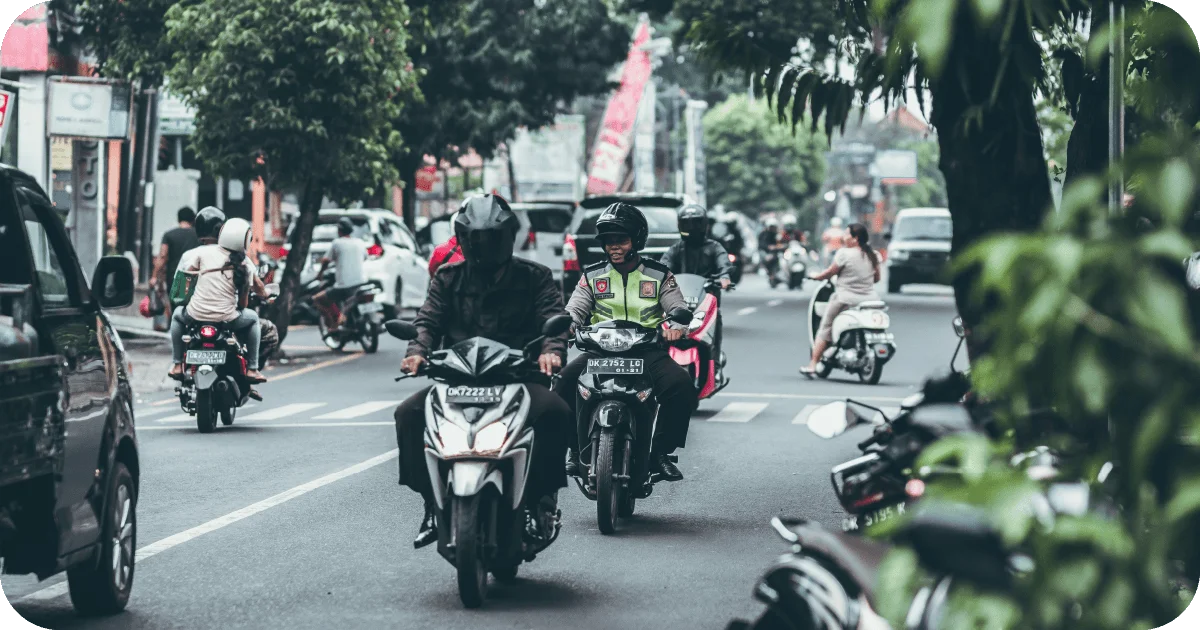
Strategic transport choices are crucial in a region like Bali. While no peer-reviewed study exists specifically for Bali, principles from cities with similar traffic patterns, like Jakarta, suggest that shifting to two-wheeled transport during peak hours is a logical congestion-avoidance strategy [6]. The trade-off is always comfort versus speed.
When to Take a Bike (GoRide/GrabBike)
Rush Hour (4:00 PM – 7:00 PM): If you are moving between Seminyak, Canggu, and Kerobokan during sunset, a car can take 45 minutes to move 3 kilometers. A bike can make the same trip in 10-15 minutes.
Short Neighborhood Trips: For quick hops, such as from a villa in Pererenan to a coworking space in Batu Bolong, bikes are efficient and cheap—often costing less than $1 USD. Gojek price Bali rates are typically the most competitive for these short runs.
Shortcuts (‘Gangs’): Bali is connected by a network of narrow paths known as gangs. Cars cannot fit here, but bikes can, unlocking routes that significantly reduce travel time.
When to Take a Car (GoCar/GrabCar/Bluebird)
Airport Runs: Essential for luggage capacity and comfort after a long flight.
Rainy Season (October – April): During the monsoon season, daily downpours make bike travel impractical and dangerous.
Long-Distance Trips: For journeys exceeding 45 minutes, such as Canggu to Uluwatu, the physical fatigue of being on a bike makes a car the better option.
Group Travel: Obviously, if you are traveling with more than one person, a car is necessary.
Frequently Asked Questions
Gojek is generally better for motorcycle taxis (GoRide) and food delivery (GoFood), as it has the largest local fleet and is often slightly cheaper. However, Grab is typically better for car services (GrabCar) due to higher reliability and is far more convenient for tourists or new residents as it seamlessly accepts foreign credit cards, unlike Gojek which often requires a local payment workaround.
Often, no. Foreign credit cards frequently fail on Gojek due to 3D Secure authentication issues. The most reliable solution is to top up Gojek's digital wallet, GoPay. You can do this by transferring money using a service like Wise or by paying with cash at a local Indomaret or Alfamart convenience store. For direct credit card payments, Grab is the recommended alternative.
Yes, Bluebird is widely considered the safest and most reputable taxi company in Bali. Their drivers are professionally trained, and their vehicles are well-maintained. To ensure your safety and a fair price, it is highly recommended to book your ride through the official MyBluebird app, which guarantees the driver will use the meter and prevents potential scams.
You can register for Gojek using your foreign phone number, but you may encounter issues with receiving the OTP (One-Time Password) verification code. If this happens, the best solution is to purchase a cheap local SIM card upon arrival at the airport or a convenience store. This not only solves the registration issue but also provides you with affordable mobile data for using the apps.
Yes, for standard car rides, GrabCar is typically cheaper than a Bluebird taxi, especially with promotions. However, during peak hours or heavy rain, Grab's surge pricing can sometimes make it more expensive. Bluebird offers a consistent, metered rate, which can be more predictable. For the best value, compare prices in both apps before booking.
No, Uber does not operate in Bali or anywhere in Southeast Asia anymore. In 2018, Uber sold its Southeast Asian operations to Grab. Therefore, if you are looking for a service similar to Uber, you should download and use the Grab app, which offers comparable ride-hailing services for both cars and motorcycles.
A private driver in Bali typically costs between IDR 600,000 to IDR 800,000 (approximately $40-$55 USD) for a full day of service (8-10 hours). This private driver in Bali cost usually includes the car, driver, and petrol. This option is ideal for sightseeing tours or complex itineraries, offering more flexibility than point-to-point ride-hailing apps.
Yes, taking a bike taxi (ojek) from Gojek or Grab is generally safe for passengers. Both apps provide a helmet for the passenger, and the drivers are registered and tracked via GPS. While Bali traffic can be chaotic, these services are a standard and essential mode of transport used by millions of residents daily. Always ensure your helmet is fastened correctly.
Yes, Gojek works in Ubud, but with restrictions. You can easily get a Gojek to drop you off anywhere in Ubud. However, picking up from central areas like near the Ubud Market or Palace is often prohibited by local transport cooperatives. To get a pickup, you must walk a few hundred meters away from the main tourist hubs to a less restricted street.
For tourists, Grab is often the best choice due to its easy setup with foreign credit cards. For residents, a combination is ideal: Gojek for its cost-effective bike rides and market-leading food delivery, and the MyBluebird app for situations where safety and a reliable metered fare are the top priorities.
Limitations, Alternatives & Professional Guidance
While apps are convenient, they have limitations. Driver availability can fluctuate based on weather and location—getting a ride from a remote villa in Uluwatu at 2:00 AM can be challenging. Furthermore, surge pricing during holidays or heavy rain can significantly increase costs. App performance also relies on mobile data, which can be spotty in certain areas.
For full-day itineraries or sightseeing, hiring a private driver often offers greater flexibility than multiple single trips. For those comfortable on two wheels, scooter rental provides the ultimate freedom, though it comes with higher safety risks. Additionally, many premium villa complexes, including those managed by COCO Development Group, offer COCO Development Group’s dedicated concierge transport services to ensure reliable transfers for residents and guests.
For long-term logistical planning—such as arranging school runs, regular staff transport, or managing fleet pickups for guests—consulting with a local property management service is recommended to establish pre-arranged, reliable solutions that do not rely solely on the on-demand economy.
Conclusion
Mastering Bali’s transport ecosystem is about using the right tool for the right moment. Gojek serves as the daily workhorse for cost-effective travel and food, Grab provides the reliability and payment ease needed for car trips, and Bluebird offers unparalleled safety for peace of mind. A savvy resident leverages all three to navigate the island efficiently. Understanding these logistics is a key part of a seamless transition to living in Bali, with Gojek Bali serving as your essential daily tool.
Just as a well-planned route can save you hours in traffic, a strategically located home can transform your daily life. COCO Development Group’s properties in Canggu and Uluwatu are designed to be at the heart of the action, minimizing commute times and maximizing your lifestyle. Discover how our community-centric developments offer a seamless living experience.
References
- Badan Pusat Statistik Provinsi Bali. (2025). Tourism Statistics: Foreign Tourist Arrivals to Bali.
- Provincial Government of Bali. (2024). Love Bali: Foreign Tourist Levy Regulation No 6/2023.
- Bluebird Group. (n.d.). Company History and Safety Standards.
- Statista. (2023). Market share of ride-hailing services in Indonesia.
- Ministry of Transportation Republic of Indonesia. (2018). Regulation No. 118 of 2018 concerning Special Rental Transportation.
- Prasetyo, R., & Zulkarnain, H. (2019). Ride-Hailing and Congestion: Evidence from Jakarta*. Journal of Regional and City Planning.

About the Author:
Rasmus Holst is a serial entrepreneur and Co-Founder of COCO Development Group, where he helps drive innovation and growth through strategic business development. He is also the Co-Founder of Estate of Bali and Regnskabshelten.dk, Denmark’s fastest-growing accounting firm, which grew to 35 employees and generated $2.5M in turnover in 2023.
Rasmus is passionate about building businesses that create long-term value and impact.