



🎯 Quick Answer:
Should you use a property agent in Bali or buy direct?
It depends on your goal. Agents are best for Lifestyle Buyers and Active Flippers seeking ready-to-move-in homes, verified income history, or “sold-out” locations in saturated zones.
However, Passive Investors seeking high ROI should generally buy directly from a Developer. Buying direct secures Off-Plan discounts (20-30%), Construction Warranties, and legal safety via Consumer Protection Laws (UUPK). Most importantly, developers offer a “fresh” lease term, whereas agents typically sell depreciating assets with fewer years left on the clock.
- Market Bifurcation: The Bali property market is split into the Secondary Market (Agents selling existing/resale stock) and the Primary Market (Developers selling new/off-plan stock), each with distinct pricing and risk profiles.
- Pricing Dynamics: Agents sell at “Market Value” which includes seller profit and commissions (typically 5%), whereas Developers offer “Early Bird” pricing (20-30% below completion value) and installment plans linked to construction progress.
- The “Time-Decay” Factor: Resale villas are depreciating assets with shorter remaining lease terms (“Lease Transfers”), while developer units typically come with a “Fresh Title” (25-30+ years) starting from handover.
- Risk & Warranty: Resale properties are sold “As Is” with high immediate maintenance risks (CapEx), whereas developer units include Defect Liability Periods and structural construction Warranties up to 10 years.
- Legal Protection: Developer transactions are classified as B2C under Consumer Protection Law No. 8 of 1999, offering legal recourse for non-delivery, unlike private resale (C2C) transactions governed by weaker Civil Code laws.
- The Amenity Shift: Modern tenant demand has shifted toward “Lifestyle Resorts” (Padel, Coworking, Wellness) which command a ~20% daily rate premium over standalone private villas.
- Strategic Use Cases: Agents remain essential for finding “Distressed Deals” (20-30% below market) or properties in saturated “Sold-Out” zones like Seminyak where developers cannot build.
Written by: Rasmus Holst (Founder & CEO of Coco Development Group) | Reviewed by: COCO Legal Acquisitions Team | Last updated: 17 March 2026
Transparency: COCO Development Group is a developer of investment-grade resorts in Bali. We write this guide to explain the difference between our model (creating new assets) and the brokerage model (selling existing assets). While we believe in the developer model for high-yield ROI, reputable agents are essential for the resale market. Always conduct due diligence regardless of who you buy from.
Table of Contents
- Introduction
- The Core Difference: Secondary vs. Primary Market
- The Math: Commissions vs. Off-Plan Discounts
- The Risk: “Sold as Seen” vs. Construction Warranties
- The Legal Safety Net: B2C vs. C2C Transactions
- The ‘Amenity Premium’: Standalone Villas vs. Lifestyle Resorts
- The “One-Stop Shop”: Transactional vs. Relational Partners
- The “Distressed Deal” & “Location” Hunter: When Agents Win
- The Checklist: When to Use an Agent vs. Developer
- Limitations, Alternatives & Professional Guidance
- Frequently Asked Questions (FAQ)
- Conclusion
- References & Official Sources
Introduction
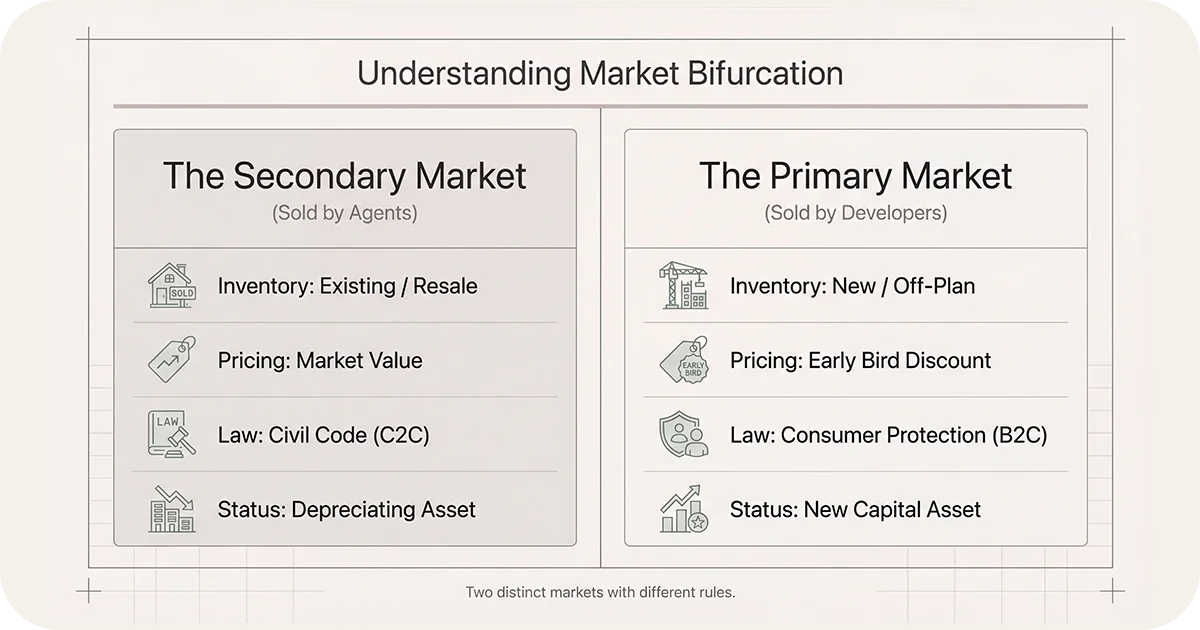
In 2026, the landscape for buying property in Bali is clearly bifurcated. You have the Secondary Market, dominated by agents selling existing leases, and the Primary Market, dominated by developers building new inventory. Understanding which lane you are in is crucial because the pricing models, risks, and legal frameworks are entirely different.
Many first-time buyers mistakenly believe that an agent is “free” to them or that a developer is “risky” because the building isn’t finished. In reality, the secondary market carries hidden costs in the form of commission pricing and lease decay, while the developer market offers consumer protection laws that private sellers do not. This article dissects these differences to help you choose the right partner for your investment strategy.
The Core Difference: Secondary vs. Primary Market
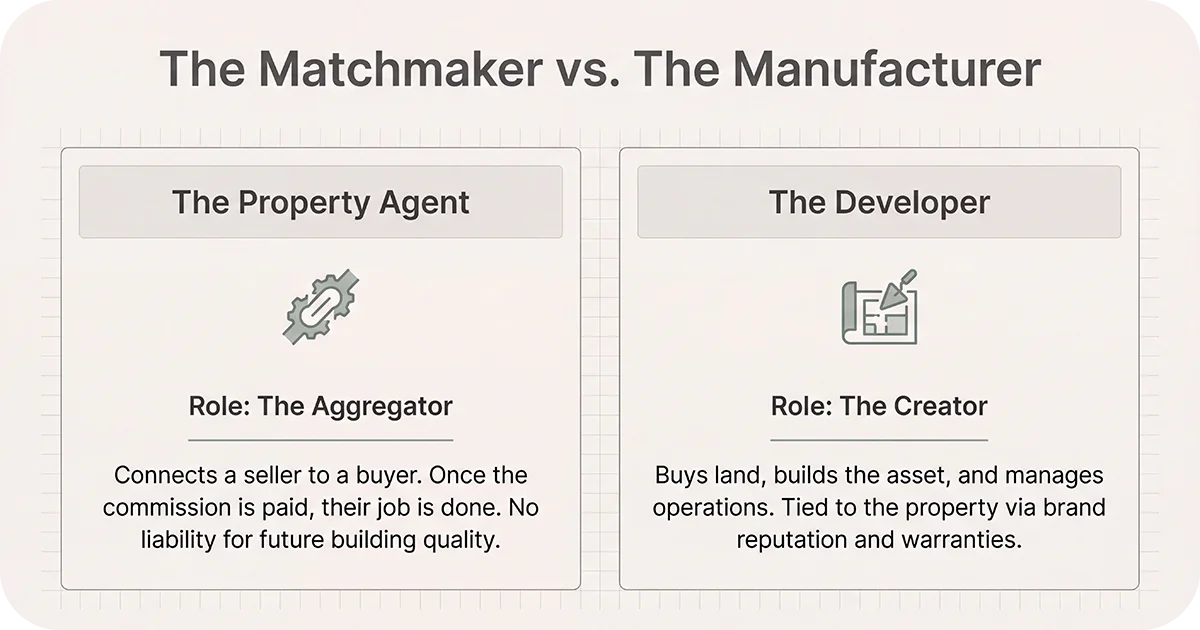
To understand who to buy from, you must understand what they are selling.
The Property Agent (The Aggregator)
Agents in Bali primarily trade in the Secondary Market (Resale).
- Inventory: They list villas built by others 5, 10, or 20 years ago.
- Role: They are matchmakers. They connect a seller (who wants to exit) with a buyer (you).
- The Reality: Once the deal is signed and the commission paid, their job is done. They are not responsible if the pool leaks next week or if the roof collapses next year.
The Developer (The Creator)
Developers trade in the Primary Market (New Build/Off-Plan).
- Inventory: They sell units they are currently building or have just finished.
- Role: They are manufacturers. They buy the land, design the concept, build the asset, and often manage it afterwards.
- The Reality: They are tied to the property. If the building fails, their brand reputation fails. They have “skin in the game” because they usually retain the management contract.
The Math: Commissions vs. Off-Plan Discounts
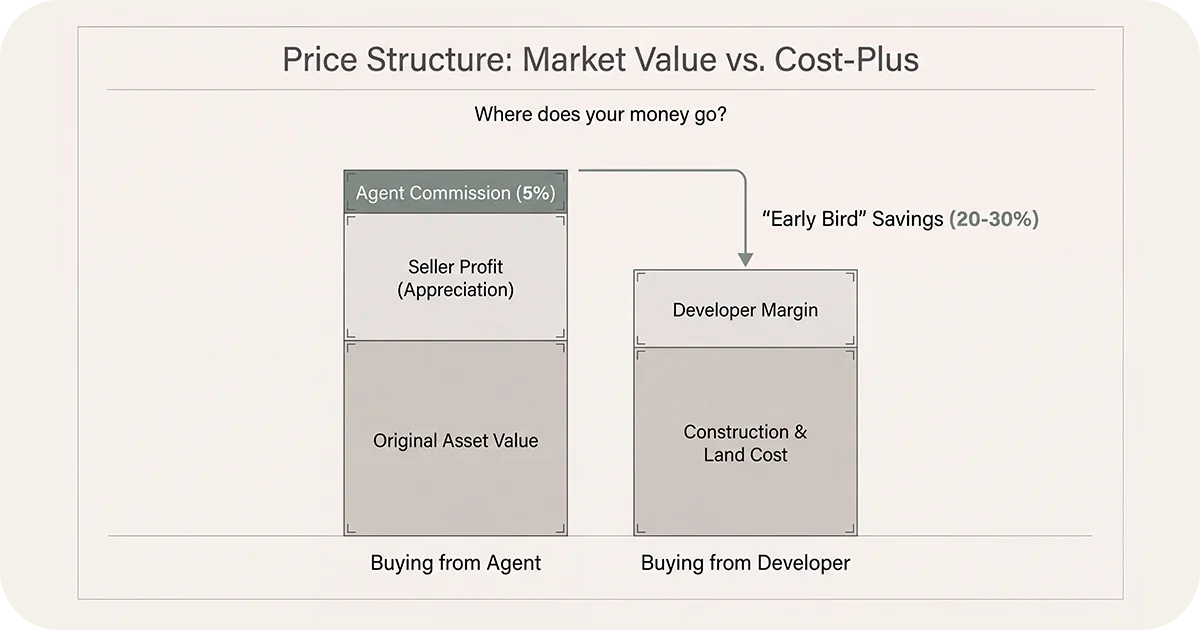
The financial entry point differs significantly between the two models.
Agent Pricing: Market Value + Friction
When you buy from an agent, you are buying at “Market Value.” The seller wants to make a profit on their original investment, and the price includes the agent’s commission (typically 5%, paid by the seller but factored into the asking price).
- Negotiation: You are negotiating against a seller who is emotionally attached to their price.
- Hidden Costs: You are paying for the asset’s past appreciation.
Developer Pricing: The “Early Bird” Advantage
Developers operate on a Capital Appreciation model. They sell “Off-Plan” (before construction is finished) to fund the build.
- The Discount: Buying early typically secures a price 20-30% lower than the completed market value.
- Payment Plans: Instead of paying 100% upfront (standard for resale), developers offer installment plans linked to construction milestones (e.g., 20% deposit, 30% structure, 30% roof, 20% handover).
💰 See the price data: Compare current market rates in our guide: Bali Real Estate
The “Time-Decay” Trap: Remaining vs. Fresh Leases
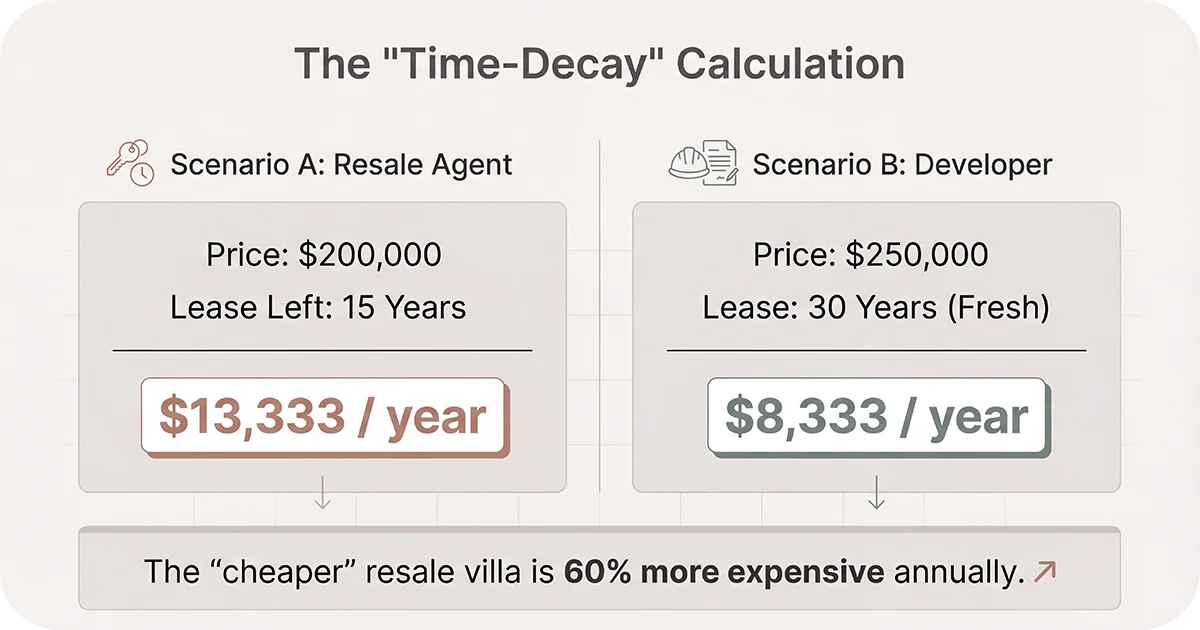
This is the single most overlooked factor in Bali real estate.
When you buy a resale villa from an agent, you are usually buying a Lease Transfer (Over Kontrak). You are not buying a new 25-year lease; you are buying the remaining years on someone else’s lease.
When you buy from a developer, you typically secure a New Title (Fresh Lease or Hak Pakai) starting from Day 1. See our guide on Freehold vs Leasehold Bali.
The Calculation Example:
- Scenario A (Resale Agent): You buy a “cheap” villa for $200,000. It was built 10 years ago on a 25-year lease. It has 15 years remaining.
- Cost per year: $13,333
- Scenario B (Developer): You buy a new off-plan villa for $250,000. It comes with a fresh 30-year lease.
- Cost per year: $8,333
The Result: The “cheaper” resale villa is actually 60% more expensive on an annual basis. Always ask: How many years are left on the clock?
Annual Cost Analysis: Resale Lease vs. New Developer Lease
The table below breaks down the ‘Time-Decay’ calculation to show why a lower total price often results in a higher annual cost:
| Scenario | Total Price | Original Term | Years Remaining | Effective Cost Per Year |
|---|---|---|---|---|
|
A: Resale Agent |
$200,000 |
25 Years |
15 Years |
$13,333 / year |
|
B: Developer |
$250,000 |
30 Years |
30 Years (Fresh) |
$8,333 / year |
The Risk: “Sold as Seen” vs. Construction Warranties
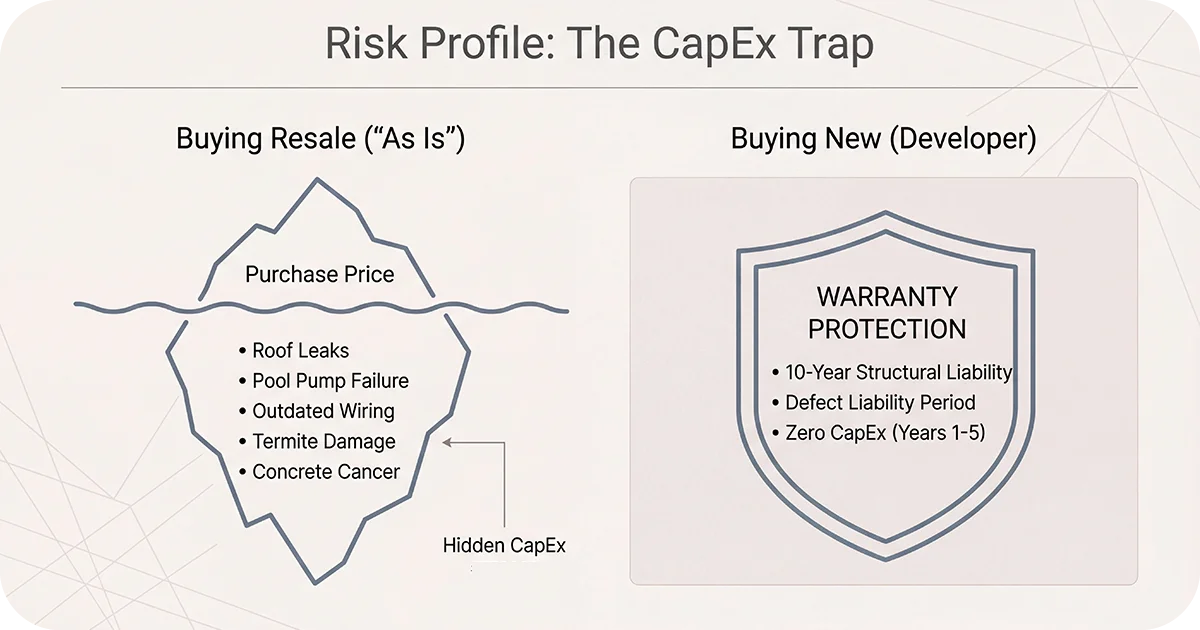
In the tropics, this is the single most critical factor.
Buying from an Agent: “As Is”
Resale villas in Bali are typically sold “As Is” (Sold as Seen).
- The Danger: You might view a villa that looks perfect because it was freshly painted.
- The Reality: Two months later, the rainy season reveals “concrete cancer,” rising damp, or termite-infested roof trusses.
- Recourse: You have none. The previous owner is gone, and the agent has no liability.
- Due Diligence: You must hire an independent surveyor before you buy.
The “Renovation Roulette”: Hidden Maintenance Costs
Investors in the secondary market often fail to account for Year 1 CapEx (Capital Expenditure).
A villa that is 5-10 years old in Bali’s harsh tropical climate often requires immediate updates that are not visible during a sunny afternoon viewing.
- Common Hidden Costs: Replacing pool pumps, fixing roof leaks, or rewiring outdated electrical systems.
- The Cost: It is common for resale buyers to spend 10-15% of the purchase price in the first year just to bring the property up to a rentable standard.
- Developer Advantage: New units come with Zero CapEx for the first few years, as everything is brand new and covered by warranty.
The “Market-Fit” Advantage: Modern vs. Dated Inventory
Tenant tastes in Bali evolve rapidly.
- Agent Inventory: Often consists of “dated” designs (e.g., open-air living rooms without AC, dark wood joglos) that were popular 10 years ago but now underperform on Airbnb.
- Developer Inventory: Built for the 2026 market. Developers maximize occupancy by integrating “must-have” features like enclosed living rooms (for AC comfort), smart home tech, and dedicated coworking spaces.
- The Value: Buying a modern, purpose-built asset ensures you are aligned with current demand, whereas buying a vintage villa often requires a costly facelift to compete with new stock.
Buying from a Developer: Defect Liability
A reputable developer provides a Warranty.
- Defect Liability Period: A standard contract includes a “retention sum” (usually 5%) that is held back for 3-12 months after handover. If cracks appear, the developer fixes them at their cost.
- Structural Warranty: Under Law No. 2 of 2017 on Construction Services, developers are legally liable for ‘Building Failure’ for up to 10 years from the final handover date.
- Standardization: The materials are new and (should be) documented. You know exactly where the pipes are.
🏗️ Worried about quality? Learn what to check in our guide: Bali Villa Construction.
The Legal Safety Net: B2C vs. C2C Transactions
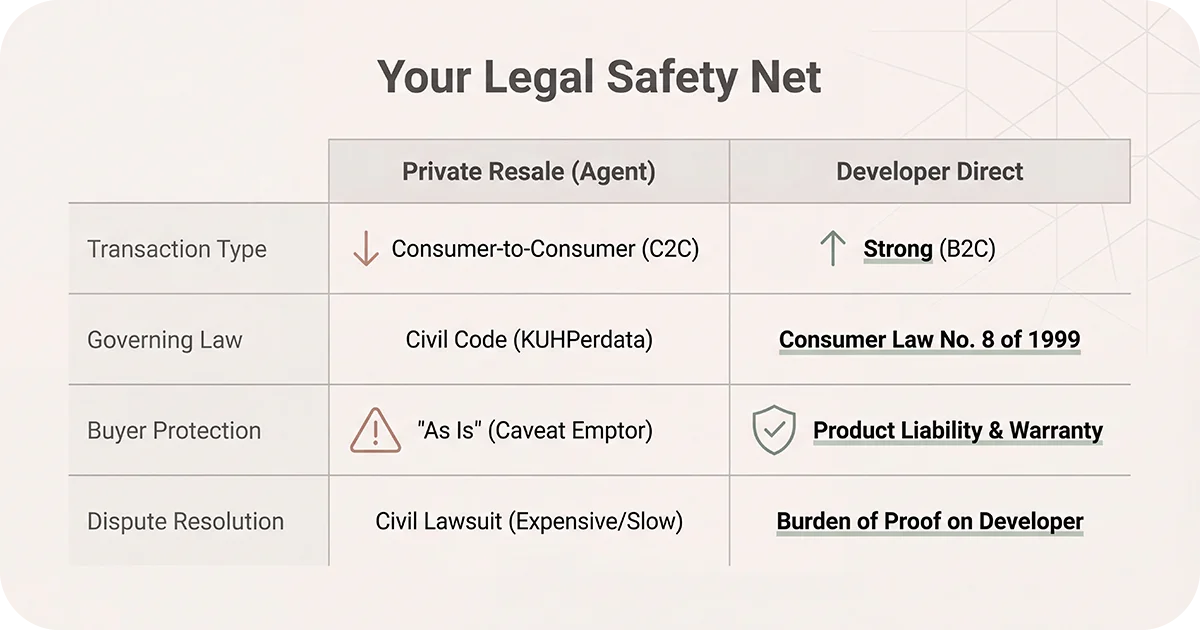
Beyond warranties, there is a massive legal distinction between buying from a developer versus a private seller.
⚖️ Confused by the regulations? Before signing any contract, ensure you understand the rules with our complete Bali Investor Guide.
Developer = Business Actor (B2C)
When you buy from a developer, you are entering a Business-to-Consumer (B2C) transaction.
- The Law: Developers are classified as “Business Actors” (Pelaku Usaha) under Law No. 8 of 1999 on Consumer Protection (UUPK).
- The Protection: This law mandates that developers must deliver the product exactly as promised in brochures and contracts. If they fail to deliver or the building specs do not match the advertisement, they are liable for compensation under Article 19.
- Burden of Proof: In many cases, the burden of proof shifts to the developer to prove they were not negligent.
Agent/Private Seller = Civil Matter (C2C)
When you buy a resale villa through an agent, you are typically buying from another individual (Consumer-to-Consumer).
- The Law: This is governed by the Civil Code (KUHPerdata), not Consumer Protection Law.
- The Risk: If the seller lies about the condition of the villa, it is considered a “Civil Dispute” (Perdata).
- The Reality: Suing a private individual in Indonesia is expensive, slow, and often fruitless if the seller has already left the country. The principle of “Caveat Emptor” (Buyer Beware) is much stronger here.
Legal Protections: Developer (B2C) vs. Private Seller (C2C)
Here is a summary of the legal frameworks governing property transactions in Bali depending on the seller type:
| Feature | Private Resale (via Agent) | Developer (Direct) |
|---|---|---|
|
Transaction Type |
Consumer-to-Consumer (C2C) |
Business-to-Consumer (B2C) |
|
Seller Status |
Private Individual |
Business Actor (Pelaku Usaha) |
|
Governing Law |
Civil Code (KUHPerdata) |
Consumer Law No. 8 of 1999 (UUPK) |
|
Liability Standard |
“As Is” / Caveat Emptor |
Product Liability (Article 19) |
|
Dispute Reality |
Civil Dispute (Slow/Expensive) |
Burden of Proof on Developer |
The ‘Amenity Premium’: Standalone Villas vs. Lifestyle Resorts
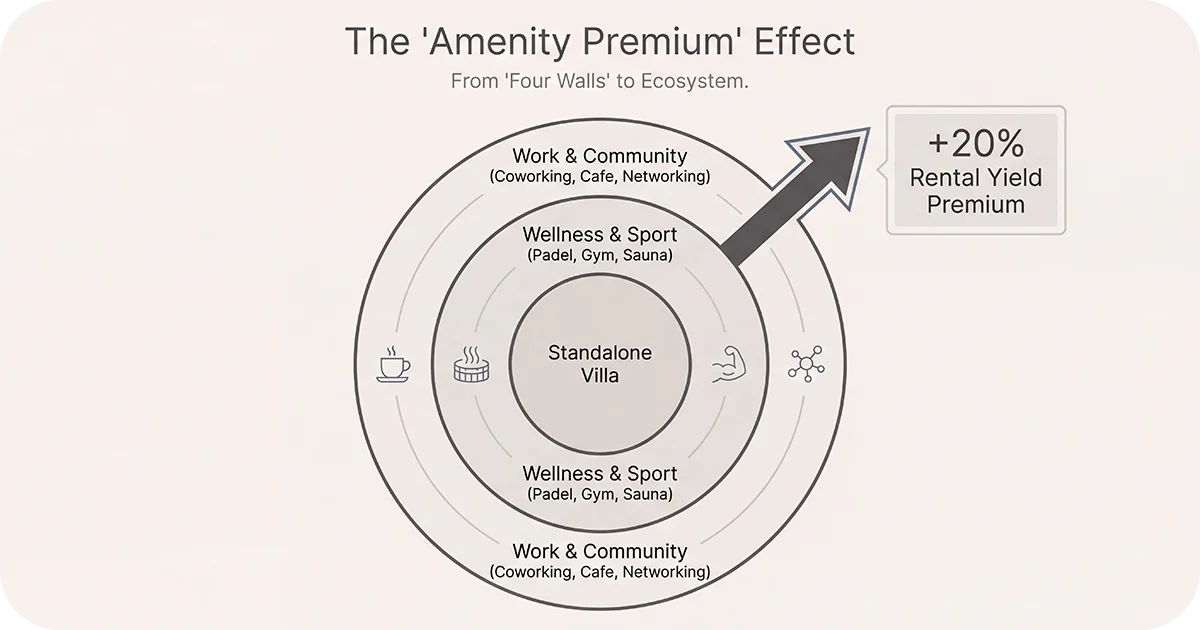
The market in 2026 is no longer just about “four walls and a pool.” It is about Ecosystems.
The “Race to the Bottom”
Standalone private villas are facing a yield compression. With thousands of generic villas on the market, owners are forced to compete on nightly rates, leading to a “race to the bottom” in pricing.
A standalone villa is an isolated asset – it has no gym, no coworking space, and no community. It relies entirely on its own marketing.
The Rise of the Lifestyle Resort
At Coco Development Group, we believe the 2026 market belongs to the Institutional-Grade Resort.
By integrating coworking hubs, wellness facilities (Sauna/Ice Bath, etc.), and sport centers (like Padel courts) into a single gated community, these developments offer what a private villa cannot: Community.
The Data:
Our internal market analysis of Airbnb listings in Bali indicates a clear “Amenity Premium.” Properties with integrated access to Padel Courts, Coworking Spaces, and Wellness facilities command up to 20% higher daily rates than comparable standalone villas.
- Why? Digital nomads and modern travelers pay for convenience. They want to wake up, grab coffee, work, and play sport without sitting in traffic.
- The Developer Edge: Only a developer has the scale to build these ecosystems. An agent selling a single plot cannot offer this “amenity shield” against vacancy.
Asset Class Comparison: Standalone Villa vs. Lifestyle Resort
The following comparison highlights the shift in tenant demand from isolated villas to fully integrated resort ecosystems:
| Feature | Standalone Villa (via Agent) | Lifestyle Resort (via Developer) |
|---|---|---|
|
Primary Appeal |
Privacy (“Four walls and a pool”) |
Community Ecosystem |
|
Facilities |
Private Pool Only |
Padel, Gym, Coworking, Sauna, etc. |
|
Vibe |
Isolated Asset |
Gated Community |
|
Rental Yield |
“Race to the bottom” pricing |
~20% Premium (Amenity Shield) |
|
Target Tenant |
Traditional Tourist |
Digital Nomads / Modern Travelers |
The “One-Stop Shop”: Transactional vs. Relational Partners
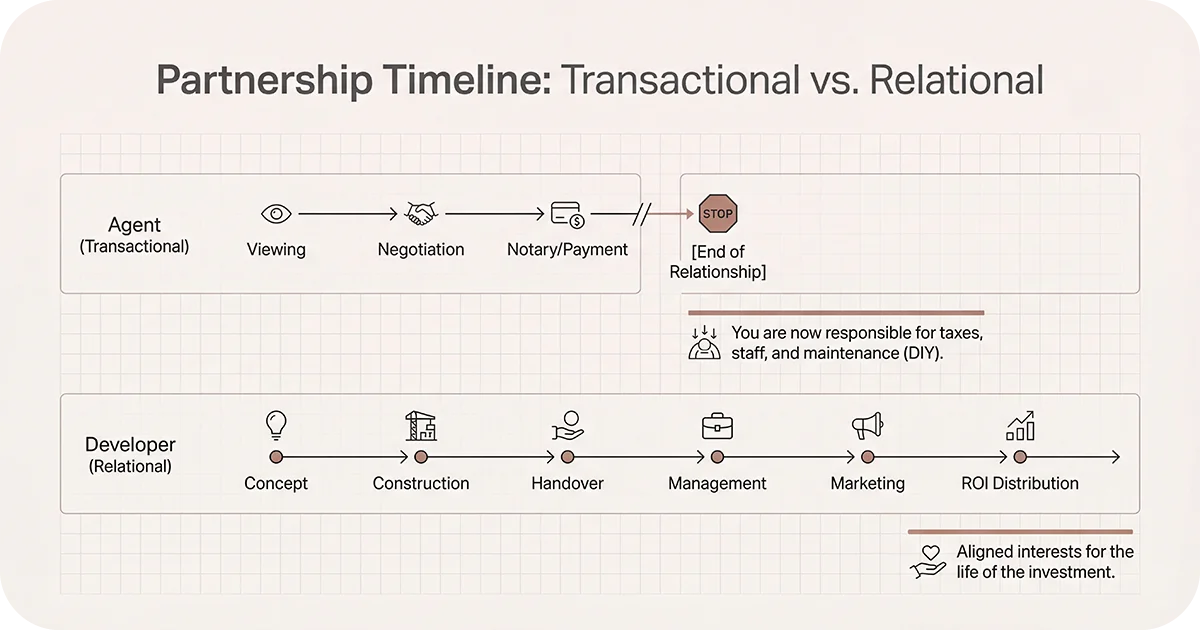
The final distinction is operational. Who picks up the phone when something breaks?
The Agent Reality (Transactional)
An agent’s relationship with you effectively ends at the notary. Once the commission is paid, their liability ends.
- The Burden: You are left to “assemble your own team” – finding a villa manager, hiring pool maintenance, and navigating tax reporting alone.
- The Risk: This “DIY” approach is where many foreign investors struggle, as managing staff and taxes remotely is complex.
The Developer Advantage (Relational)
A developer who retains management has a vested interest in the property’s ongoing success.
- The Alignment: They must maintain the building to protect their brand and rental yields. If your villa fails, their next project fails.
- The Solution: This provides a “Turn-Key” solution where the entire ecosystem (Legal, Build, Management, Marketing) is fully integrated under one roof.
The “Distressed Deal” & “Location” Hunter: When Agents Win
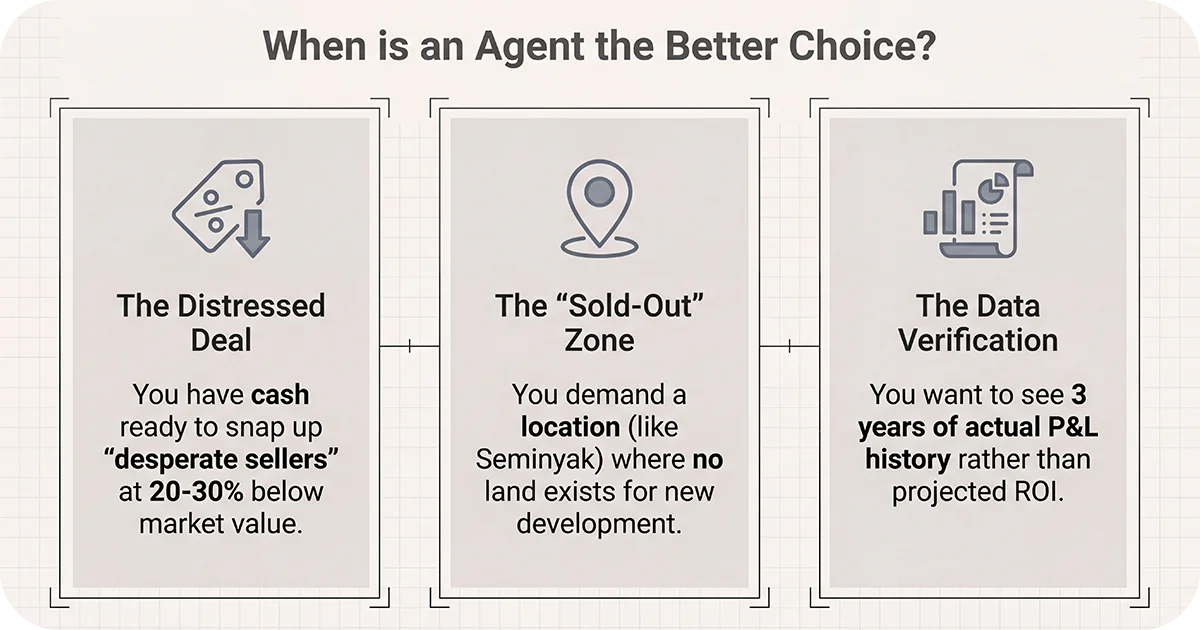
While developers offer safety and predictable pricing, there are specific scenarios where an Agent is your superior option.
1. The “Zombie Seller” Opportunity (Distressed Deals)
Developers have fixed price lists. Private sellers in the secondary market, however, are individuals with personal motivations – divorce, relocation, or liquidity needs.
- Leverage: A developer can wait; a desperate seller cannot.
- The Strategy: Experienced investors use agents to find properties that have been sitting on the market for 6+ months. In these cases, it is possible to negotiate prices 20-30% below market value.
- The Catch: These “Distressed Deals” are high-friction. They typically require 100% Cash Upfront, immediate renovation budgets, and aggressive due diligence to ensure you aren’t inheriting a legal mess.
2. Access to “Sold-Out” Prime Zones
Developers build where the land is. In fully saturated, established zones like Seminyak (Oberoi) or central Batu Bolong, there is virtually no empty land left for new development.
- The Reality: If you demand to be in the absolute center of Seminyak, a developer cannot help you because they cannot build there.
- The Agent Advantage: Agents are the only gatekeepers to these “Sold-Out” neighborhoods. If you want a specific address in an established area, you must buy a resale property through the secondary market.
3. The “Data” Buyer (Verified History)
Buying off-plan relies on projections. Buying resale allows for verification.
- The Advantage: A running holiday villa comes with 3-5 years of Airbnb history. An agent can show you the actual P&L statements, occupancy rates, and guest reviews.
- The Value: For conservative investors who distrust developer spreadsheets, buying a proven asset offers peace of mind – even if the building is older and the lease is shorter.
If you are an Active Investor willing to manage renovations or a Lifestyle Buyer demanding a specific saturated location, an agent is your best partner. If you are a Passive Investor seeking a “hands-off” asset, the developer route remains superior.
The Checklist: When to Use an Agent vs. Developer
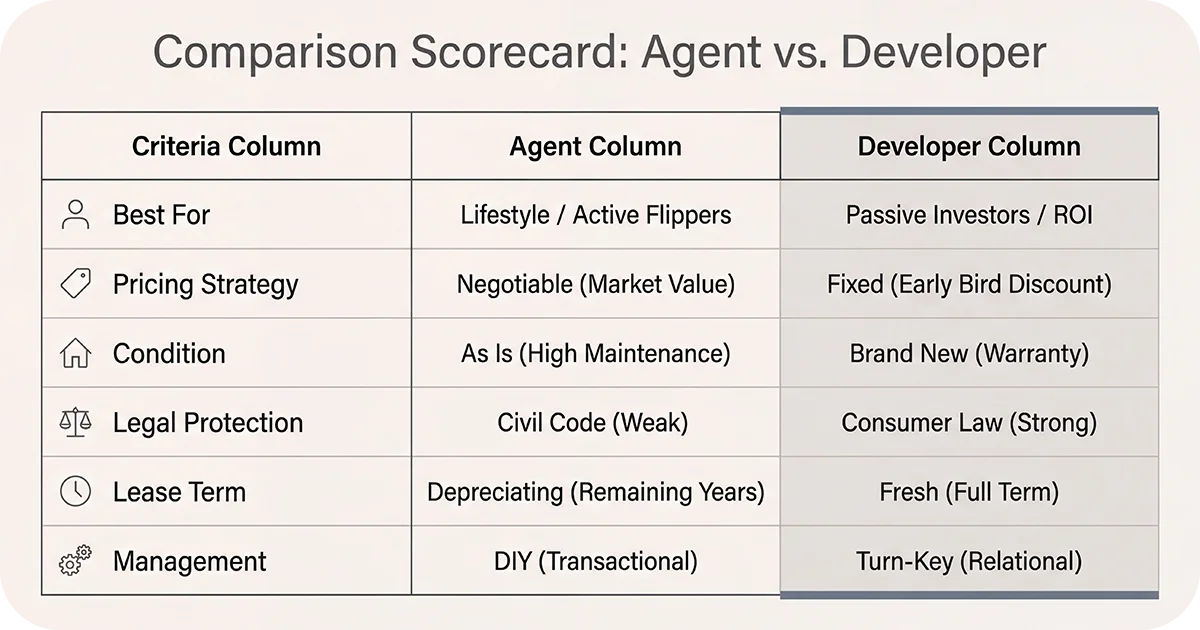
Use this table to decide which partner fits your profile:
| Feature | Property Agent (Resale) | Developer (Off-Plan/New) |
|---|---|---|
|
Best For |
Lifestyle / Active Flippers |
Passive Investment / ROI |
|
Move-in Date |
Immediate |
12-18 Months (Wait time) |
|
Price Strategy |
Negotiable (Distressed Deals) |
Fixed (Early Bird Discount) |
|
Condition |
Used (High Maintenance) |
Brand New (Zero CapEx) |
|
Design |
Dated (Needs Renovation) |
Market-Fit (Modern) |
|
Warranty |
❌ None |
✅ Yes (Statutory up to 10 Years) |
|
Legal Protection |
Civil Code (Weak) |
Consumer Protection Law (Strong) |
|
Lease Term |
Depreciating (Remaining Years) |
Fresh (Full Term) |
|
Location Access |
Saturated Zones (Seminyak) |
Growth Zones (Uluwatu/Seseh) |
|
Data Source |
Verified History (Past P&L) |
Projected ROI (Forecast) |
|
Management |
DIY (Transactional) |
Turn-Key (Relational) |
Choose an Agent If:
- You are hunting for Distressed Assets to flip.
- You absolutely must be in a “Sold-Out” location like Seminyak.
- You trust historical data more than future projections.
Choose a Developer If:
- You are an Investor seeking passive income (12-17% yields).
- You want a modern, low-maintenance asset with zero CapEx.
- You want the safety of a warranty, a fresh lease term, and Consumer Protection laws.
Limitations, Alternatives & Professional Guidance
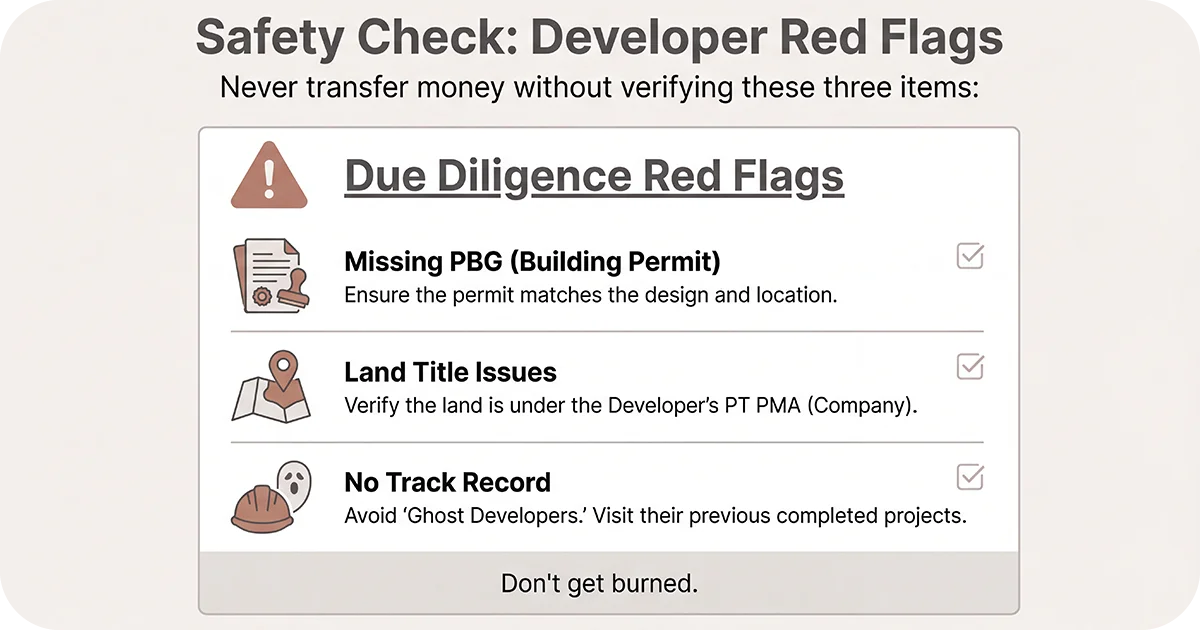
Buying direct is not without its own risks.
Project Delays: The biggest risk with developers is delivery time. “12 months” can turn into 18 months due to rainy seasons or logistics.
The “Ghost” Developer: Some developers sell off-plan without owning the land or having permits.
- The Fix: Never buy from a developer who cannot show you the PBG (Building Permit) and the Land Certificate under their PT PMA.
Alternatives:
- Buy Land & Build: You can buy raw land from an agent and hire a contractor. This saves developer margin but exposes you to massive project management stress.
- Commercial Turnkey: Buying a running business (hotel/guesthouse). High risk, high effort.
Lets Meet
Conclusion
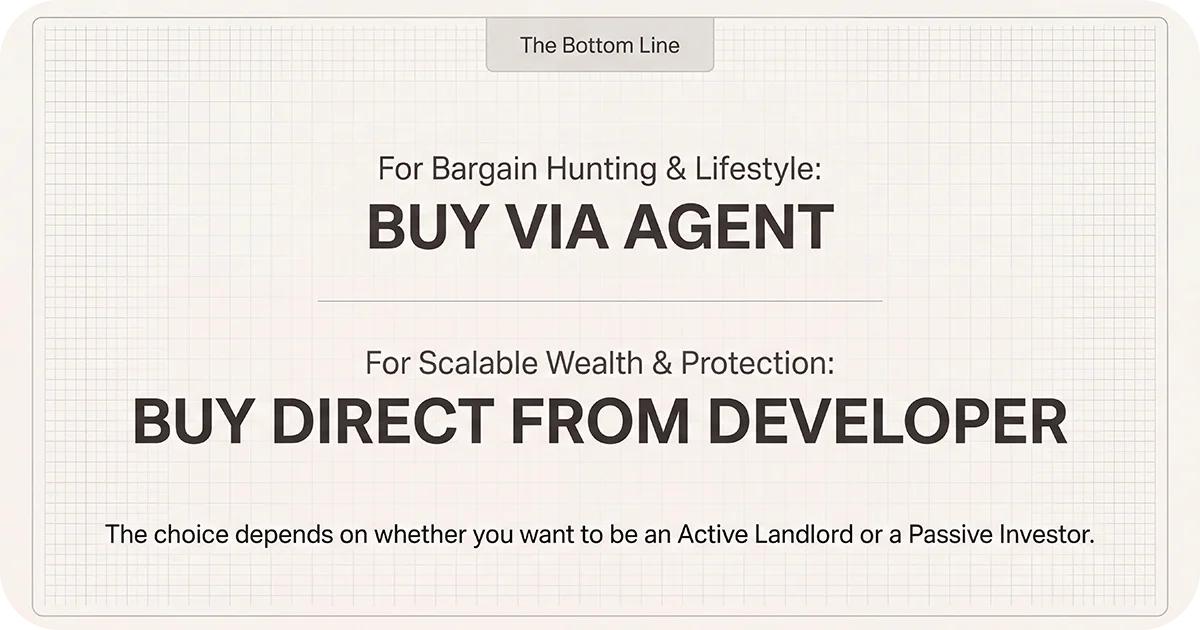
The choice between an agent and a developer is a choice between Active and Passive investing.
If you are a “hands-on” buyer looking for a bargain flip, a home in a saturated zone like Seminyak, or a villa with verified income history, the Agent is your essential partner. They unlock the secondary market where negotiation is king.
But if you are building a scalable wealth portfolio, the Developer is your natural partner. By removing the middleman, you secure better pricing, legal warranties, fresh lease terms, and the formidable protection of Indonesian Consumer Law—safeguards that simply do not exist in the resale market.
Ready to bypass the middleman?
Explore our developer-direct investment units, built with full warranties and managed for high yields.
Frequently Asked Questions (FAQ)
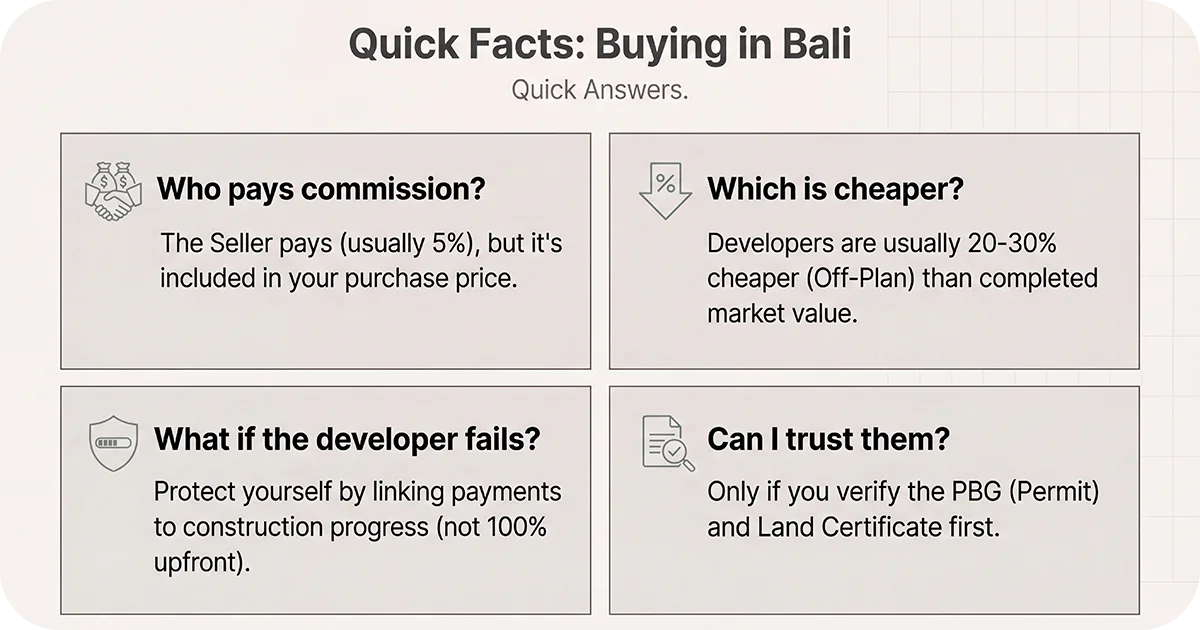
Generally, buying Off-Plan from a developer is cheaper because you are buying at construction cost plus a margin, often 20-30% below the final market value of a completed villa. However, an agent can sometimes secure "Distressed Deals" from desperate sellers at below-market rates, though these often require immediate cash and renovation.
Typically, no. The seller pays the commission (usually 5%). However, this cost is almost always baked into the asking price. If you buy direct from a developer, there is no "middleman commission" to cover, which can reflect in better pricing or higher furniture specs.
Trust must be verified. While many developers are professional, "cowboy" developers exist. You must check their Track Record (have they built before?), Land Title (is it HGB/Hak Pakai?), and Permits (PBG). Reputable developers like COCO Development Group operate under transparent PT PMA structures and are bound by Consumer Protection Law No. 8 of 1999.
This is a valid risk for off-plan purchases. To mitigate this, ensure your payments are made to a Notary Escrow or are strictly linked to Construction Progress (e.g., you don't pay for the roof until the roof is on). Never pay 100% upfront.
References & Official Sources
- Republic of Indonesia. Law No. 8 of 1999 on Consumer Protection (Undang-Undang Perlindungan Konsumen).
(Establishes the “Business Actor” vs. “Consumer” liability framework crucial for developer transactions). (https://jdih.kemendag.go.id/peraturan/undang-undang-nomor-8-tahun-1999-tentang-perlindungan-konsumen) - Asosiasi Real Estate Broker Indonesia (AREBI) (2025). Professional Standards and Ethics Code for Real Estate Brokers.
https://arebibali.com/wp-content/uploads/2025/01/CODE-OF-ETHICS-AREBI-english-translation.docx.pdf - The Bali Lawyer (2025). Developer Legal Check in Bali: Corporate & Permit Verification.
(https://thebalilawyer.com/developer-legal-check-in-bali/) - Mondaq / Leks & Co (2019). “Representations and Warranties in an Indonesian Real Estate Sale Transaction”. (Confirms that Indonesian law is silent on warranties for private sales, establishing the Caveat Emptor principle). https://www.mondaq.com/real-estate/849996/representations-and-warranties-in-an-indonesian-real-estate-sale-transaction
- Civil Code of Indonesia (KUHPerdata). “Article 1338 & General Provisions”. (Establishes the Civil Code as the governing framework for private C2C transactions rather than Consumer Protection laws). https://www.lawjournals.org/assets/archives/2025/vol11issue7/11158.pdf
- Legal Indonesia (2024). “Villa Leakage & Contractor Liability in Bali”. (Case study confirming Law No. 2 of 2017 enforces a 10-year liability period for building failures). https://legalindonesia.id/villa-leakage-contractor-liability-bali/
- Growing Scholar Journal (2023). “Legal Implications of Building Failure Liability”. (Academic analysis of Law No. 2/2017 confirming the statutory 10-year defect liability for contractors). https://www.growingscholar.org/journal/index.php/TIJOSSW/article/download/164/141
- Assegaf Hamzah & Partners (2016). “Government Regulation 103/2015 Analysis”. (Legal analysis confirming the 80-year total validity structure (30+20+30) for Hak Pakai titles). https://www.ahp.id/client-update-20-january-2016/
- Bali Business Club (2026). “Bali Real Estate Market 2026: What the Data Really Shows”. (Data analysis confirming the market bifurcation into Secondary (Resale) and Primary (Developer) sectors). https://balibusinessclub.com/bali-real-estate-market-in-2026-what-the-data-really-shows/

Rasmus Holst is a serial entrepreneur and Co-Founder of COCO Development Group, where he helps drive innovation and growth through strategic business development. He is also the Co-Founder of Estate of Bali and Regnskabshelten.dk, Denmark’s fastest-growing accounting firm, which grew to 35 employees and generated $2.5M in turnover in 2023. Rasmus is passionate about building businesses that create long-term value and impact.