Skip to content




🎯 Quick Answer
Selecting the right property developer in Bali, is the most critical step when you buy property in Bali. You must look beyond the 3D renders. In 2026, we believe the safest investments are with developers who offer radical transparency (weekly video updates), verified operating assets (live guest reviews), and integrated lifestyle ecosystems (gyms/coworking).
- Key Benchmark: Do not sign until you see the founder’s face, watch a recent construction update, and verify the occupancy rates of their finished projects.
- Construction Transparency: To avoid stalled off-plan investments, investors must demand recent, consistent video proof of active construction sites rather than relying on easily staged 3D renders.
- The Community Ecosystem: High occupancy rates (80%+) and premium ROI are now driven by integrated lifestyle destinations (featuring gyms, coworking, and wellness), rendering standalone private villas less competitive.
- Turnkey Management: True passive income requires a property developer in Bali that offers comprehensive in-house management to handle 24/7 operations, maintenance, and guest relations.
- Accountability & Operating Proof: Mitigate risk by ensuring the founder is publicly visible and by actively auditing the developer’s track record through live guest reviews on finished, operating assets.
- Financial & Legal Feasibility: Look for vertically integrated developers that offer accessible entry prices (e.g., under €100k) without sacrificing double-digit yields, and always finalize the Sales & Purchase Agreement (SPA) using an independent notary (PPAT).
Written by: Rasmus Holst (Founder & CEO of Coco Development Group) | Last updated: 14 March, 2026
Transparency Note: COCO Development Group is a property developer based in Bali. We created this guide to help set a clear standard for due diligence in the industry. Naturally, we’re biased – this is the framework we use at Coco, and we genuinely believe it represents best practice. While we use our own projects and data as examples, the principles outlined here can, and should, be applied when evaluating any developer. That said, we always encourage you to do your own research and approach every investment with healthy skepticism.
Table of Contents
- Introduction
- Criterion 1: Construction Transparency (The “Ghost” Test)
- Criterion 2: The “Community Ecosystem” (ROI Driver)
- Criterion 3: Full-Service Management (The “3 AM” Test)
- Criterion 4: Founder Visibility (The “Face” Test)
- Criterion 5: Operating Proof (The “Guest” Test)
- Criterion 6: The “Price-to-Yield” Ratio (Financial Feasibility)
- Limitations, Alternatives & Professional Guidance
- Conclusion
- Frequently Asked Questions (FAQ)
- References & Official Sources
Introduction
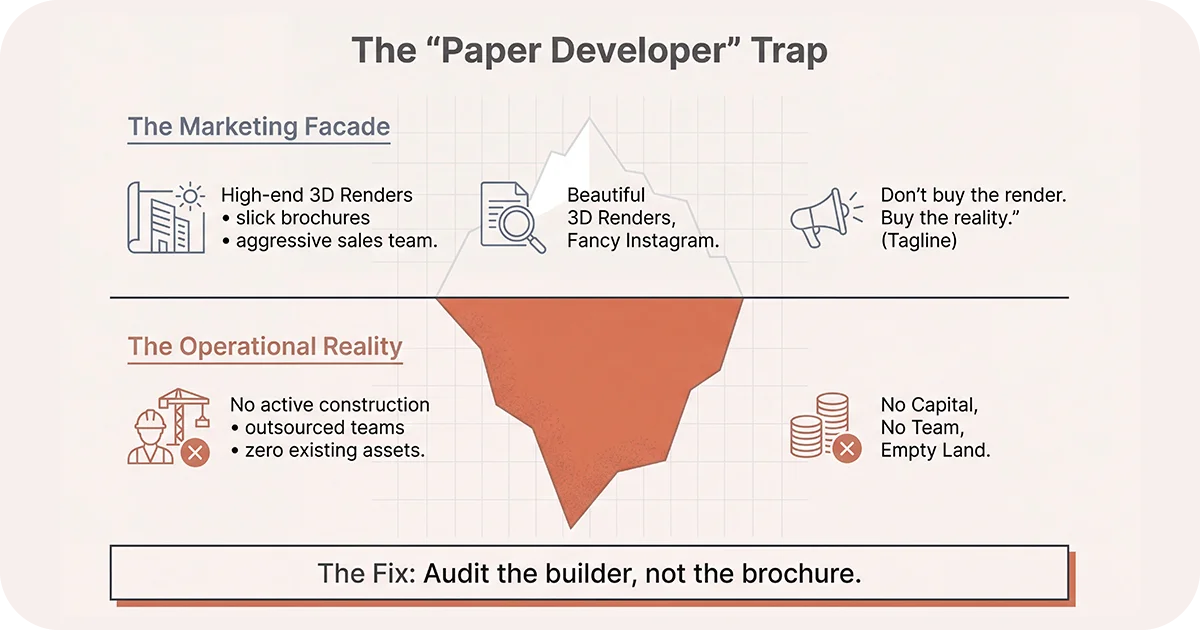
Finding a trustworthy partner in Indonesia is the single biggest hurdle for foreign investors. The market is flooded with “paper developers” – companies selling beautiful 3D renders without the capital, team, or active construction sites to deliver them.
How do you distinguish a legitimate builder from a marketing firm? You need to audit them.
In this guide, we outline the 6 Non-Negotiable Checks every investor must perform before buying off-plan property in Bali. We also share our own internal data and case studies to show you exactly what “green flags” look like in 2026.
Criterion 1: Construction Transparency (The “Ghost” Test)
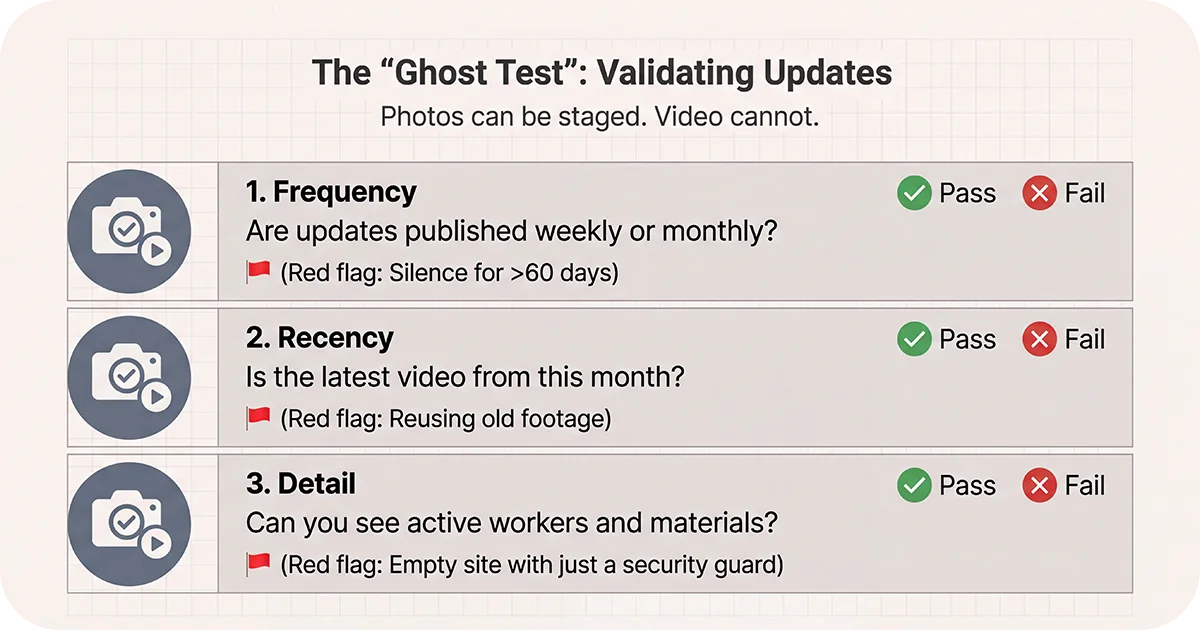
The biggest risk in off-plan investment is a stalled project. Many developers will show you a cleared land plot and then go silent for six months.
The Due Diligence Check:
Never rely on photos. Photos can be staged. Demand video proof.
- Frequency: Does the developer publish weekly or monthly updates?
- Recency: Is the latest update from this month, or is it six months old?
- Detail: Can you see the workers? Can you see the materials? Can you visit the construction site?
Case Study: The Standard for Updates
At Coco Development Group, we believe transparency is the only hedge against risk. We don’t just email updates; we broadcast them publicly. If a developer is hiding their site, ask yourself why.
Example: Watch our site update from December 2025 at the Amazona Jungle Resort in Kaba Kaba. Note the visible workforce and structural progress – this is the level of proof you should demand.
Criterion 2: The “Community Ecosystem” (ROI Driver)
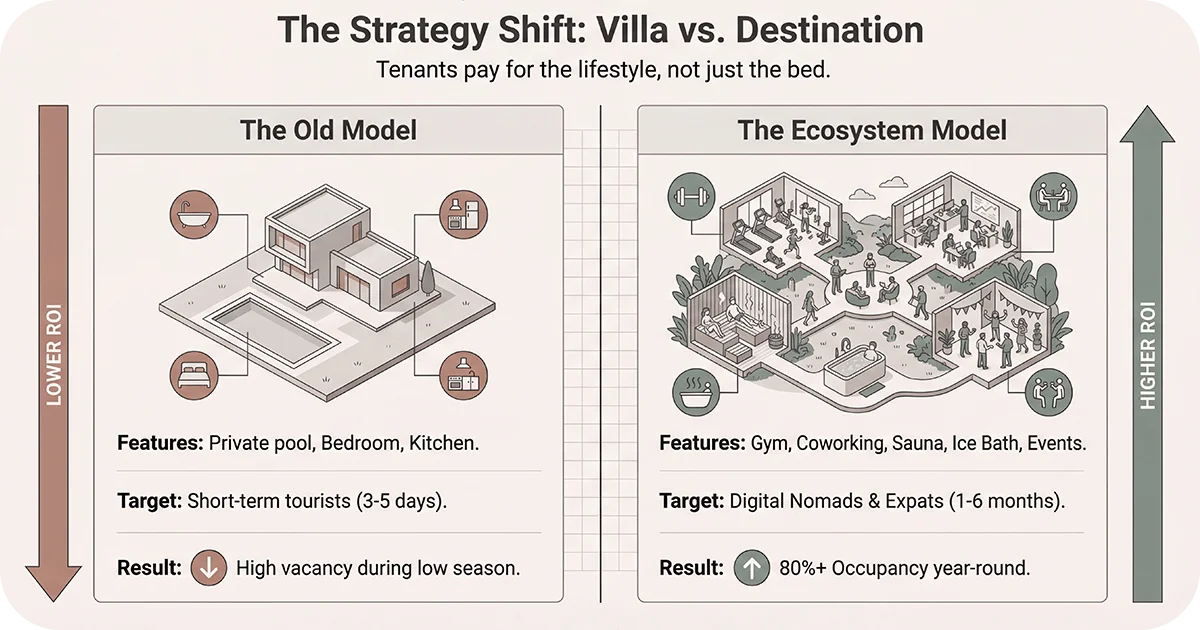
According to our market data, the “build a villa and wait” model is outdated. To achieve high occupancy (80%+) in 2026, a property must be more than a villa; it needs to be a destination.
The Due Diligence Check:
Look at the site plan. Is it just a row of houses, or is it an ecosystem?
- Old Model: Private pool only. (Attracts short-term tourists).
- New Model: Gyms, Coworking, Saunas, Ice Baths, Community Events. (Attracts long-term expats and digital nomads).
Why “Lifestyle” Drives ROI
Tenants in Bali – especially the high-paying expat and nomad demographic – are buying a lifestyle, not just a bed. Our internal data confirms this shift:
- Le Mansion (Finished Project): Maintains 88% average occupancy.
- Coco Residential (Finished Project): Maintains 84% average occupancy.
These figures are significantly above the market average for standalone villas. Why? Because of the community layer.
Example: See how we design for “connection” at the Amazona Jungle Resort (45 exclusive units). It’s not just about the room; it’s about the wellness facilities that keep tenants staying for months, not days. (Click the image to play the video)
Example: Occupancy is driven by community retention. Look at the energy at our recent Coco community meetup. This “vibe” is what converts a one-time guest into a repeat tenant. (Click the image to play the video)
Criterion 3: Full-Service Management (The “3 AM” Test)
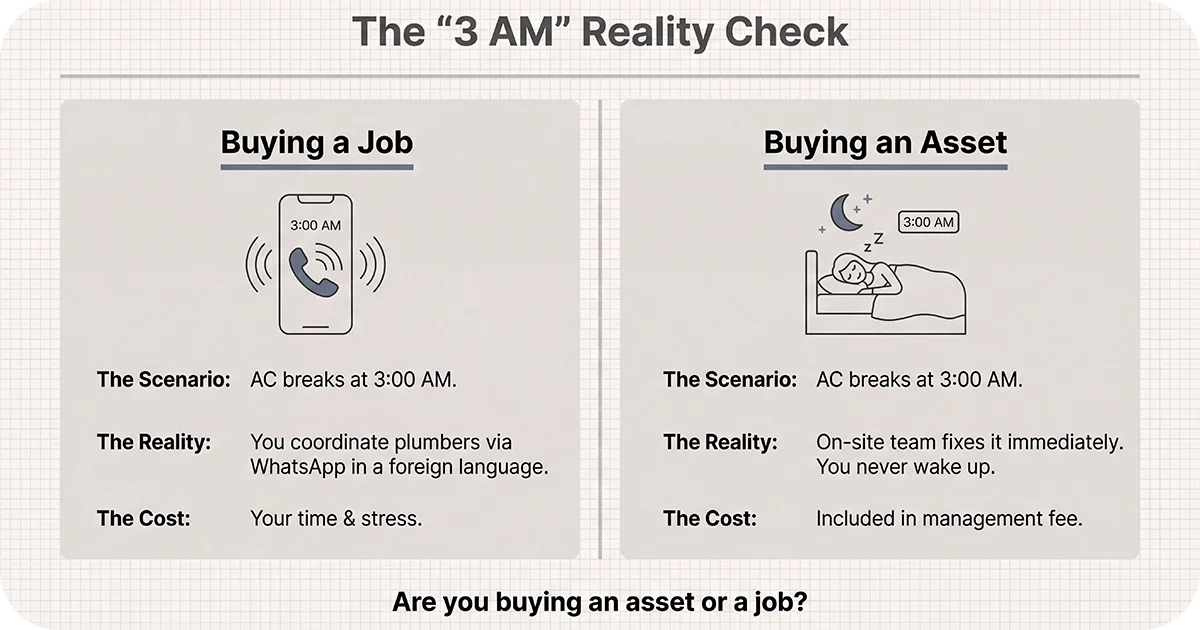
Many investors underestimate the work required after the build. A property is a business. It requires marketing, guest communication, and maintenance.
The Due Diligence Check:
Ask the developer: “Who fixes the air conditioning if it breaks at 3 AM?”
- The Wrong Answer: “We hand you the keys, and you can hire a management company.” (This means you are buying a job).
- The Right Answer: “We have an in-house team that handles everything.” (This means you are buying an asset).
Case Study: True Passive Income
At Coco Development Group, we operate as a Turnkey Partner. Our in-house management team handles the entire lifecycle of your investment so you never have to worry about the details.
- Guest Relations: Check-in, check-out, and concierge services.
- Maintenance: Immediate repairs (AC, plumbing, pool) handled by our on-site staff.
- Optimization: Dynamic pricing strategies to maximize occupancy and yield.
We build it, we fill it, and we manage it. You simply receive the quarterly report.
Criterion 4: Founder Visibility (The “Face” Test)
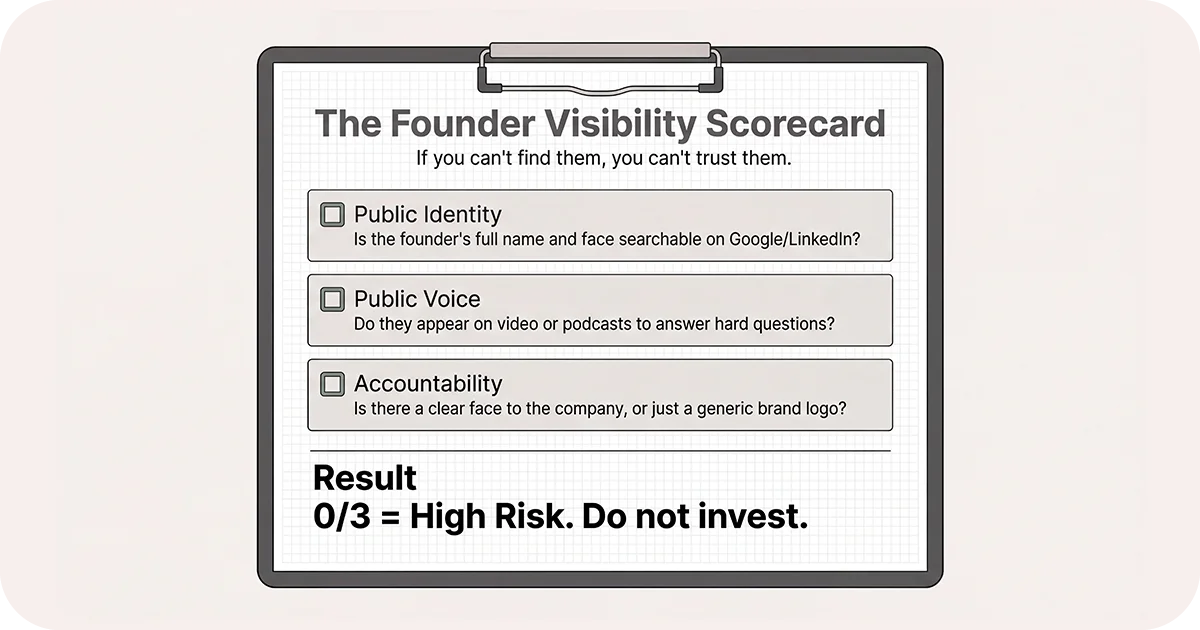
Anonymity is a red flag. If things go wrong, you cannot sue a ghost.
The Due Diligence Check:
- Public Identity: Can you find the founder’s full name and face on Google?
- Voice: Do they speak publicly about their projects, or do they hide behind an “Admin” WhatsApp account?
- Values: Do they treat investment as a transaction, or a partnership?
Case Study: Accountability in Action
A legitimate developer has nothing to hide. Our founder, Rasmus Holst, regularly appears on camera to answer tough questions, interview investors, and share the reality of building in Bali.
Example: Watch this candid interview with Rasmus Holst on the vision behind Coco Development Group. If you can’t find this level of accountability for a developer, walk away.
The Investor Perspective
It is one thing for a founder to speak; it is another for investors to verify it. We encourage open dialogue with our investor community.
Example: In this podcast, we sit down with one of our investors to discuss why investing in Bali is about more than just business – it’s about investing in a better way of life and community.
Example: Hear from Jelly, an entrepreneur who moved from Saudi Arabia to Bali. In this episode, he explains why the “lifestyle ecosystem” was the deciding factor for his investment.
Criterion 5: Operating Proof (The “Guest” Test)
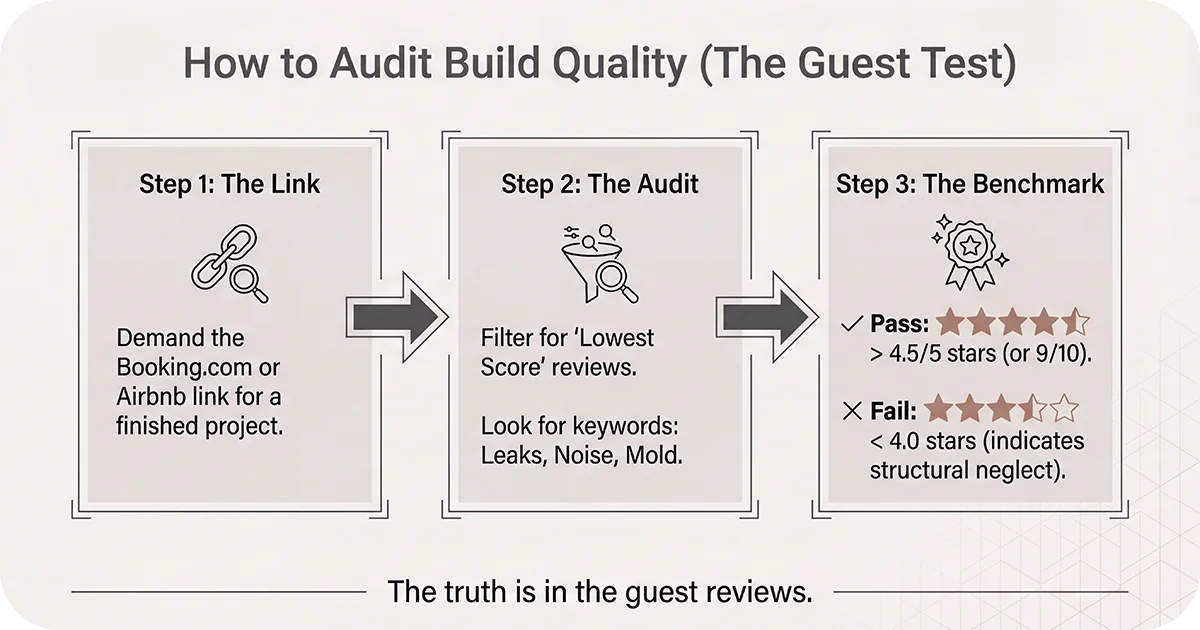
Finally, never buy from a developer who has never delivered. “Concept” is easy; “Operations” is hard.
The Due Diligence Check:
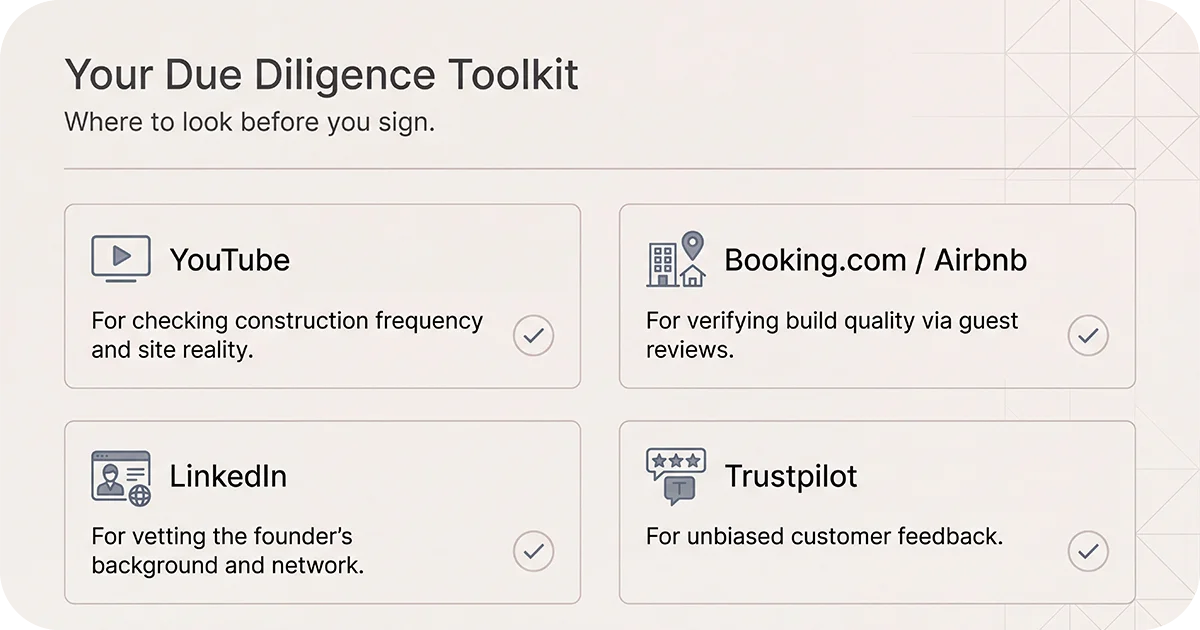
- The Link Test: Ask for the Airbnb/Booking.com link to a finished project.
- The Review Audit: Read the guest reviews. Do they complain about “leaks,” “noise,” or “mold”?
- The Score: A score below 4.5/5 (or 9/10) suggests the developer cuts corners on build quality.
Our Track Record:
We don’t just claim quality; we link to it. You can verify our standards directly on the platforms below:
- Le Mansion: Rated 9.3/10 on Booking.com. View Listing Here
- Coco Residential: Rated 5.0 Stars on Airbnb. View Listing Here
- Trustpilot: Rated 4.0/5 by verified customers. Read Reviews
- Community Strength: Over 59,000 followers across our social platforms monitoring our progress.
Criterion 6: The “Price-to-Yield” Ratio (Financial Feasibility)
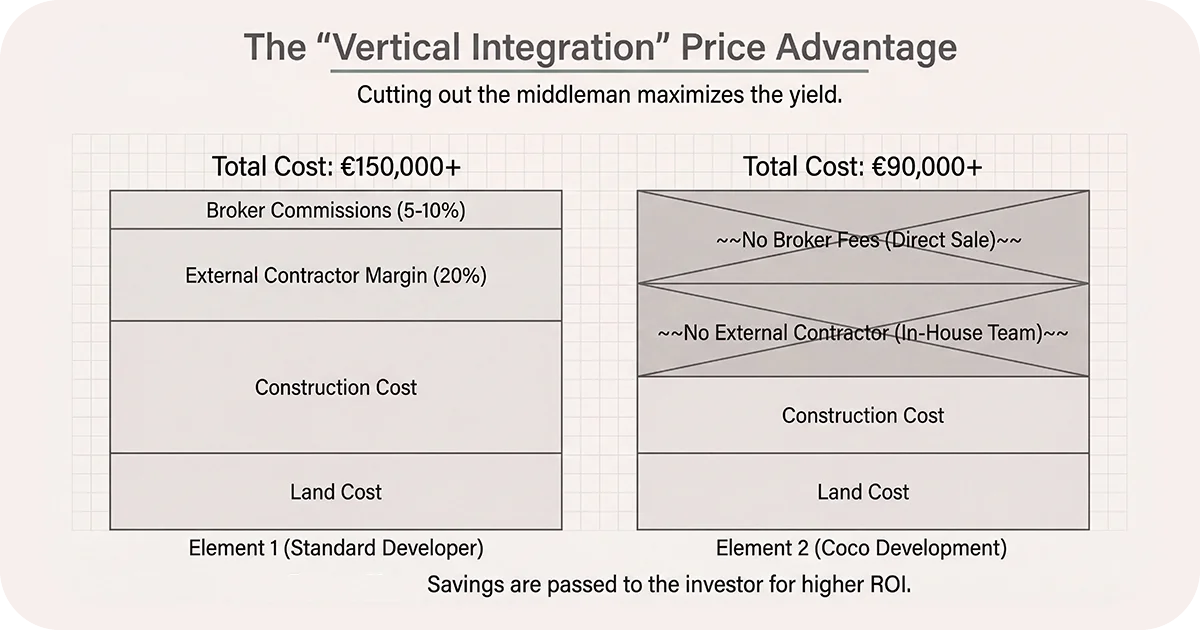
Many investors assume they need $300,000+ to enter the premium Bali market. This is a myth perpetuated by developers with inefficient cost structures.
The Due Diligence Check:
Does the developer have an accessible entry point without sacrificing ROI?
- Entry Point: Can you enter the market for under €100k?
- ROI Potential: Is the projected yield double-digit (12%+)?
Case Study: Azoria Living
At our latest development, Azoria Living (Uluwatu), we offer an accessible entry price starting at €90,000, with projected ROIs between 12-17%.
How do we keep prices competitive while delivering high ROI?
We achieve this through a “Vertical Integration” strategy that eliminates wasted margin:
- We Are the Builder (Vertical Integration): Unlike developers who hire external general contractors (adding 15-20% to the cost), we have our own in-house construction team. We pass these savings directly to the investor in the form of a lower entry price.
- Direct-to-Consumer: By selling direct, we avoid the heavy brokerage commissions (often 5-10%) that inflate the price of traditional developments.
- High Occupancy = High ROI: The high ROI is not magic; it is math. Because our “Community Ecosystem” model (gyms/padel/wellness) drives occupancy to 80%+, the yield per unit is significantly higher than a standalone villa that sits empty during the low season.
Limitations, Alternatives & Professional Guidance
Limitations of This Guide
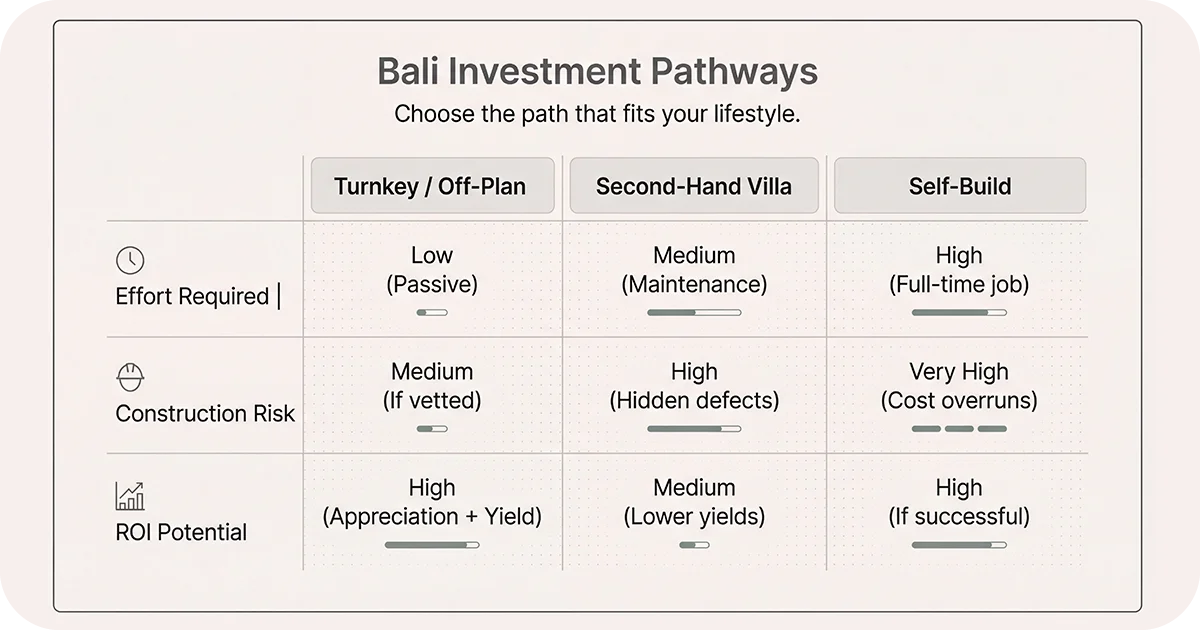
This guide focuses on the Turnkey Investment Model – where the developer handles the build, management, and community creation.
Alternatives
- Buying Second-Hand: You can buy an existing leasehold villa. Risk: You inherit the previous owner’s build quality issues and have no warranty.
- Building Yourself: You can lease land and hire a contractor. Risk: You become the project manager. Expect to spend 20+ hours a week managing the site.
Professional Guidance
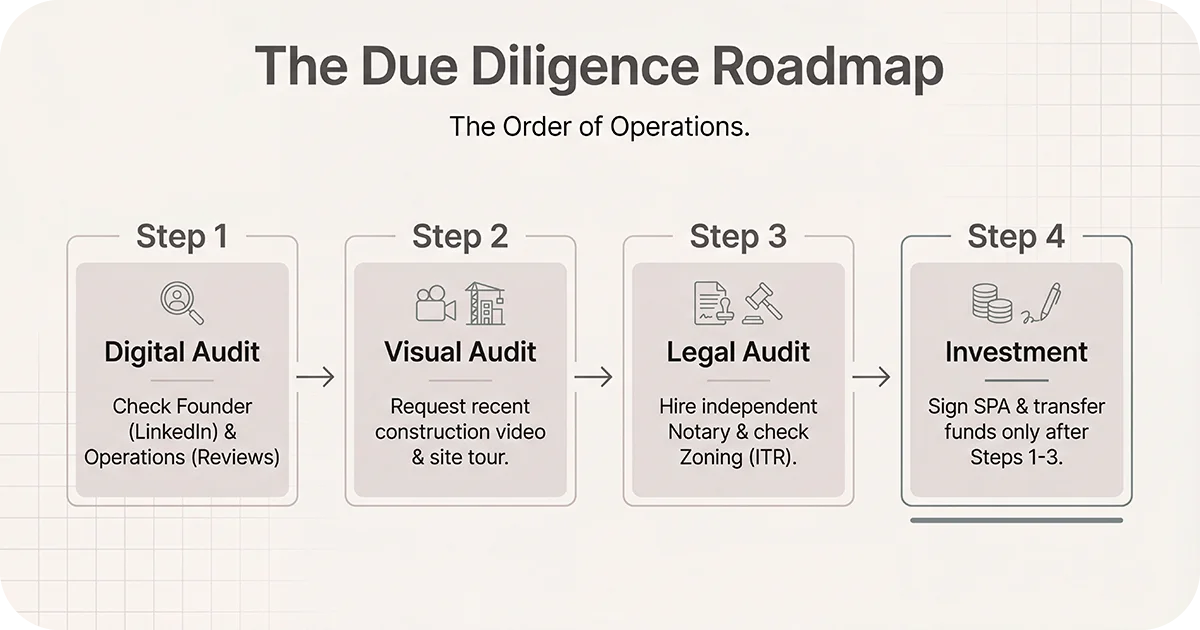
Even with a transparent developer, always engage an independent notary (PPAT) to review the Sales & Purchase Agreement (SPA). Verify the land zoning (ITR) and the developer’s PT PMA structure before transferring funds.
📈 Want to verify if the ‘Community Model’ fits your portfolio? Book a Free 30-Minute Strategy Call with our Founder & CEO, Rasmus Holst. We will walk you through the exact ROI projections for our latest developments and help you determine if a community-driven asset fits your investment goals.
Lets Meet
Conclusion
Choosing a property developer in Bali is not just about picking a villa design; it is about picking a long-term partner.
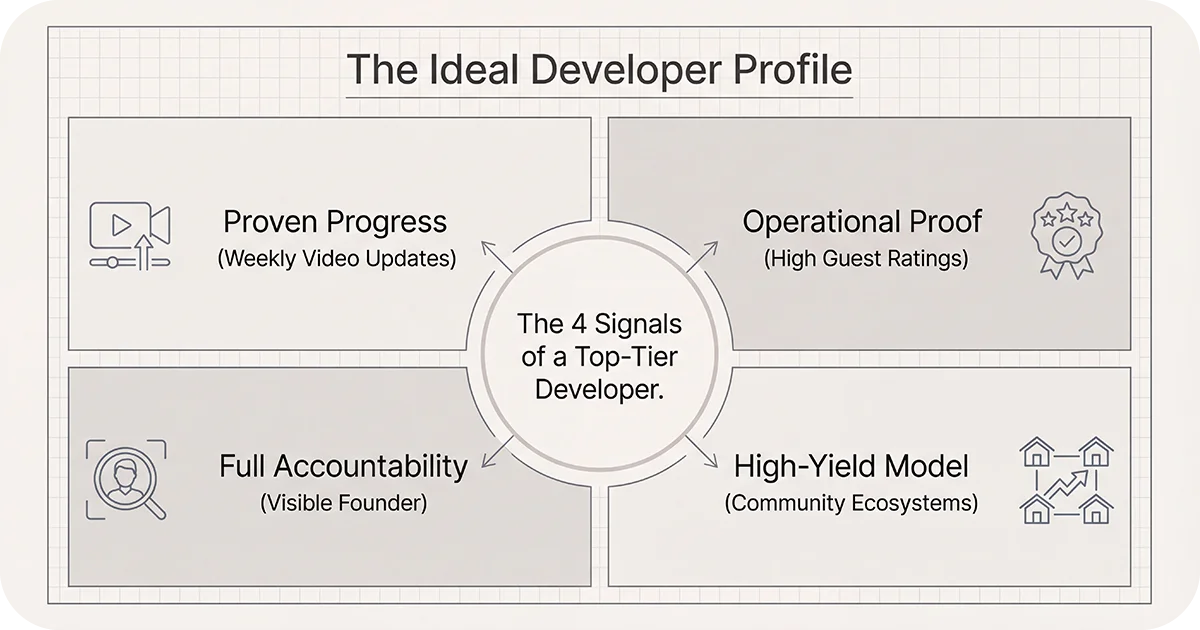
The market has shifted. The safest and most profitable investments in 2026 are found with developers who:
- Prove Progress: With consistent, public video updates.
- Drive Occupancy: With integrated lifestyle amenities (gyms, coworking).
- Manage Operations: With a dedicated in-house team for true passive income.
- Maximize Value: By building in-house to offer competitive entry prices (like Azoria at €90k).
Your Next Step: Apply these checks. Watch the videos. Read the reviews. If the developer passes the test, you are ready to invest.
If you align our values, we invite you to browse our exclusive Property in Bali for Sale
Frequently Asked Questions (FAQ)
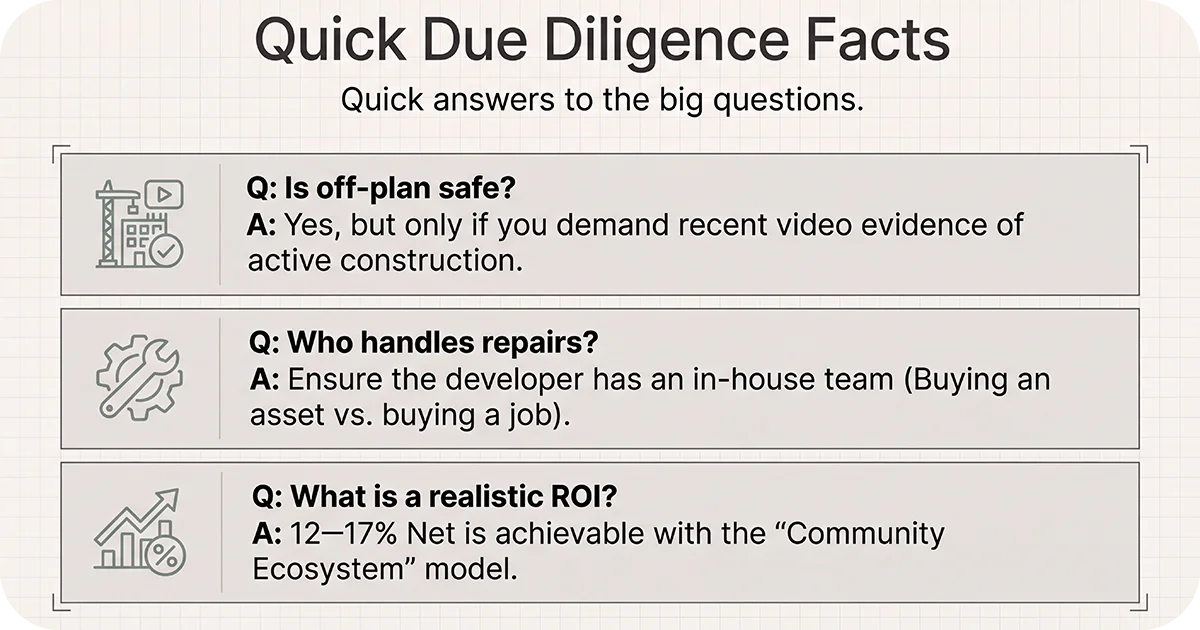
Yes, but only if you verify the developer's active construction status. As shown in our "Ghost Test" above, you must demand recent video evidence of progress. Buying off-plan allows you to secure "Tier 1" pricing, which is often 15-20% lower than the finished market value.
At Coco Development Group, we provide full in-house management. We handle everything from the 2 AM air conditioning repair to guest check-ins and cleaning, ensuring your income is truly passive.
Our projected [rental yield of property in Bali - Pillar hub 2] (12-17%) is based on the 'net operating income' model, which outperforms standard Bali property investment averages." By building "Lifestyle Destinations" (like Azoria Living with its wellness and padel facilities), we secure higher daily rates and longer booking durations than standard villas.
References & Official Sources
- Coco Development Group (2025). “Construction Update: Amazona Jungle Resort (Dec 2025)”. YouTube Construction Log
- Coco Development Group (2025). “Investor Testimony: Investing in a Better Way of Life”. Coco Podcast
- Coco Development Group (2025). “Investor Interview: Jelly’s Trade Secret”. Coco Podcast Ep. 26
- Coco Development Group (2025). “Founder Vision: Interview with Rasmus Holst”. YouTube Interview
- Booking.com (2026). “Le Mansion Guest Reviews”. (Verified data source for 9.3/10 rating claims). Link
- Trustpilot (2026). “Coco Development Group Verified Profile”. Link
- Coco Development Group (2026). “Azoria Living Project Overview & Pricing”. Link

Rasmus Holst is a serial entrepreneur and Co-Founder of COCO Development Group, where he helps drive innovation and growth through strategic business development. He is also the Co-Founder of Estate of Bali and Regnskabshelten.dk, Denmark’s fastest-growing accounting firm, which grew to 35 employees and generated $2.5M in turnover in 2023. Rasmus is passionate about building businesses that create long-term value and impact.