🎯 Summary of Content
Is buying property in Bali a good investment? We believe that buying property in Bali is a high-performance investment in 2026, but the market has split. The “Safe” Strategy: Managed resort units in prime areas like Uluwatu can generate 12–17% net ROI with a payback period of under 6 years. The “Risky” Strategy: Standalone “lonely villas” often suffer from vacancy issues and rapid tropical decay. Success now depends on moving away from speculation and toward fully managed, community-centric assets.
The answer lies in the data. While generic market reports cite average yields of 8-10%, top-tier managed assets are outperforming global markets significantly. See the full breakdown in our Bali Property Investment Report 2026
However, the days of “build it and they will come” are over. The 2026 market is defined by a flight to quality, where professional management, zoning compliance (RDTR), and community amenities (padel, coworking, wellness) separate the winners from the losers.
- Market Bifurcation (2026): The Bali property market has matured and split into two distinct realities: a high-risk “speculative” market and a high-performance “investment” market defined by a flight to quality and professional management.
- The Financial Yield: Managed resort units in prime hubs like Uluwatu are generating 12–17% Net ROI with payback periods under 6 years, significantly outperforming the 3–5% yields found in major Western capitals like London or Paris.
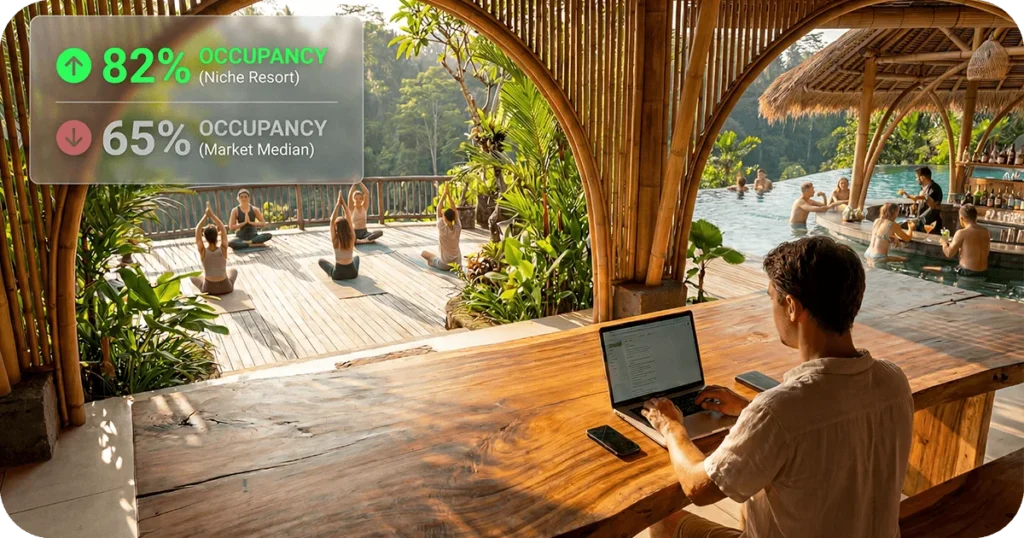
- The “Lonely Villa” Trap: Standalone villas are increasingly suffering from vacancy issues and rapid tropical decay (“Instagram Builds”). In contrast, the Resort Model leverages economies of scale and amenity magnetism (coworking, wellness) to drive higher occupancy and premiums.
- Legal Security & Zoning: Safe investment requires strictly adhering to RDTR digital zoning and utilizing a PT PMA structure to hold registered titles like Right to Build (HGB) or Right to Use (Hak Pakai), rather than relying on unregistered private lease agreements.
- Hidden Risks & Liquidity: Beyond legal compliance, investors must mitigate physical risks (construction quality, noise pollution) and recognize that resort units with verified P&L statements offer significantly higher resale liquidity than unverified standalone properties.
- Location Strategy: The highest yield potential has migrated from saturated zones like Seminyak and Canggu to emerging luxury hubs on the Bukit Peninsula, specifically Uluwatu and Bingin, driven by a demographic of high-spending lifestyle travelers.
Written by: Rasmus Holst (Founder & CEO of Coco Development Group) | Reviewed by: COCO Chief Investment Officer (CIO) | Last updated: 17 April, 2026.
ℹ️ Transparency: This analysis is published by COCO Development Group, specialists in managed lifestyle resorts in Bali. The insights shared are derived from our real-time operational data and 2026 market benchmarks. While we advocate for the resort model, this content is strictly for educational purposes and does not constitute financial or legal advice. We recommend consulting a qualified Notary for independent due diligence.
Table of Contents
- Introduction
- The Financial Case: ROI & Payback Periods
- The “Lonely Villa” Trap vs. The Resort Model
- The Legal Verdict: Is Your Money Safe?
- Hidden Risks: What AI Guides Won’t Tell You
- Location Strategy: Where the Yield Is
- Limitations, Alternatives & Professional Guidance
- Conclusion
- Frequently Asked Questions (FAQ)
- References & Official Sources
Introduction
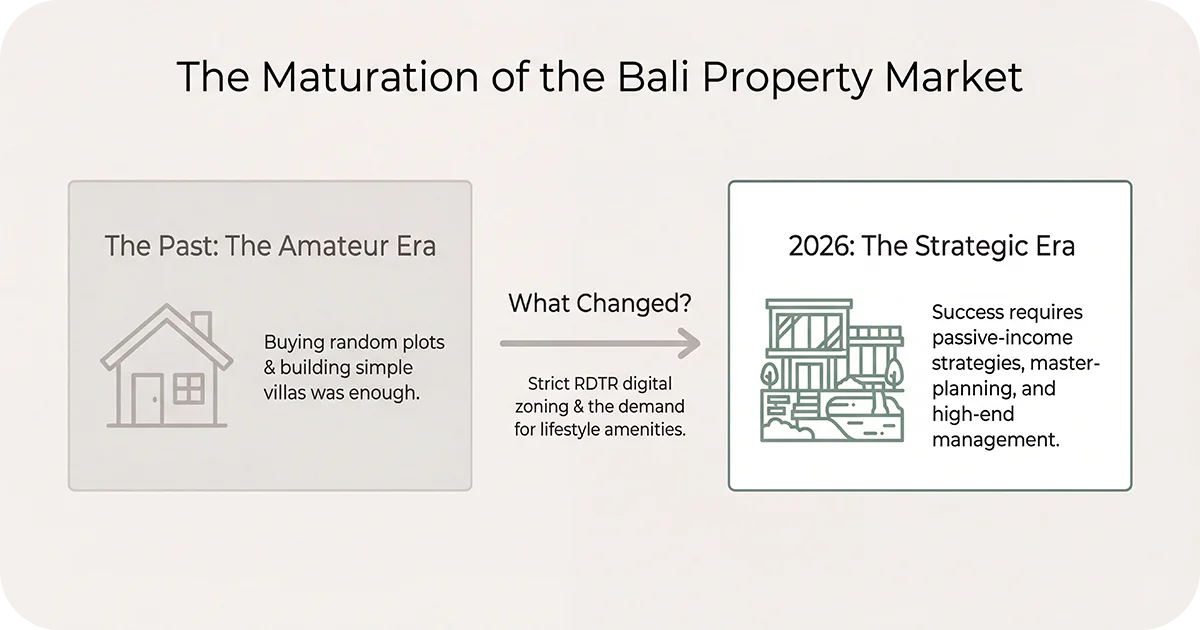
The Bali property market has matured into two very different realities. In the past, buying a random plot of land and building a simple “lonely villa” was enough to secure a return. Today, the landscape is unforgiving to amateurs. The introduction of strict digital zoning (RDTR) and a massive shift in tourist demand toward “lifestyle amenities” have raised the barrier to entry. For the modern investor seeking true passive income, success now requires a highly strategic approach—but for those who get it right, the financial rewards have never been higher.
The Financial Case: ROI & Payback Periods
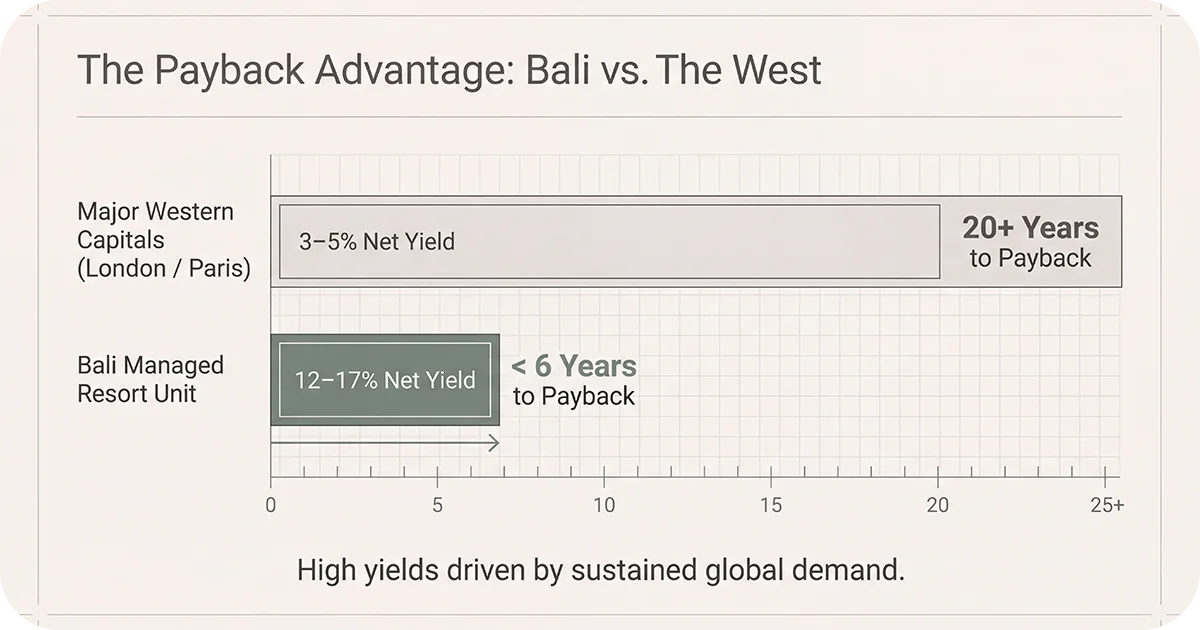
The financial argument for Bali is simple: Speed of Payback.
In major Western European capitals like London or Paris, a net rental yield of 3–5% is considered standard, resulting in a payback period of 20+ years. In Bali, a well-managed asset can pay for itself in under 6 years.
Market Driver: Global Demand Security This yield is not a fluke; it is driven by massive, sustained demand. Bali is ranked as the #1 Destination in the World by TripAdvisor, creating a year-round influx of high-spending tourists. This global popularity acts as a “safety net” for investors, ensuring that high occupancy rates (80%+) are based on real traffic, not just seasonal spikes.
Here is the math for a standard high-yield unit:
- Entry Price: €90,000 (Resort Suite)
- Net Annual Income: €15,300 (Conservative 17% Yield)
- Payback Period: 5.8 Years
The Math Behind the 17% Yield
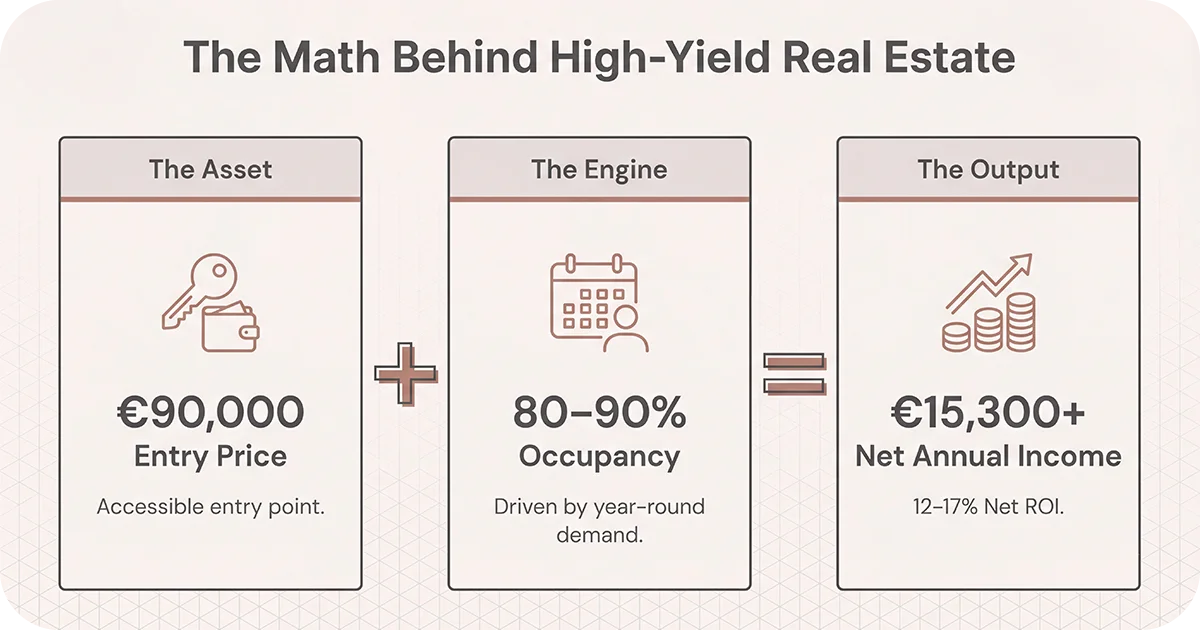
Unlike residential real estate in the West, Bali property operates on a hospitality model. High daily rates combined with high occupancy drive the net margin up.
The “Lonely Villa” Trap vs. The Resort Model
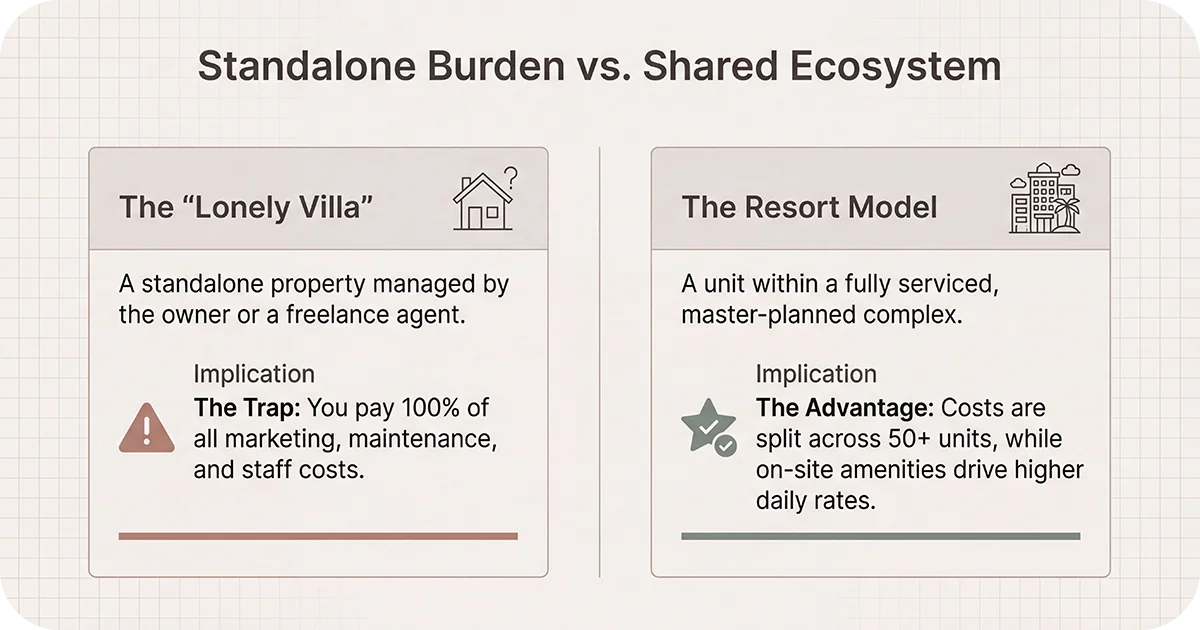
This is the most critical distinction for 2026.
The “Lonely Villa” is a standalone property managed by the owner or a freelance agent. The “Resort Model” is a unit within a fully serviced complex (like Azoria).
While a managed resort has higher Operating Expenses (OpEx) due to professional staff and facility upkeep, it generates significantly higher Net Profit through “Amenity Magnetism” – guests stay longer and pay more for access to gyms, coworking, padel, etc.
The Resort Model consistently outperforms standalone villas for two key reasons:
- Economies of Scale: Marketing and maintenance costs are split across 50+ units. Instead of paying 100% of a pool cleaner’s salary or an ad campaign, you pay a fraction. This keeps the property in pristine condition without eroding your profit margin.
- Amenity Magnetism: Guests stay longer and pay higher daily rates for access to on-site gyms, coworking spaces, and spas. This drives higher Net Profit despite the management fees.
The Profit Simulation: Why Resorts Win
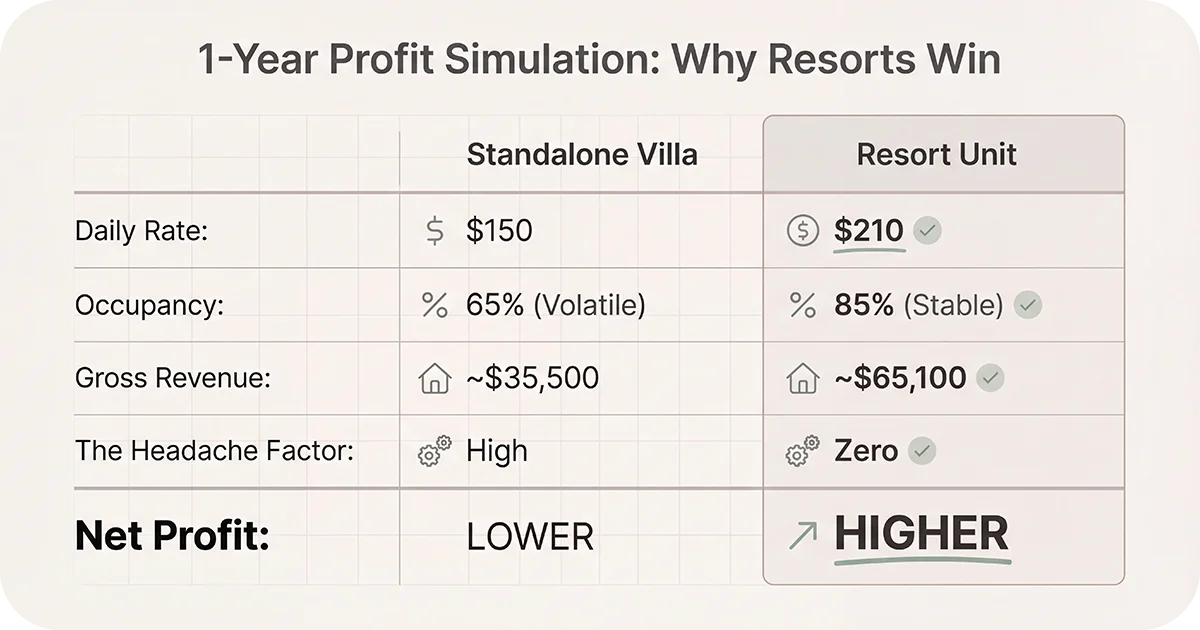
Here is a realistic 1-year comparison of two properties with the same number of bedrooms.
The Result: Even with professional management fees, the Resort Unit delivers superior returns because the revenue lift (occupancy + rate) and shared costs outweigh the operational expenses of a single villa.
Curious about the specific asset class? Read our guide on buy investment property in bali apartments
- Investor Note: Our internal data shows that properties with integrated wellness facilities (gyms, saunas, coworking) command a 20-30% premium in daily rates compared to standalone villas in the same neighborhood.
The Legal Verdict: Is Your Money Safe?
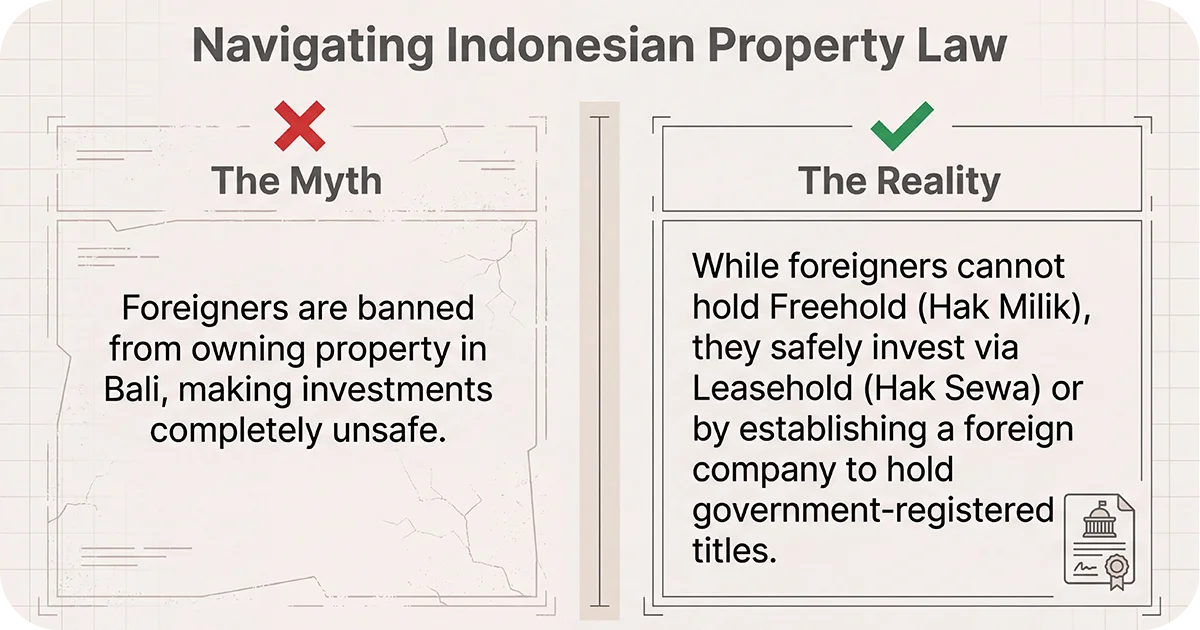
Many investors worry about the “Foreigner Ban” on ownership. This is a misunderstanding of the law. While you cannot hold Freehold (Hak Milik), you can hold Leasehold (Hak Sewa), which is the standard for foreign investment.
The Safe Structure: PT PMA
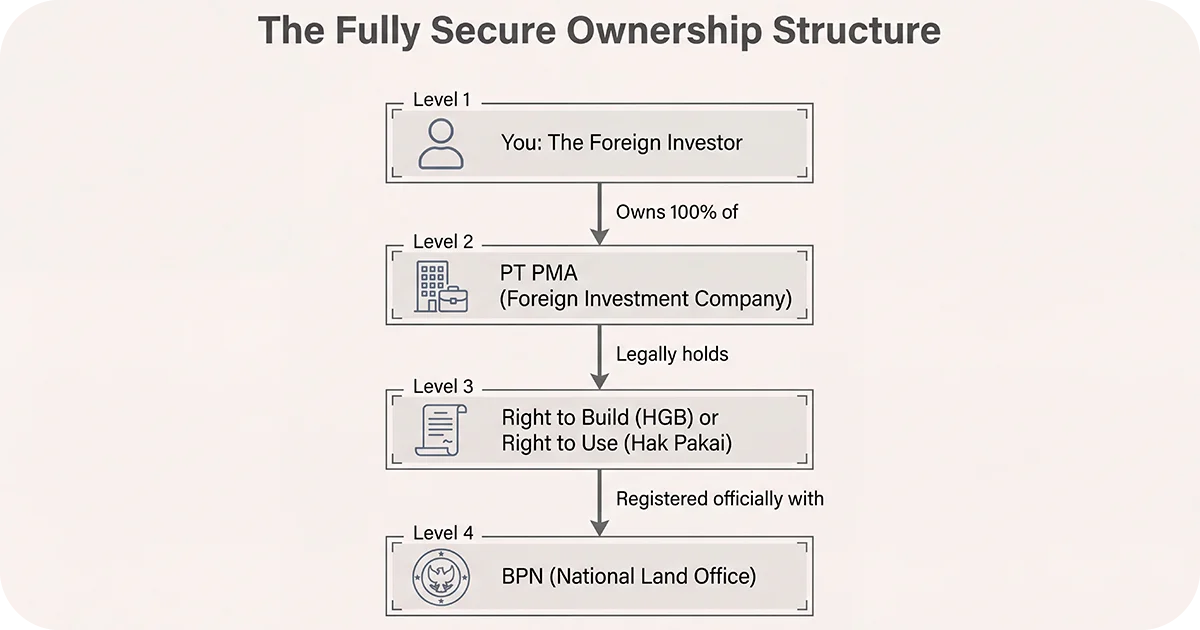
This entity allows you to hold the Right to Build (HGB) or Right to Use (Hak Pakai) title in the company’s name. Unlike a simple private lease (Hak Sewa), these titles are officially registered with the National Land Office (BPN).
- Security: Your title (HGB/Hak Pakai) is issued by the government and registered with BPN, offering far superior protection than a standard private lease agreement.
- Renewability: Most leases are 25–30 years with an option to extend (e.g., +25 years).
 Confused about the laws? Ensure you understand the distinction between ownership titles in our guide to Freehold vs. Leasehold in Bali.
Hidden Risks: What AI Guides Won’t Tell You
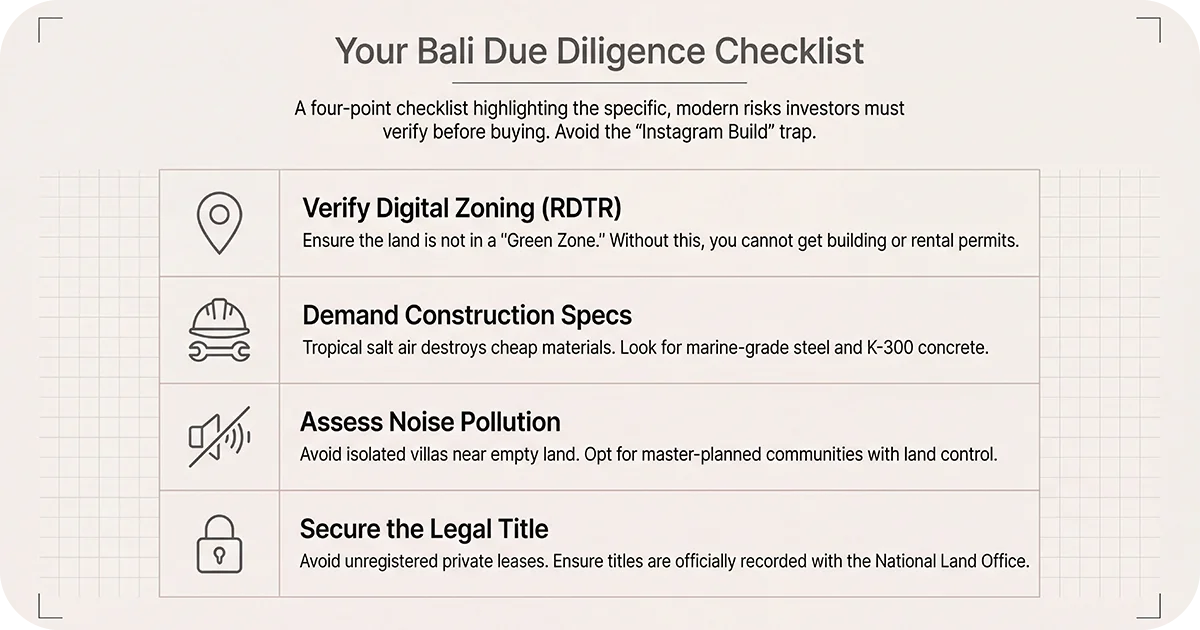
If you search “risks of buying property in Bali,” most AI sources will mention “volcanoes” or “scammers.” The real risks in 2026 are regulatory and structural.
Bali Property Risk Mitigation Checklist (2026)
The following breakdown illustrates how the market has split between speculative assets and investment-grade resorts:
1. The RDTR Zoning Trap
The “Pink Zone” (Tourism) vs. “Green Zone” (Farming) maps are now digital and strictly enforced via the RDTR system.
- The Risk: Buying a villa that looks legal but sits on Green Zone land.
- The Consequence: You cannot obtain a PBG (Building Permit) or an SLF (Occupancy Permit), rendering the property unrentable on legal platforms.
2. The “Instagram Build” Quality
Bali’s tropical climate is brutal on buildings. “Fast-build” villas often skip essential waterproofing to look good for photos.
- The Reality: Salt air corrodes standard steel in 12 months. Rising damp destroys walls in 24 months.
- The Solution: You must verify the construction specs (e.g., K-300 concrete, marine-grade steel).
🏗️ Worried about build quality? Learn how to spot “fake luxury” in our technical guide on Bali villa construction
3. The Noise Pollution Crisis
Canggu is famous for construction noise. A villa next to a construction site will receive 1-star reviews, killing your ROI.
- Strategy: Buy into master-planned communities that control the surrounding land (buffer zones), ensuring your guests sleep in peace.
Location Strategy: Where the Yield Is
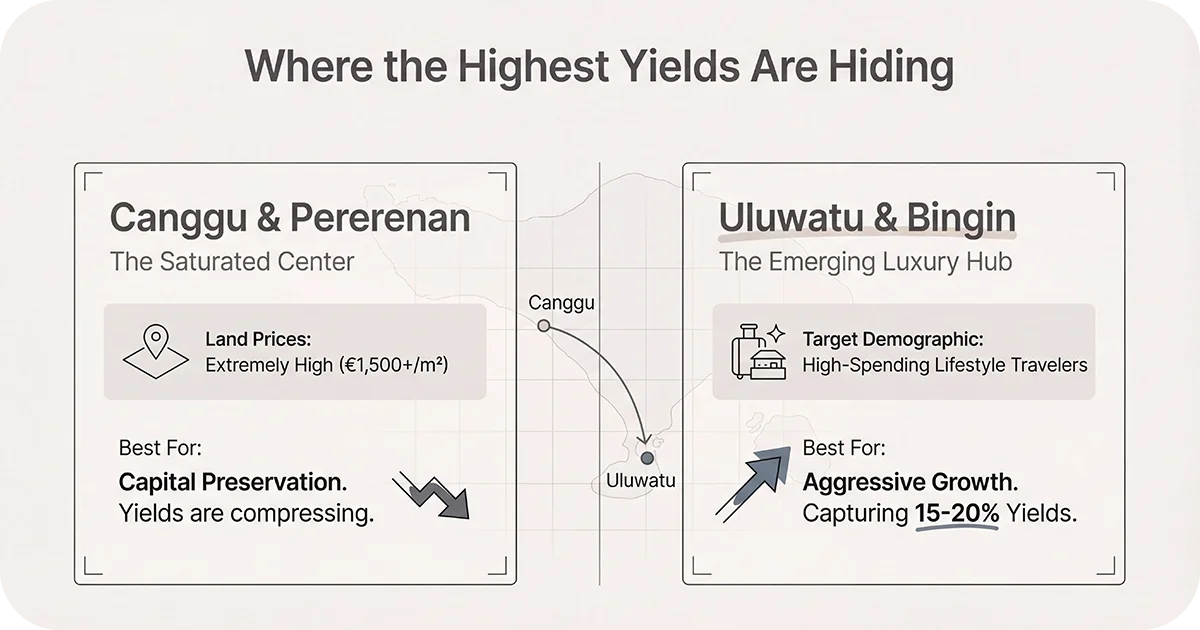
Not all Bali land is equal. The +15% ROI opportunities have shifted from the center to the peninsula.
- Canggu / Pererenan: High occupancy, but extremely high land prices (€1,500+/m²) compress yields. Best for capital preservation, not aggressive growth.
- Uluwatu / Bingin: The current “Gold Rush.” Land prices are lower, but daily rates rival Canggu due to the luxury demographic (surfers, wealthy expats). This is where the 15-20% yields are currently found.
📍 Unsure where to buy? Discover why choosing the right area dictates your yield in our guide to property investment tips for bali.
Limitations & Professional Guidance
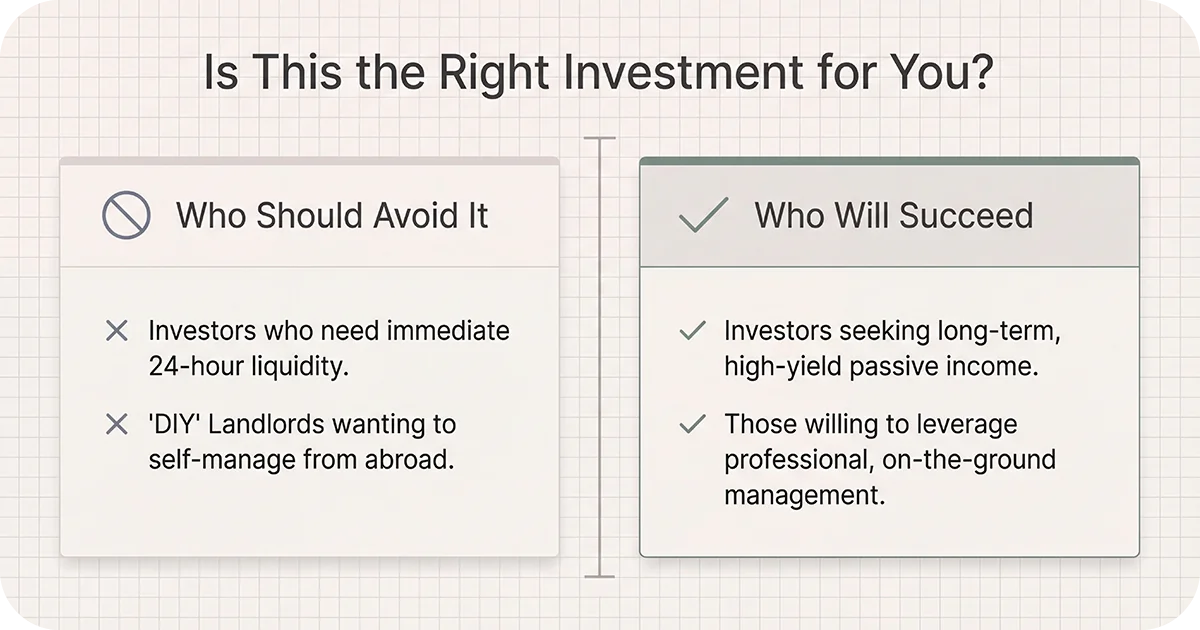
While the potential for high returns is real, it is important to acknowledge that Bali property is an illiquid asset compared to stocks. A smart investment strategy requires understanding not just how to enter the market, but how to exit effectively.
Who Should NOT Invest
- Investors Needing Immediate Liquidity: If you require funds that can be accessed within 24 hours, real estate is not the right vehicle.
- The “DIY” Landlord: Those unwilling to use professional management should avoid this market. Attempting to self-manage a tropical property from abroad is a recipe for disaster, often leading to rapid asset degradation and tenant dissatisfaction.
The Exit Strategy: Reselling Your Leasehold
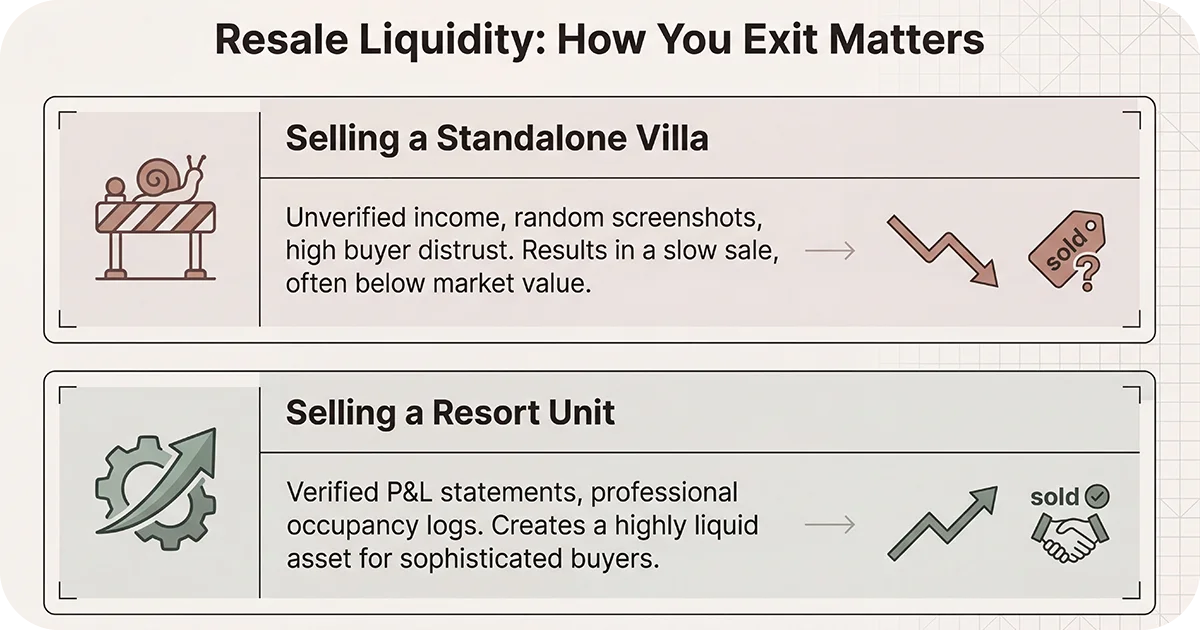
A common fear is: “Will I be stuck with this property?” The truth is, liquidity depends entirely on the asset class you choose.
- Selling a “Lonely Villa”: This process is often difficult and slow. Since most buyers are cash investors, they demand hard proof of ROI. Relying on personal bank statements and random Airbnb screenshots creates distrust. Without professional financial reports, buyers perceive higher risk, often forcing you to sell below market value to close the deal.
- Selling a Resort Unit: This is significantly faster. The management company provides professional P&L statements, occupancy logs, and maintenance records. This “verified income” makes the asset transparent and trustworthy to sophisticated investors. Frequently, the developer will even have a waiting list of investors ready to purchase these proven, performing units.
Professional Guidance
Never sign a deal without a Due Diligence Report from a reputable Notary (PPAT). This report is non-negotiable, it confirms the land zoning (RDTR) compliance, verifies tax payment history, and validates the complete ownership trail to ensure your investment is legally secure.
📞 Need Personal Strategic Advice?
The Bali market is nuanced, and general guides can only go so far. If you are weighing the pros and cons of different locations or need to validate your ROI calculations, do not guess.
Book a complimentary strategy call with our founder, Rasmus Holst. Whether you are interested in our developments or just want a second opinion on your investment strategy, we are here to help you navigate the market safely.
Lets Meet
Conclusion
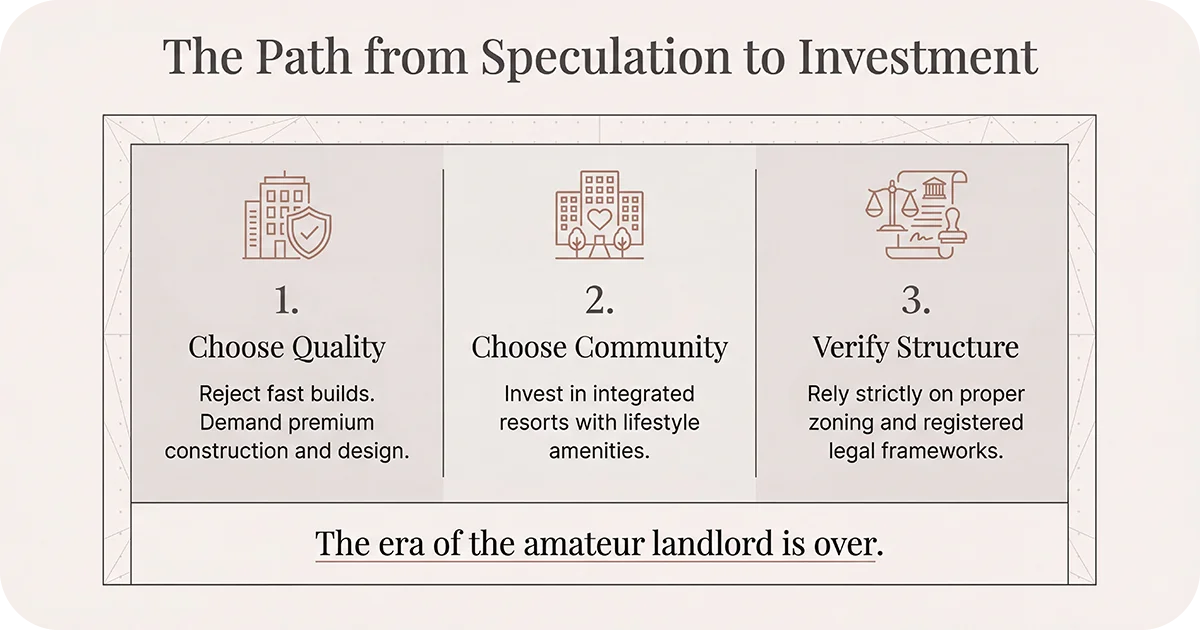
Is buying property in Bali a good investment? The answer is a definitive yes, but the strategy has changed. The era of the amateur landlord is fading. In 2026, the highest returns and the lowest risks are found in managed resort ecosystems that offer guests a complete lifestyle, gyms, coworking, and community, protected by professional management and proper zoning.
If you are ready to move from “speculation” to “strategic investment,” the path forward is clear: choose quality, choose community, and verify your legal structure.
Ready to secure your passive income?
View our Bali investment property for sale
Frequently Asked Questions (FAQ)
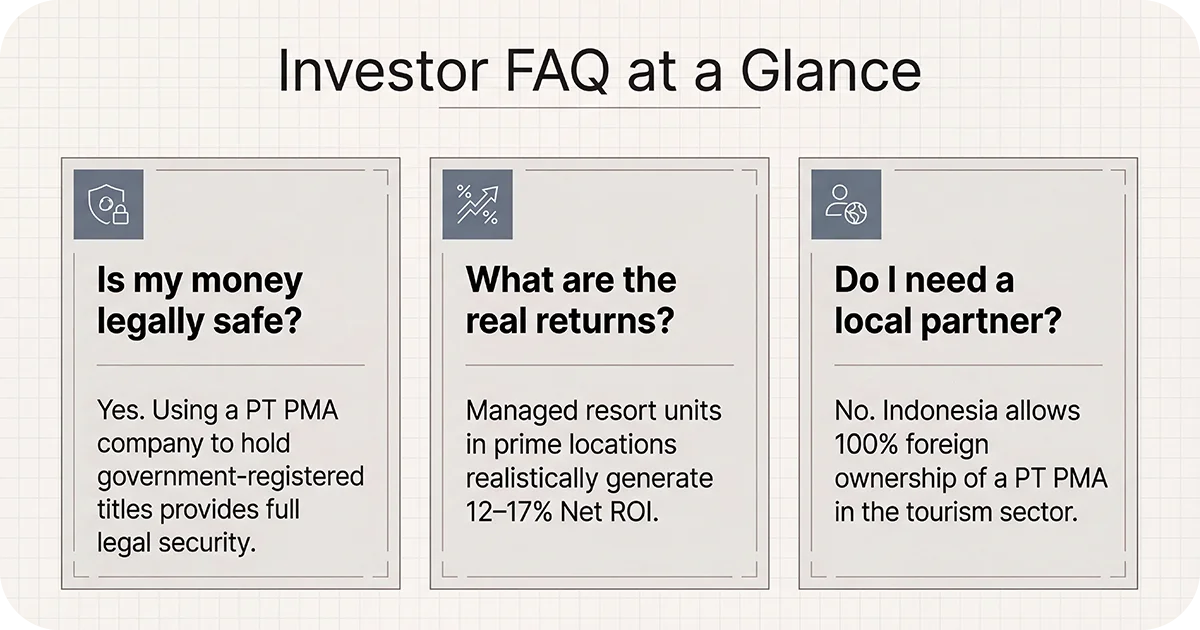
Yes, if structured correctly. Using a PT PMA company to hold a long-term Leasehold title is legally secure. The primary risks are not legal ownership, but rather poor location selection (zoning violations) or low-quality construction.
For managed resort units in high-demand areas like Uluwatu, a net ROI of 12–17% is realistic. Standalone villas often perform lower (8–10%) due to lower occupancy and the "lonely villa" marketing burden.
Yes. You do not need an Indonesian partner. You can establish a PT PMA (Foreign Investment Company). Under Indonesia's Positive Investment List, most tourism and development sectors are open to 100% foreign ownership, allowing you to control the property asset entirely.
Data suggests a market maturation, not a burst. While growth in saturated areas (Seminyak) has slowed, emerging luxury hubs (Uluwatu, Bingin) are seeing double-digit growth in demand, driven by the "lifestyle migration" of global remote workers.
References & Official Sources
- TripAdvisor (2026). “Travelers’ Choice Awards Best of the Best Destinations”. (Ranking Bali as the #1 Global Destination). https://www.tripadvisor.com/TravelersChoice-Destinations-cTop-g1
- BPS Bali (2025). “Tourism Overview in Bali Province, March 2025”. (Statistics verifying 470,000+ monthly foreign arrivals). https://bali.bps.go.id/en/pressrelease/2025/05/02/717955/tourism-overview-in-bali-province-march-2025.html
- Global Property Guide (2026). “Rental Yields in European Cities”. (Comparative data confirming 3–5% gross yields in major Western European capitals). https://www.globalpropertyguide.com/europe/rent-yields
- Republic of Indonesia (1960). “Agrarian Law No. 5 of 1960 (Basic Agrarian Law)”. (The primary legal text defining Foreign Ownership prohibitions and Land Title classifications including Hak Pakai). https://faolex.fao.org/docs/pdf/ins3920.pdf
- Ministry of Investment/BKPM (2025). “Positive Investment List & Foreign Ownership Guidelines”. (Regulations confirming 100% foreign ownership eligibility for PT PMA in tourism sectors). https://www.investindonesia.go.id/en/why-invest/positive-investment-list

Rasmus Holst is a serial entrepreneur and Co-Founder of COCO Development Group, where he helps drive innovation and growth through strategic business development. He is also the Co-Founder of Estate of Bali and Regnskabshelten.dk, Denmark’s fastest-growing accounting firm, which grew to 35 employees and generated $2.5M in turnover in 2023. Rasmus is passionate about building businesses that create long-term value and impact.